
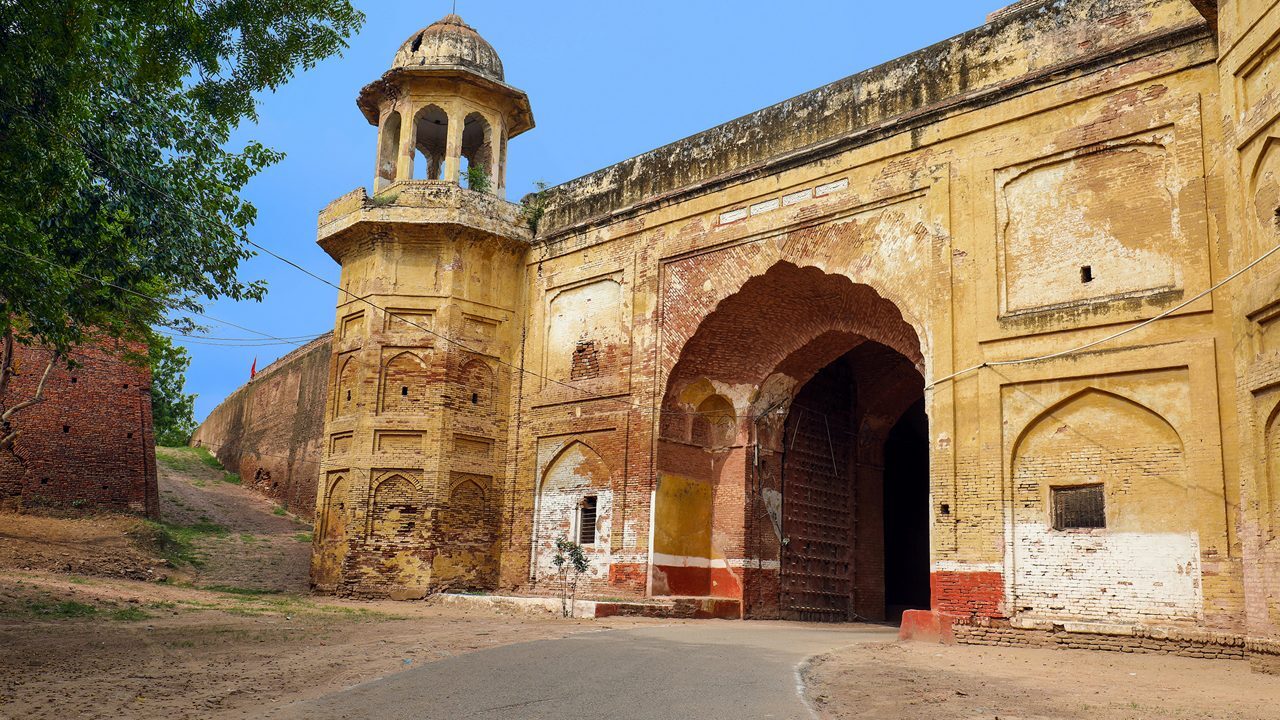
In India, history has a habit of hiding in plain sight. Sometimes, it even camouflages the modern world within its centuries-old walls. A striking example of this coexistence lies in Punjab’s Patiala district, where the Bahadurgarh Fort stands as both a relic of the past and a bastion of the present.
For most heritage seekers, Patiala conjures images of the imposing Qila Mubarak, the district’s most celebrated landmark. Yet, tucked away not far from it is Bahadurgarh, a fortress whose origins predate Qila Mubarak by over a century. What sets Bahadurgarh apart is not merely its age, but the unusual role it plays today: housing the commando training centre of the Punjab Police.
A Fort With a Warrior’s Spirit
Approaching Bahadurgarh Fort, one might expect the crumbling grandeur of another medieval bastion. Instead, visitors encounter an active hub of discipline and strategy. Armed sentries at the gate offer more than a perfunctory glance; their scrutiny reminds you that this is not a museum but a place still alive with martial purpose.
Inside, history and modernity exist side by side. A centuries-old mosque shares space with a sign directing recruits to a “Small Weapon Firing Range.” On a nearby wall, the word Commando is spelled out as an acronym, each letter embodying a warrior’s attribute. The juxtaposition is surreal yet strangely fitting, for Bahadurgarh has always been a soldier’s domain.
From Saifabad to Bahadurgarh
The story of the fort begins in the 17th century with Saif Khan, a nobleman in Mughal service. Known for his outspoken views, he often fell out of imperial favor, only to be reinstated time and again. Around 1656, during the turbulent succession battles of Aurangzeb, Saif Khan established a fortified town he named Saifabad.
The fort was a testament to his stature. Within its walls, Saif Khan left behind a Persian inscription that praised both Shah Jahan and Aurangzeb—perhaps a hedge in uncertain political times. After his death in 1683, his descendants remained in Saifabad for over a century, witnessing the decline of Mughal power and the rise of the Sikhs.
In 1774, the rulers of Patiala seized control and renamed the site Bahadurgarh in honor of Guru Tegh Bahadur. Later, in 1837, they rebuilt much of the fort. Today, its mosque, gateways, and moat—still holding water—are the most striking survivors of its Mughal origins.
A Living Fortress
With Independence came change. The Patiala royals faded into history, and Bahadurgarh Fort found new life as a training ground for Punjab Police commandos. These men would go on to play a crucial role in combating militancy in the state.
What might have seemed an odd pairing—the elegance of Mughal architecture with the grit of modern counter-insurgency—appears instead as a natural continuation. For centuries, Bahadurgarh has been tied to soldiers, strategy, and survival. Its walls have echoed with the footfalls of Mughal nobles, Sikh rulers, and now police commandos.
Despite not being a protected monument, the fort remains in remarkable condition. Perhaps this endurance lies in its very purpose. Forts and warriors are inseparable, and Bahadurgarh has stayed true to its name: the home of the brave.

