
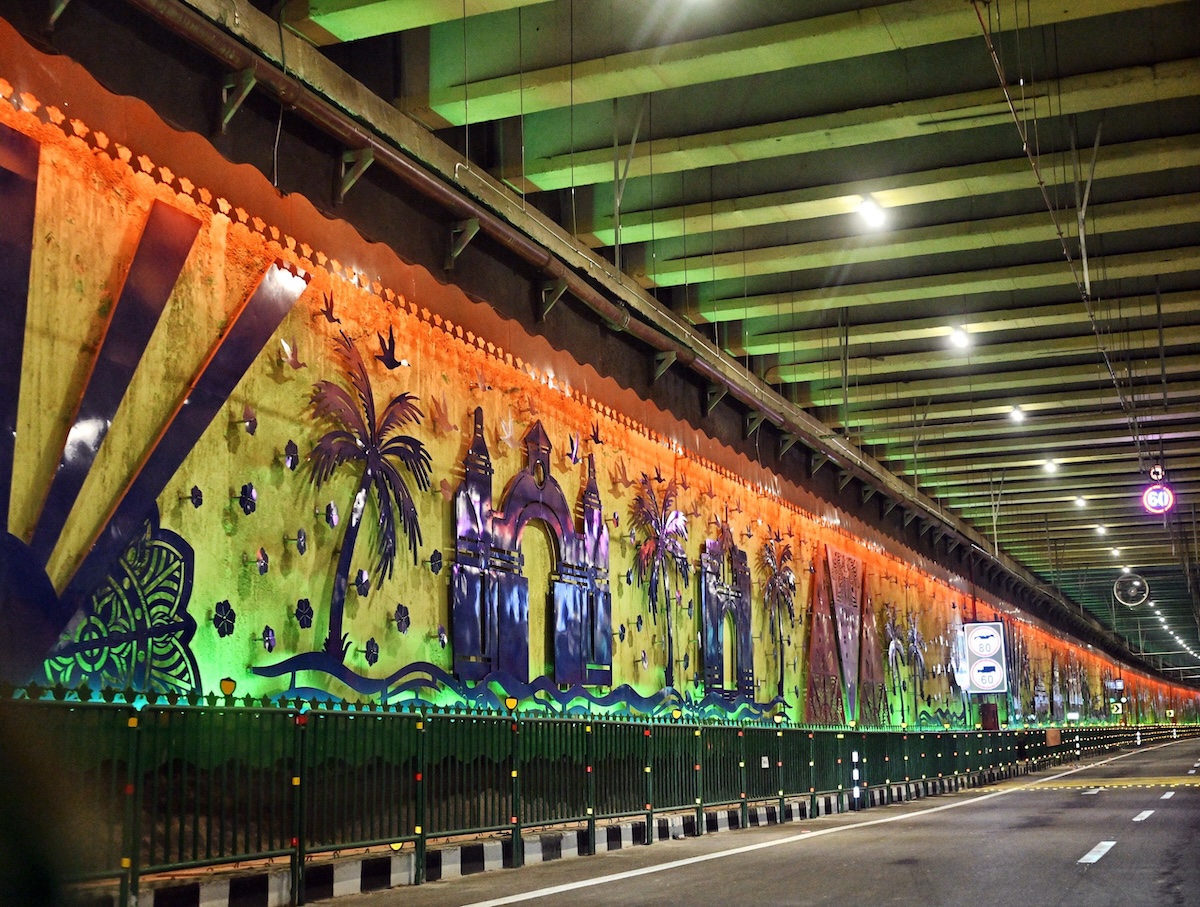
The newly opened Dwarka tunnel in Delhi-NCR is redefining how public infrastructure can double as cultural landmarks. Stretching 5.1 kilometres, with a central 3.6-kilometre eight-lane stretch, this is not just India’s longest and widest urban tunnel; it is now the world’s largest public art canvas, covering an extraordinary 51,478 square metres.
Inside, every wall, column, and overhead surface has been turned into a vibrant visual journey through the nation’s heritage. The tunnel’s interior bursts with depictions of India’s 28 states and 8 union territories, each compartment celebrating regional landmarks, traditions, and biodiversity. Towering 7.5-metre-high walls showcase sacred rivers, monumental architecture, folk traditions, and native wildlife, while the 3,600-metre-long national flag motif unfurls across the tunnel’s length.
The project, titled BharatBhagya Vidhata, unfolds as a rolling story in colour. It begins in Uttarakhand, where the sacred Ganga flows past temples, wildlife, and rituals, before transitioning into the grandeur of Rajasthan’s forts, the elegance of the Taj Mahal, and the spirituality of the Ram Mandir. Visitors encounter southern dance traditions, the cultural vibrancy of the Northeast, the solemnity of the Cellular Jail, and the architectural pride of the Indian Parliament. The Ashok Chakra appears between each state’s section, symbolising unity and progress, while motifs like the banyan tree add layers of symbolic meaning.
The transformation is the vision of Shimla-based artist Him Chatterjee, who drew from his earlier public art experience to create this immersive drive-through gallery. The scale is unprecedented, surpassing even Korea’s famed tunnel murals, and blends hand-painted artistry with modern techniques. For Chatterjee and his team, including production lead Sandeep Tiwari, the aim was to make art accessible to all, taking culture out of galleries and into spaces where people move, gather, and live.
As motorists pass through in five to six minutes, they are accompanied by painted birds in flight, giving the sensation of movement and continuity. The experience turns a routine commute into a journey through India’s past, present, and spirit, making the Dwarka tunnel a living, breathing exhibition of the nation’s soul.

