
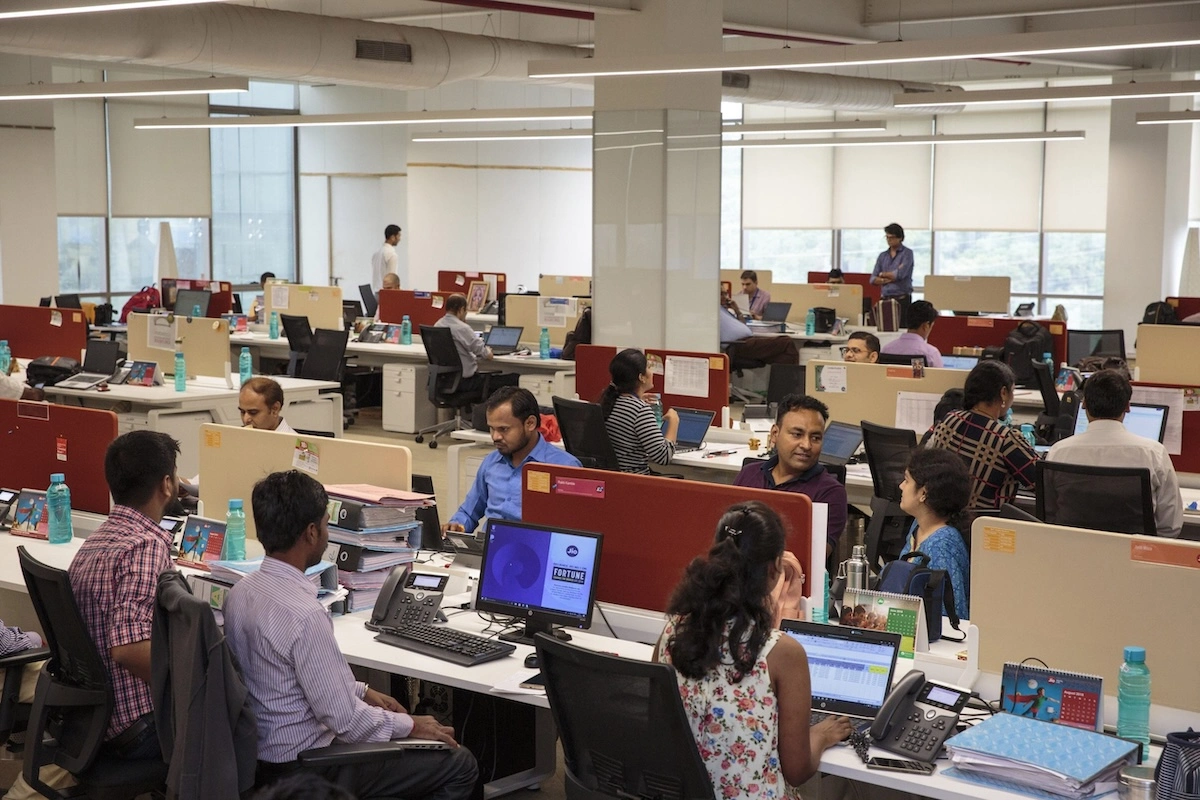
President Donald Trump’s recent call for American tech giants to stop hiring foreign workers, including those from India, has sent shockwaves through Silicon Valley and India’s vast engineering community. The headlines say uncertainty, disruption, risk—but look closer: this moment presents India with a rare opening to leap from the world’s outsourced back office to the commanding heights of global technology leadership.
Breaking Dependency: India Steps Out of America’s Shadow
For decades, U.S. tech companies have relied on Indian engineers for cost-effective, high-quality talent, funneling graduates from India’s premier institutions into roles in California, Washington, and New York. H-1B visas and offshore campuses created a pipeline that shaped careers and fueled India’s software boom. But as Trump’s rhetoric pivots American tech toward economic nationalism, Indian professionals face barriers once unthinkable—roles vanishing and dreams deferred. However, dependency on Western opportunity has long restricted India’s tech ecosystem from full self-expression.
Trump’s stance removes the glass ceiling. Indian engineers—1.5 million graduating every year—are now primed to build for India, not just the West. Instead of exporting raw talent, the country can nurture founders, inventors, and creators who tackle Indian problems first. It is a wake-up call to invest in domestic innovation and entrepreneurship.
Harnessing India’s Tech Talent for Indigenous Innovation
India’s government is already moving decisively. The IndiaAI Mission, launched in 2024, focuses specifically on homegrown solutions in agriculture, healthcare, and language models—sectors crucial to India’s unique context and massive population. AI models like Sarvam-1, designed for India’s languages, showcase ambition beyond mere adaptation of Western technologies. Boosting compute infrastructure, investing in research, and ramping up support for startups mean the technological engines are being primed for a historic shift.
“India’s digital infrastructure, powered by Aadhaar and UPI, already sets a world benchmark,” says the G20 Task Force report, highlighting how scaled digital platforms—built to solve Indian problems—now underpin everything from banking to vaccination logistics. The Aadhaar identity network, 5G rollouts, and financial inclusion have created fertile ground for innovation in domains neglected by Western tech giants.
Solving for India – and the World
Trump’s hiring ultimatum, though disruptive, could provide the nudge India needs to prioritize self-reliance over outsourcing. Building indigenous AI models for agriculture can revolutionize food security and climate adaptation—where over 46% of India’s workforce still depends on farming, often under stress from erratic weather and low yield. In healthcare, AI can bridge gaps in diagnostics for rural populations, bringing life-saving solutions where expertise is scarce.
With its vast digital user base—over 900 million internet connections—and advances in payment technology, India sets an example in scalable public infrastructure. UPI, Aadhaar, and ONDC are not just domestic marvels but international blueprints, now being adopted around the world. Indian SaaS and fintech unicorns, fueled by local know-how, are fast becoming global leaders, with exports topping $200b annually.
The Upside of Brain “Retain”
While a hiring ban stunts traditional migration, it catalyzes a vital “brain retain.” Top-tier engineers, instead of leaving, now have incentives to create and lead within India. The pressure to innovate locally helps plug the employability gap—only 10-15% of India’s engineering graduates currently find meaningful employment at home. Instead of outsourcing their best minds, India can unleash them on its scale and diversity, yielding solutions with global resonance.
Redefining Global Tech Leadership
India’s rapid digital transformation—building capacity in AI, cloud, and cybersecurity—now positions it as a must-hire global partner, not just a vendor. As tensions over global supply chains rise and Western policies become insular, India emerges as an alternative hub for innovation, standardization, and critical technology resilience.
Leading voices argue that America’s own tech ecosystem cannot thrive in isolation: more than half of top U.S. AI researchers remain foreign-born, many from India. Companies like Google, Microsoft, and Apple have historically lobbied against strict bans, acknowledging a shortage of domestic high-skilled talent. Restricting hiring may slow American innovation, but it accelerates India’s.
Government Backing and the Road Ahead
The Indian government is turbocharging its support: funding GPU infrastructure, fostering research hubs, and easing regulatory hurdles for AI startups. Institutional collaboration, rich data platforms, and the power of vernacular AI mean the world’s most diverse, populous nation is now a laboratory for scalable, inclusive tech solutions.
India’s G20 leadership further amplified its global role, as digital public infrastructure standards set by Aadhaar and UPI become models for economic transformation worldwide. Instead of viewing Trump’s directive as pure risk, India is poised to convert it into a radical opportunity.
Trump’s hiring ultimatum, in short, is not a curtain call—it’s the opening act of India’s own innovation drama. Disruption is always painful, but it is also a potent catalyst. India can now double down on its people, its problems, and its potential, transforming exclusion into empowerment. The era of coding for Silicon Valley is giving way to India coding its own destiny—problem-solving at home, exporting solutions abroad, and shaping the future of global technology on its own terms. The world is watching, and this time, India is not just participating—it is leading.

