The dust has barely settled at Bharat Mandapam following the India AI Impact Summit 2026, but the strategic reverberations are already crossing the Line of Actual Control (LAC) and sinking deep into the Indian Ocean. While the New Delhi declaration focused on the ethics of human-centric AI, the subtext was far more muscular. India has officially signalled its transition into the era of intelligentized warfare
For a long time, military power was all about size; the heavier the armour, the bigger the weapons, the further the missiles could reach. But now, the game has changed. Deterrence is being measured by new criteria: data sovereignty and the speed of decision-making, known as the OODA loop (Observe, Orient, Decide, Act). Whether in the heights of the Himalayas or the vast waters of the Malacca Strait, victory now leans in favour of those who wield the fastest and most efficient algorithms.
One of the most significant, yet understated, revelations from the summit could send shivers down the spines of our adversaries. India’s Strategic Forces Command unveiled a locally developed AI tool capable of predicting military buildups in disputed areas along the Line of Actual Control (LAC) with remarkable accuracy, 94% to be exact, before any physical signs, like tents, appeared.
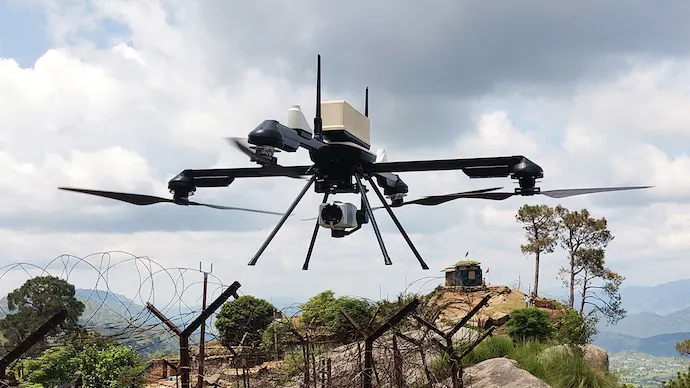
This tool combines satellite images, drone footage, and electronic data, revolutionising our military intelligence. It has effectively lifted the veil on the fog of war, moving us away from relying solely on human analysts to a system that provides real-time, actionable insights. In fast-paced operations, this AI helps us make decisions before the first shot is even fired, allowing us to plan and prepare with unprecedented precision.
The summit underscored that AI is not just a passing trend; it’s becoming the backbone of our modern military. Here’s how it’s transforming different branches of India’s armed forces:
The Army’s Leverage: With the SAM-UN platform, the Army isn’t just adding new equipment; they’re rejuvenating older platforms. By installing AI-driven fire control systems into legacy tanks and armoured vehicles, they’re ensuring these assets remain effective in today’s tech-driven battlefield.
The Navy’s Vigilance: The introduction of Drishti-10 MALE drones has been a game-changer for the Navy. These drones use AI to identify unusual ship behaviours in the Indian Ocean that human eyes, tired from the vastness of the sea, might easily overlook.
The Air Force’s Insight: The Indian Air Force is leveraging AI for predictive maintenance of its Tejas and Rafale fighter jets. By monitoring real-time vibrations and heat patterns, they can service the aircraft based on actual needs instead of fixed schedules, keeping them always ready for missions.
Central to this revolution is the MANAV (Human-centric) vision. Unlike some global powers that may push for unmanned systems to operate without ethical guidelines, India emphasises that while AI provides information, human judgment remains crucial.
This moral stance is paired with a robust security measure: the EKAM initiative, a secure military cloud that keeps our strategic data within our borders. By avoiding reliance on foreign AI solutions, India is crafting a protective digital barrier as fiercely as it defends its physical territory.
What the 2026 Summit made clear is that India is not just anticipating the future; it is actively shaping it. By integrating drone technology, predictive logistics, and homegrown AI models into our defence framework, the Indian Armed Forces are shifting from a reactive stance to a proactive one.
In this pivotal moment, the ultimate determinant of victory will not hinge on sheer numbers of troops but on the sophistication of the systems that safeguard them. The silicon shield is in place, and it’s driven by homegrown innovation, reinforcing our position on the global stage.