American Primacy
Unipolarity and Primacy are as crucial to Americans as Independence is to the Indians. A world without primacy is unthinkable for American citizens and their allies all over the world. Therefore, when the US decided to launch an attack on Iran, it was to maintain primacy and unipolarity in the global order. The US has never been satisfied with a first-among-equals status. It wants primacy at all costs. Sitting pretty between the two great oceans, the US has repeatedly launched military attacks on countries to achieve its goals. Since its own population is insulated from violent reprisals, the US employs violence without consequence to achieve its strategic goals. Most countries have not been able to cope with the overwhelming force that the US military brings down to bear. Vietnam, Iraq, and Afghanistan fought back and won, but at the cost of ruin. Vietnam even managed to reunify the Vietnamese mainland, but it took years. Iraq and Afghanistan are tragic stories where American retreats left failed states in their wake. The deal is simple – Either comply with Uncle Sam or face ruin. This is the stark reality of the American Unipolar Order and the American Empire. However, the US is not the first empire in history, nor will it be the last. The first superpower in ancient times was – The Persian Empire.
The Persian Empire
The Persian Empire—specifically the Achaemenid Empire founded by Cyrus the Great—was the first true “superpower” of the ancient world. Their strategic longevity wasn’t just due to military might, but rather a sophisticated blend of logistics, psychological warfare, and administrative innovation.
The strategic longevity of the Persian Empire was rooted in a sophisticated “soft power” doctrine that prioritized administrative flexibility and psychological warfare over brute force. By establishing the Satrapy system, the Achaemenids allowed conquered regions to maintain their cultural and religious identities, which significantly reduced the frequency of internal rebellions. This decentralized governance was bound together by revolutionary infrastructure, most notably the Royal Road and a high-speed postal relay system that ensured the central leadership could respond to distant threats with unprecedented speed. This combination of local autonomy and rapid communication transformed a collection of diverse territories into a cohesive, manageable superpower.
In terms of military engagement, the Persians leveraged psychological dominance and massive logistical superiority. The “Immortals” served as a constant symbolic reminder of the empire’s inexhaustible resources, while their military engineers executed feats like the Xerxes Canal to bypass geographic barriers. Beyond the battlefield, the empire utilized “gold diplomacy,” frequently funding rivalries between external enemies to keep them divided and distracted. By integrating the specialized naval skills of the Phoenicians and the financial systems of the Lydians, the Persians created a multi-domain strategic framework that dominated the ancient world for over two centuries.
The Empire Strikes Back
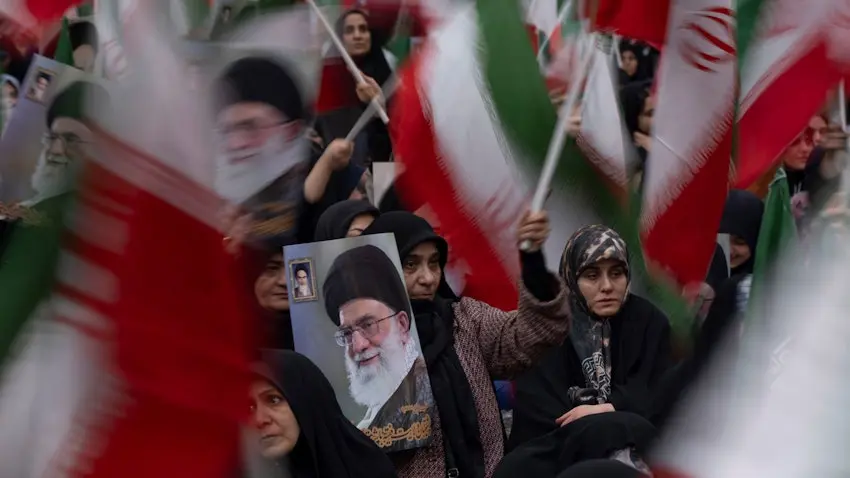
Therefore, when the US decided to launch an unprovoked military attack on Iran, what followed was nothing short of staggering. Iran not only endured the US attack; it turned the tables on the global economy by reclaiming the Strait of Hormuz. Iran achieved all this in a matter of 32 days. Nations have exercised control over proximate waters for centuries. The historical significance of this achievement is further indicated by the fact that Iran had lost control of the strait to colonial Portugal almost 500 years ago. By striking at the heart of the logic of unipolarity – the so-called freedom of navigation – Iran has struck a mortal blow to American primacy. American power is blunted if it cannot be used to achieve the goals of economic dominance and American primacy. Iran’s legitimate control of the Strait of Hormuz has led to massive shortages across the globe and ushered in calls for a multipolar order. Countries are mulling ways and means to reject American unipolarity and use the emergence of multipolarity to their advantage. Countries no longer trust the US as the guardian of values and security interests. They believe it has turned into a predatory hegemon. This has completely obliterated American credibility and legitimacy as the global superpower. Each country in its strategic space is looking for ways to rid itself of US control. Those who continue to comply with US diktats continue to accrue massive losses for their countries. The losses are tangible and will lead to a change in domestic politics. A war initiated to isolate and change the regime in Iran has led to massive losses for the global economy and domestic debate in all countries. Iranian resilience has managed to convince the international community of its equanimity and justifiable self-defense.
Yankee Go Home
Can the US recover from this humiliating defeat, or will it resort to war crimes in Iran to regain the illusion of primacy? A naval blockade initiated to counter the Iranian control of Hormuz reeks of desperation. Diplomacy is being stifled by unrealistic American demands of Zero enrichment and reopening Hormuz without Iranian control. The US needs to learn from its predecessor empires, like the British and the Soviet, who were astutely aware of the fact that their time was up and a historic moment of transition was arriving. The US has a choice between the British decline and the soviet decline.
The British Empire adopted a strategy of “decolonization by design,” attempting to preserve global influence by transforming colonial possessions into a voluntary Commonwealth of Nations, thereby maintaining economic and linguistic ties while offloading the unsustainable costs of direct administration. In contrast, the Soviet Union’s decline was characterized by “perestroika” and “glasnost”—belated attempts at internal restructuring that inadvertently triggered a rapid, uncontrolled disintegration.
US must choose wisely because a refusal to give up primacy could lead to a coalition against the US. The international community’s patience with America’s rogue behavior is running out. The Persians have ushered in the multipolar order. I conclude with a quote from the previous historic moment of transition.
Tolerance is the alpha and omega of a new world order. Further world progress is now possible only through the search for a consensus of all mankind.” — Mikhail Gorbachev (1990, on the early visions of a pluralistic world)