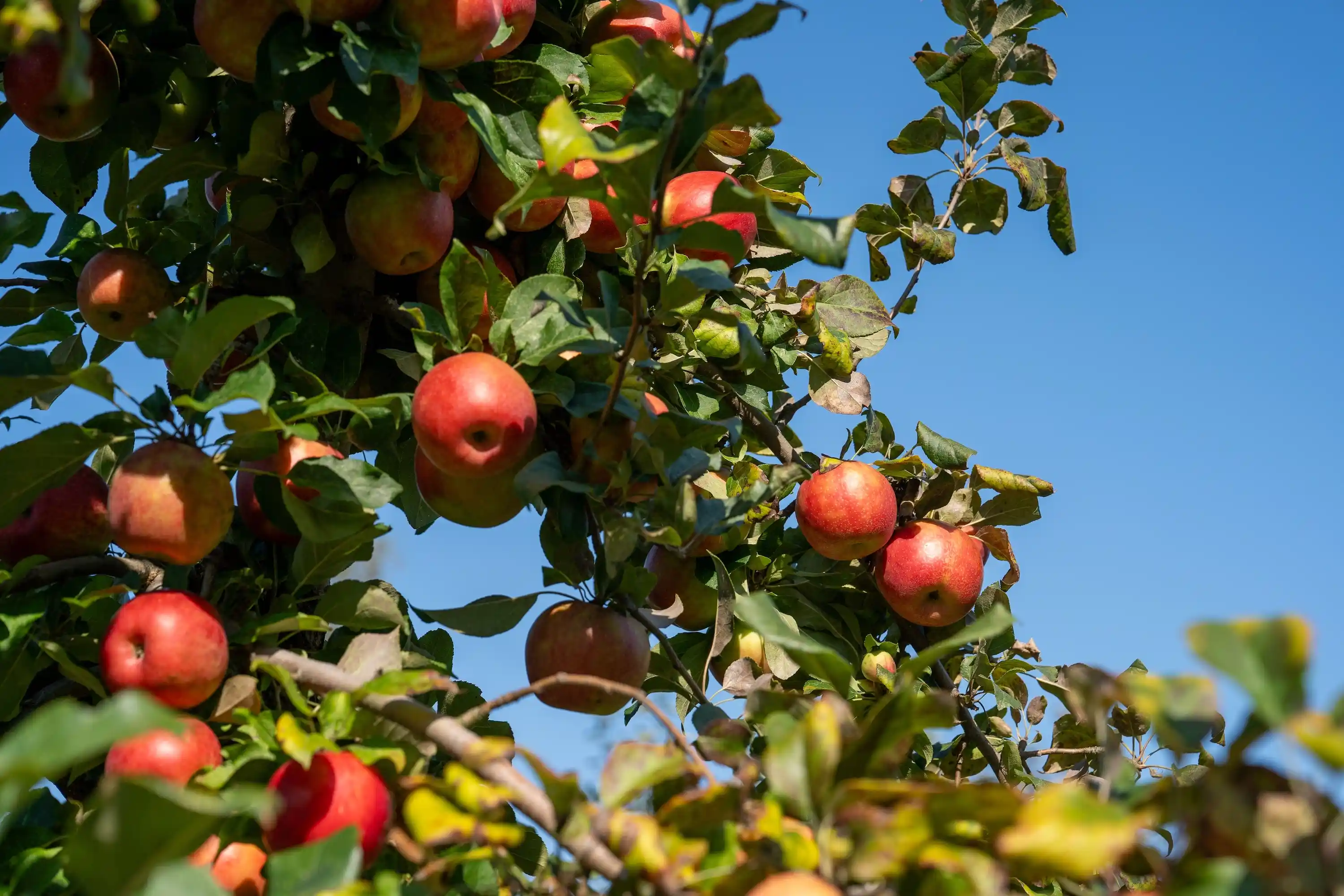
“An apple a day keeps the doctor away,” goes the adage. Today, however, it is climate change that is driving apples away from the very hills of Himachal Pradesh that once produced India’s finest varieties and powered the economic transformation of mountain farmers, previously surviving on low-income subsistence farming.
With rising winter temperatures, erratic snowfall, prolonged dry spells, and extreme weather events becoming a new normal, Himachal Pradesh’s Rs 5,500 apple economy is facing its biggest challenge of the century.
The state’s iconic fruit, as apple is known, has been more than a fruit to nearly four lakh families, half of these directly engaged in its cultivation in an area of 1.60 lakh hectares. But the harvest is shrinking, and those whose livelihoods are dependent on seasonal produce are under unprecedented stress.
Admits Dr S K Bhardwaj, a senior scientist and environmentalist at Dr Y S Parmar University of Horticulture and Forestry, “Erratic weather is constantly lowering the productivity of the apples. Unusual change in the weather pattern during the winters, which is a crucial period for the next year’s crop, weak snowfall and fewer chilling hours, impact the prospects of yield.”
Economists who have tracked Himachal Pradesh’s economic transformation largely based on the expansion of its horticulture economy warn that the deepening apple crisis could have far-reaching consequences for the state’s rural economy, livelihoods, and farm incomes.
The traditional apple belt is also gradually moving uphill as lower and mid-hill orchards in Shimla, Solan, Sirmour, Mandi and Kullu are becoming less suitable, while cultivation is expanding into higher elevations in areas like Kinnaur, Lahaul-Spiti, and Bharmour in Chamba.
Apples grown at elevations of 1,200–1,300 metres are gradually shifting to higher altitudes because warmer winters are no longer providing the mandatory chilling hours required for dormancy and flowering.
Traditional apple varieties need about 1,200–1,600 chilling hours at temperatures below 7°C. This condition has now been reduced to barely 500 to 600 chilling hours. The temperature also hovers between 9 and 11 degrees C.
Declining snowfall and delayed winter cold have reduced these chilling hours, making climate change the single biggest threat to Himachal Pradesh’s apple industry.
Moreover, studies show that changing weather patterns—particularly warmer winters—are fueling the spread of pests and diseases, forcing orchardists to rely increasingly on pesticides and chemical sprays. The rising input costs are steadily making apple cultivation both environmentally unsustainable and economically unviable.
Even this year, the crop is shockingly as low as 50-60 per cent mainly due to failed snowfall, dry spell, inadequate chilling hours, hailstorms, and erratic temperatures. All these factors have taken a heavy toll on orchards across the state,” reveals Harish Chauhan, president of the Fruit, Vegetable, and Flower Growers Association.
Actual output may be closer to 1.8 crore boxes, compared with the government’s estimate of 2.15 crore boxes. This is just one-third of the produce in 2025.
The data provided by the Himachal Pradesh Horticulture Department also puts estimates at 4.36 lakh metric tonnes as compared to last year’s 6.99 lakh MT (3.50 crore boxes).
It is not merely a seasonal decline. Himachal Pradesh’s apple crop is confronting a long-term existential threat, driven by both climate change and human-induced pressures.
The crisis is no longer cyclical or confined to a bad season. Himachal Pradesh’s apple crop is facing a long-term existential threat from the twin pressures of climate change and human-induced ecological degradation
“Rising temperatures, belated and inadequate snowfall, and prolonged dry spells are also compounded by indiscriminate road constructions through the apple farms, steep hill cutting, rapid urbanisation and deforestation, which are also triggering factors. The whole mountain system has been disturbed. This is a broader reason making the apple industry worry,” feels Dr Suresh Attri, a climate change expert at the Directorate of Environment, Science, and Technology.
Yet another challenge that the apple producers are facing, also as a result of the increased frequency of climate-related disasters in Himachal Pradesh, is during the monsoon. This is also a period when the apple crop is harvested and transported to the markets outside the state.
Torrential rains, flash floods, and disruption of the highways after the incidence of cloudbursts disrupt the movement of the apples. Being a perishable produce and with no adequate CA storage facility, the apples get stranded on NHs and also in different areas within the state. This happened in 2023 and 2026 when the state was worst hit by the flash floods and disruption of road communication.
The climate crisis for apples has also started compelling the farmers to shift to new varieties suiting the changing weather patterns. The scientists advocate cultivation of climate-resilient apple varieties requiring fewer chilling hours, rainwater harvesting, and integrated pest management.
Harish Chauhan, himself a pioneering apple grower, says diversification is one of the options that the farmers have started exploring, as they have also started cultivating kiwi, pomegranate, persimmon, peach, plum, cherry, and pear. “Diversification rather than complete dependence on apples to reduce climate-related risks and maintain dependency on high-value crops,” he underlines.
With imported apples flooding Indian markets after tariff changes, apple growers in Himachal Pradesh, Uttarakhand and Jammu & Kashmir are already facing growing uncertainty and asking for higher import duties and stronger safeguards against cheap apple imports.
Dr Rajinder Chauhan, a former vice-Chancellor of Himachal Pradesh University, feels “ the future of Himachal’s apples will depend not merely on the next snowfall, but on how rapidly the state adapts to a changing climate and saves the Rs 5.500 crore industry”