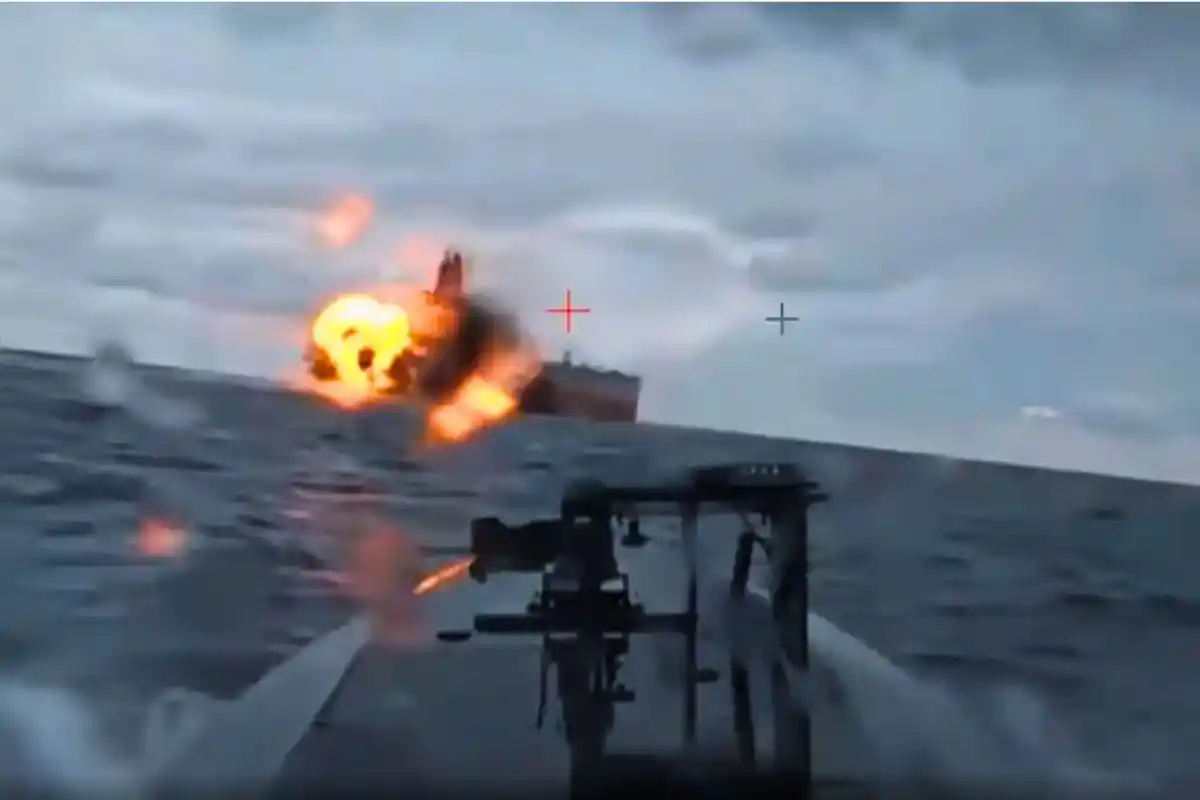
The Security Service of Ukraine (SBU) conducted a naval-drone strike on the crude-oil tanker Dashan on 10 December 2025, an action that has raised fresh concerns about the safety of international commercial shipping amid already stressed global energy markets. The vessel was en route to the Russian port of Novorossiysk when it was hit, and preliminary assessments from the agency indicated that the tanker had been put out of service. This incident occurred shortly after Dashan had delivered a cargo of Russian crude oil to India’s Sikka port and just a few weeks after Russian President Vladimir Putin’s visit to New Delhi, during which India and Russia emphasised the strategic importance of ongoing energy cooperation. The interconnection of these developments might imply that the strike was not solely a tactical military action, but also a broader geopolitical signal with the potential to exert pressure on countries that have maintained neutrality while engaging in lawful commercial trade with Russia.
The “shadow fleet” and the context of sanctions
The Dashan occupies a notable position within India’s supply chain. Although flying the flag of Gambia, the tanker is certified by the Indian Register of Shipping, reflecting its integration into established maritime safety and compliance frameworks. Throughout 2025, the vessel made 38 documented port calls worldwide, 7 of which were to India. This represents over 18% of its global activity and makes India one of its primary destinations outside Russia’s export terminals. It appears that the majority of these calls were concentrated at Sikka, which functions as the maritime gateway for Reliance Industries’ Jamnagar refinery complex and supports logistics networks that also service other Indian refiners, including Bharat Petroleum. It is estimated that the Dashan typically carried between 650,000 and 750,000 barrels of crude per voyage, meaning that approximately 5 million barrels of Russian crude reached India through this single vessel in the course of 2025.
At the same time, the Dashan is generally perceived as part of what is often termed Russia’s ‘shadow fleet’, a network of vessels that operate beyond the scope of conventional Western insurance and compliance systems yet persist in transporting Russian crude through alternative logistical channels. However, it should be noted that this designation does not in any way alter the ship’s fundamental civilian status. It is understood that, under international maritime law, and particularly the provisions of the United Nations Convention on the Law of the Sea, merchant vessels engaged in commercial activity are protected from attack when operating outside zones of active hostilities. It is important to note that, regardless of its previous cargo or its commercial relationship with any state under sanctions, striking such a vessel by Ukraine could be seen as a violation of the principles that safeguard neutral shipping and ensure the security of global trade.
An incident with the strategic messaging
The attack on the Dashan is a part of Ukrainian operations against commercial tankers linked to Russia’s energy trade. While Ukraine argues that such actions disrupt Russia’s wartime financing, they inevitably affect vessels operating under neutral flags and carrying cargoes to neutral states. This trend has generated growing concern among maritime law specialists, who see in these incidents a gradual erosion of protections that have long underpinned stability in sea-borne trade.
For India, the timing of the attack is of some significance. This unfortunate incident occurred shortly after renewed pledges at the highest levels to strengthen energy cooperation with Russia, at a time when Russian crude oil makes up a significant part of India’s total oil imports. It is understood that Indian refiners depend on predictable maritime supply routes to ensure price stability and maintain refinery throughput. It is therefore important to consider the potential implications of any action that could introduce uncertainty into the maritime environment. Such actions may pose challenges not only to India’s energy security but also to global market stability, given India’s role as one of the world’s largest crude importers.
It is also worth noting the international implications of the strike. If commercial tankers can be targeted because of the political sensitivity surrounding their cargoes or trade routes, it is possible that other regions marked by territorial disputes or sanctions could also be affected. Examples of such regions could include the South China Sea, the Caribbean basin surrounding Venezuela, or even parts of the Red Sea. Such a shift might potentially expose neutral countries and commercial operators to threats arising from conflicts in which they are not participants, and it could perhaps undermine confidence in the rules governing freedom of navigation.
The incident involving the Dashan could be seen as representing more than just an attack on an individual vessel. It could possibly challenge widely recognised maritime norms, create uncertainty for the energy-supply routes of a major importer, and send a signal to all nations that depend on predictable, depoliticised commercial shipping that may be perceived as troubling. In this context, it would be beneficial for India and the wider international community to reaffirm their commitment to the principles that safeguard civilian maritime operations and to urge Ukraine to refrain from actions that endanger neutral shipping. It is vital to uphold these norms for India’s energy stability, as well as for the preservation of global economic security and the protection of all states that rely on secure and lawful maritime passage.