There is a lively and, at times, sharply divided discourse in India today on its foreign policy choices over the Iranian crisis. At the centre of this debate is a simple but uncomfortable question: Is India being prudently cautious, or is it being needlessly timid or has it devolved into strategic ambiguity?
In the aftermath of the failed “Islamabad Talks,” critics argue that India has underutilized its considerable economic weight, diaspora leverage, and political capital in the Gulf. They contend that New Delhi’s preference for quiet, behind-the-scenes diplomacy has ceded diplomatic space to Pakistan, which—at least optically—has emerged as a facilitator in high-stakes negotiations.
Recent developments seem to reinforce that perception. When Prime Minister Narendra Modi spoke to U.S. President Donald Trump, the conversation appeared focused on aligning red lines—keeping energy flows steady and supply chains intact—rather than signaling any deeper Indian role. External Affairs Minister S. Jaishankar’s visit to the United Arab Emirates, too, was more about reassurance and coordination than intervention.
To many observers, this looks like excessive caution and to some others, it looks like drift. Yet, this apparent circumspection is less a symptom of indecision and more a reflection of structural constraints.
India’s foreign policy in the Gulf is a textbook case of strategic autonomy under duress. New Delhi is tied into a dense web of relationships that pull it in different directions at the same time. It is closely linked to the United States on technology, finance and defense; dependent on Iran for energy and connectivity through Chabahar; deeply engaged with Israel on defense; and economically intertwined with the Gulf states through trade, investments and the livelihoods of millions of Indian workers.
In such a situation, there is no clean move available. Supporting Iran risks alienating the United States, the Gulf and Israel. Backing the U.S. and Israel risks losing access to Iran and exposing India’s energy lifelines through the Strait of Hormuz. Stepping in as a mediator carries its own risks—failure would damage credibility without guaranteeing any real influence. In other words, what looks like hesitation is, in many ways, the price of strategic autonomy.
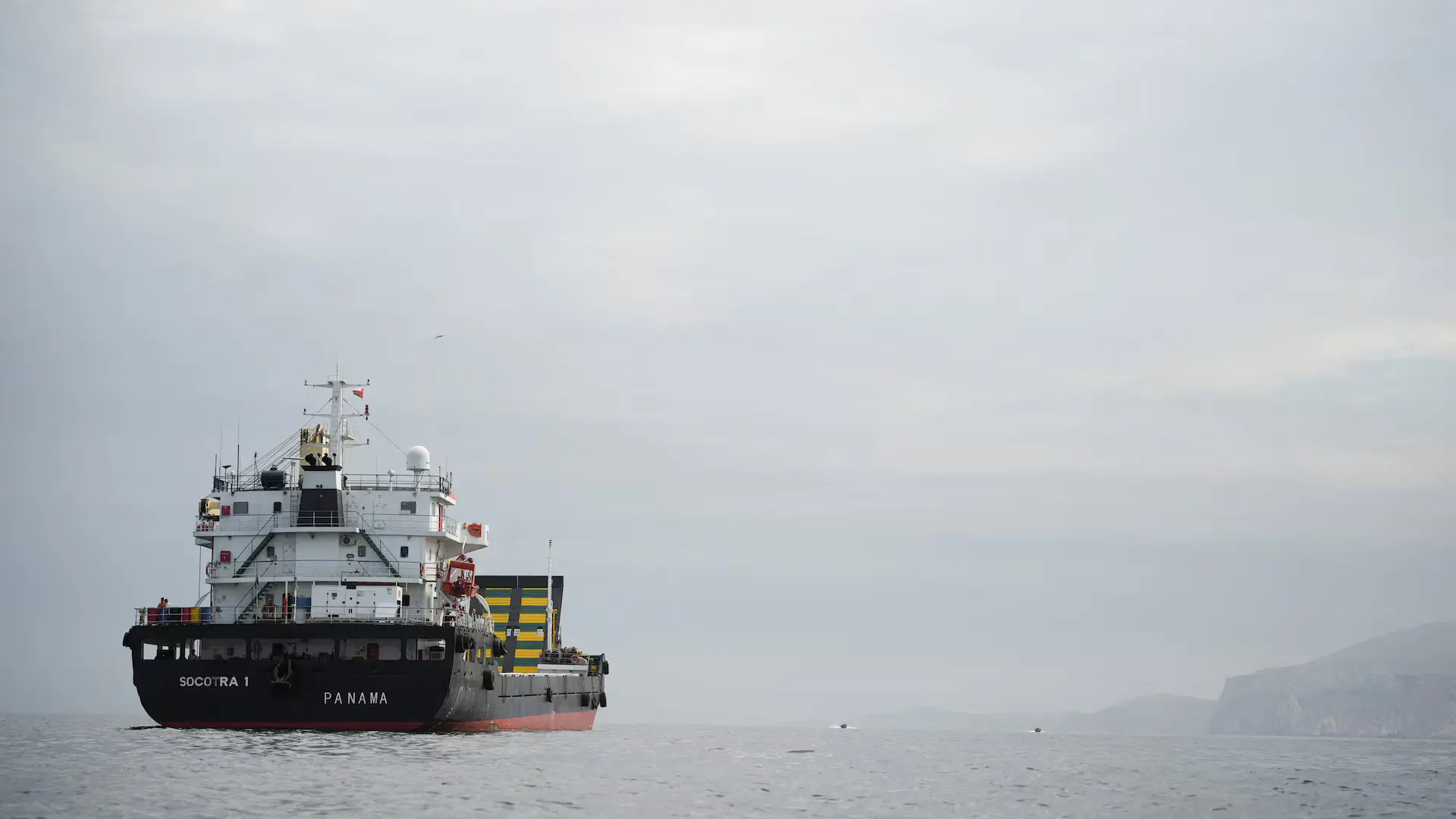
India’s room for maneuver is further compressed by external dynamics. The China–Pakistan strategic partnership has reduced its bandwidth for regional activism in the middle east, while renewed U.S.–Pakistan engagement introduces diplomatic irritants and complicates regional optics. Above all, India’s vulnerability to energy shocks—given its dependence on flows through the Strait of Hormuz—acts as a hard constraint on any adventurous policy shift.
Domestic considerations, though secondary, have also reinforced this cautious posture. India’s sensitivity to energy price shocks, given its dependence on supplies through the Strait of Hormuz, makes any external miscalculation politically costly at home. The presence of a large Indian diaspora across the Gulf further raises the stakes, as instability in the region can quickly translate into domestic economic and political pressures. In this context, a calibrated and low-risk approach is not merely a strategic preference but also a political necessity.
In contrast, Pakistan’s apparent activism stems from a fundamentally different strategic model. Positioned geographically between Iran and the Gulf, maintaining working ties with Tehran, enjoying defense linkages with Saudi Arabia and Qatar, and backed by China while engaging the United States, Islamabad has emerged as a politically low-cost venue for talks that might have been difficult to host elsewhere. Its facilitation efforts are enabled less by autonomous strength and more by external sponsorship.
This distinction is crucial. Pakistan’s role is that of a facilitator, not a shaper of outcomes. Its influence is derivative—enabled by external backing rather than driven by its own economic or strategic weight. What looks like bold diplomacy is, in reality, a different strategic choice: a willingness to trade a degree of autonomy for immediate relevance and support. India, by contrast, continues to bear the cost of maintaining autonomy, even at the expense of low visibility or the appearance of passivity and reflects a deliberate effort to preserve long-term strategic flexibility.
That said, the criticism within India is not entirely misplaced. Strategic autonomy, when overextended, can blur into strategic ambiguity. A policy, which by default, minimizes risk, can also limit initiative. The question, therefore, is not whether India should abandon strategic autonomy—it will not though—but whether it can exercise it more proactively.
However, there are scenarios and thresholds where India will be forced to move more decisively. A serious disruption in the Strait of Hormuz that sends energy prices spiraling would directly hit India’s economy and compel a stronger response. A large-scale crisis involving the Indian diaspora in the Gulf would necessitate active diplomatic engagement. And if the conflict escalates into a full-blown confrontation between a U.S.–Israel–Gulf bloc and Iran, India may find neutrality increasingly untenable, forcing it to tilt to protect its core interests. Even in such scenarios, India is unlikely to abandon strategic autonomy; at most, it will stretch and re-calibrate it.
Until such triggers emerge, however, India is likely to stay its current course—engaged, watchful, but not overtly interventionist. There is another, less discussed reason for this restraint: unpredictability. U.S. signaling, particularly under President Trump, has been inconsistent enough to make any high-visibility diplomatic role risky. India has little incentive to step into a process where outcomes—and narratives—can shift suddenly.
Pakistan may have had the spotlight, but India has the stakes. India, for now, is choosing to play a longer game—one that prioritizes flexibility over visibility, and positioning over posturing. Whether that proves to be wisdom or a missed opportunity will only become clear when the crisis moves from confrontation to settlement. That is when real influence—not optical relevance—will matter.
But if the conflict prolongs, the Indian economy is bound to get more and more exposed, India may not have much choice than to get off the sitting fence.