For nations aspiring to major power status, arms exports serve as a foundational mechanism for projecting geopolitical leverage and strategic influence. States primarily achieve great power status through military dominance, driven by technological innovation and global arms sales. This hard power is complemented by growing diplomatic influence, allowing states to advance their foreign policy goals and national interests more effectively. The shifting geopolitical landscape is descending into raw power politics, where the law of ‘might is right’ openly trumps territorial sovereignty and international rules. In this hostile environment, vulnerable states are left scrambling for new ways to protect themselves. Betrayed alliances and broken promises often force threatened states to adopt aggressive defensive postures to secure themselves. For aspiring great powers, this surge in defence spending opens a critical pathway to international status, allowing them to fulfil a primary requirement: becoming dominant arms exporters. Such is the case with India, which has emerged as the third-largest arms exporter to Europe. India is already drawing global attention with its growing BrahMos missile market among Global South countries. The ‘ReArm Europe’ initiative has provided a powerful catalyst for India’s defence sector, turning its arms export mission to Europe into a landmark success.
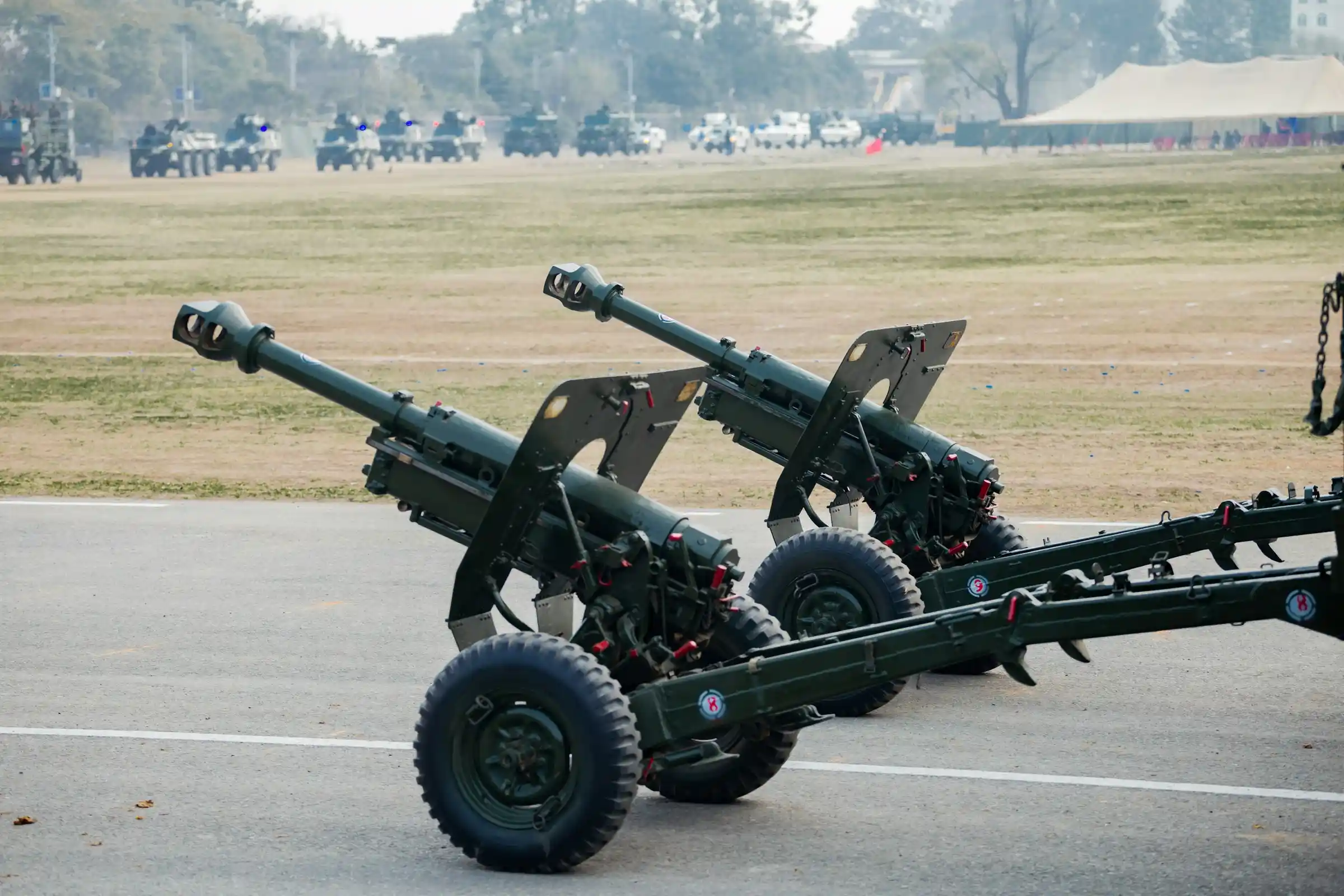
The dual pressures of the Russia-Ukraine war and the Trump administration’s push to shift the defence burden onto its European allies have severely strained continental stability. Alarmed by the potentially devastating fallout for Europe’s defence architecture, the European Parliament has moved to support the ReArm Europe Plan 2030, aimed at boosting Europe’s defence capabilities, formulating a long-term strategy, and pursuing strategic autonomy. The plan aims to strengthen defence procurement in critical areas such as ammunition and missiles, artillery systems, artificial intelligence, and cybersecurity. This crisis has created a massive market opportunity for India’s defence sector, fuelled largely by Europe’s urgent requirement for artillery shells and ammunition. In the four years since the Russia-Ukraine war began in 2022, India has exported at least $872 million worth of ammunition to Europe, a surge of more than 1,600% compared to the preceding four-year period. Driven by European countries replenishing their stocks and strengthening their defence capabilities, ammunition exports have climbed steeply since 2024. Analysts note that these shipments consist of military supplies ranging from artillery shells and small-calibre ammunition to mortars, propellants, and explosives. A 13-country bloc in Eastern and Central Europe, heavily relied upon to supply arms to Ukraine, has received three-quarters of India’s ammunition shipments. Trade Data Monitor reports that India has risen from 28th place four years ago to become the second-largest overall supplier of shells, mortars, propellants, and explosives to these nations, ranking just behind South Korea. According to Defence Secretary Rajesh Kumar Singh, the ‘ReArm Europe’ initiative has served as a major catalyst, significantly amplifying Indian arms exports to Europe. Looking ahead, he added that India intends to expand its integration into European defence procurement channels by leveraging joint partnerships and inviting foreign defence corporations to establish manufacturing operations in India. He asserted, “India intends to increasingly take part in Europe’s arms procurement program. Not directly, but by setting up joint ventures in Europe.”
India’s defence exports have experienced a massive 56-fold increase from the ₹686 crore reported in FY14. A recent PIB release details that in FY26 alone, Defence Public Sector Undertakings (DPSUs) and the private sector generated ₹21,071 crore (54.84%) and ₹17,353 crore (45.16%) of these exports, respectively. Backed by this momentum, the government is now targeting ₹3 lakh crore in annual production and ₹50,000 crore in exports by 2029. Bilateral and multilateral defence ties between India and Europe are strengthening, anchored by the India-EU Security and Defence Partnership (SDP), signed in January this year. This agreement has moved the relationship towards direct industrial and operational cooperation, highlighted by a March 2026 dialogue on managing joint military logistics and ongoing negotiations on sharing classified intelligence. As the ninth nation to sign an SDP with the EU, India has entered a framework that serves as a non-binding political instrument to boost defence industrial collaboration and interoperability. This milestone was further reinforced by the concurrent launch of the India-EU Defence Industry Forum. This regional momentum is also strongly reflected at the bilateral level, most notably through India’s deep partnership with France to co-develop advanced military technology, coordinate joint manufacturing, and strengthen maritime security. Data from the World Bank’s World Integrated Trade Solution platform reveals that Romania, Slovenia, and the Czech Republic led European purchases of Indian military hardware in 2025. Together, these three countries imported arms and ammunition valued at US$288.6 million.
Defence Minister Rajnath Singh has said that India has the potential to become a major global exporter of defence equipment within the next 25–30 years. Through systemic reforms, increased investment, and a strong push for self-reliance, India has enhanced its capability, capacity, and credibility as a rising defence exporter. Key policy initiatives, including the Defence Acquisition Procedure (DAP) 2020, the Positive Indigenisation List, and Innovations for Defence Excellence (iDEX), have successfully expanded domestic manufacturing, fostered innovation, and integrated the private sector into the defence ecosystem. Strategic policy reforms and a massive push for private sector participation have transformed India’s defence manufacturing landscape. Today, the nation’s robust indigenous ecosystem comprises 16 DPSUs, roughly 500 licensed defence firms, and nearly 17,000 MSMEs. A clear testament to the sector’s expanding capacity and improved ease of doing business is the tripling of defence industrial licences, which increased from 258 in 2015 to 834 by March 2026. This thriving ecosystem is not only consolidating domestic production and stimulating innovation but also advancing India’s goal of complete self-reliance. As Europe emerges as India’s latest major defence export destination, joint ventures are becoming India’s primary vehicle for entering European defence procurement markets. This dual-track strategy involves Indian firms establishing a manufacturing presence in Europe, alongside European defence majors entering the Indian ecosystem through arrangements that align with the ‘Make in India’ mandate. This cross-border collaboration offers mutual strategic advantages, providing Indian suppliers with the insights needed to navigate European procurement systems and establish themselves within local networks, while offering European firms access to India’s booming defence sector and valuable opportunities for joint production.
Europe has opened the door to India’s defence exports, but translating this opportunity into lasting strategic influence requires substantial domestic investment. India must support its exports with rigorous quality assurance and long-term technical assistance while upgrading its manufacturing base to develop complex technological capabilities. This transition hinges on a massive, uninterrupted infusion of capital into defence research and development (R&D). Securing sustained global competitiveness will ultimately depend on three pillars: reliable delivery, deep-tech indigenisation, and resilient international partnerships.