Geopolitics is unpredictable. The ongoing trajectory of China-India relations offers a clear pattern of strategic convergence towards accommodating coexistence without abandoning their fundamental interests. Neither Beijing nor New Delhi subscribes to undoing their disagreements, particularly over the border and regional influence. Yet, both are looking for selective engagement as a prelude to strategic outreach.
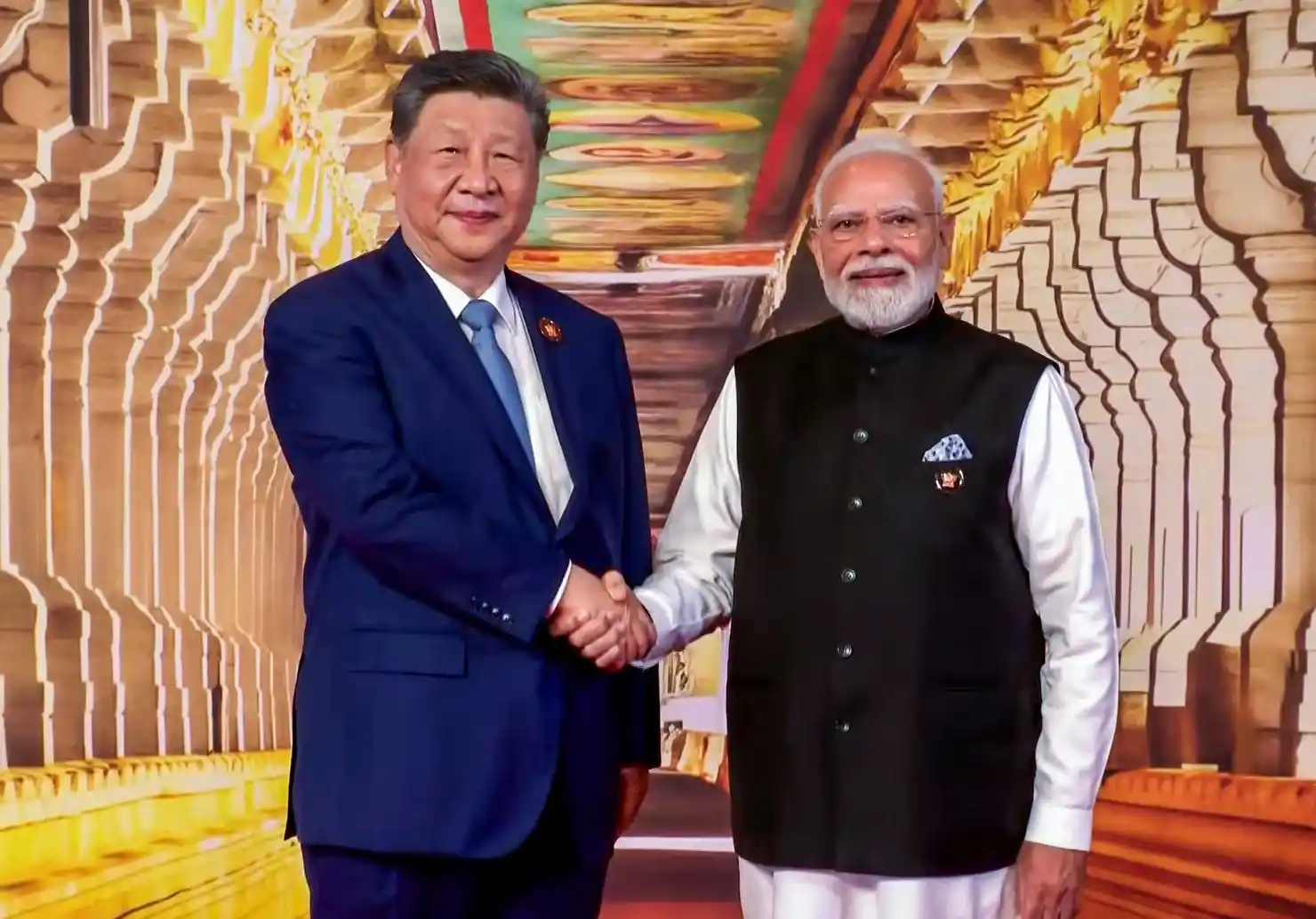
Chinese President Xi Jinping attended a meeting in New Delhi for the BRICS Summit on 12–13 September 2026 with Indian Prime Minister Modi. The sharing of the table and the timing signified the changing geopolitical environment of the East. After the 2020 conflict, India-China relations witnessed a period of strain. Despite this, the two Asian neighbours represented a common voice for the Global South together, even during the post-2020 conflict.
Last month, the 26th SCO Summit, 2026, was held in Bishkek, Kyrgyzstan, where the leaders of both India and China interacted with each other. The episode was well articulated, followed by Doval-Wang talks on eight consensuses between China and India: substantial progress on boundary delimitation, greater facilitation of the Kailash-Mansarovar Yatra, easier visa applications, peace on the frontier, restoration of direct flight connections, establishment of more communication hotlines, and rebuilding and resuming trade networks. Although the summit provides no evidence to claim good ties between India and China, it offers a better outlook for common interests in the SCO.
Interestingly, the first-ever China-India bilateral commanders’ interaction on 6 September at the Arunachal border was a positive outcome after the Bishkek Resolution.
Why does Washington have its eyes on it?
This is where developments between China and India become uncomfortable for Washington. The swift grouping of BRICS has emerged as considerably more important since its inception.
For Washington, the exorbitant factor lies in three parameters. First, the presence of Russia at the epicenter could stretch its tangible regional influence, as it has already formed a stronger Russia-China-India nexus of global cooperation. Second, Washington has heavily invested in India as an important geostrategic partner in the Indo-Pacific region to counter Beijing’s footprint. Perhaps India acknowledges the partnership with the U.S. but has resisted joining an alliance framework. The changing atmosphere of India-China relations could reduce U.S. intensity in the region and twist the prism or shuffle the cards for the U.S. in Asia.
Third, China’s whirlwind presence in regional influence comes straightforwardly. President Xi Jinping has created a diplomatic blitz of travel in recent years. Again, the U.S. introduction of a “final and conclusive” decision to impose 25% tariffs at unjustifiable rates was directed against several states, alongside the escalation of the U.S.-Israel confrontation with Iran (a BRICS member), which later erupted into energy insecurity and wider implications for regional dynamics. With the rare show of China-India firmness standing together against the U.S., the heat from the West begins. This turmoil puts a veiled spotlight on the vulnerabilities of a global system heavily dependent on a dollar-oriented financial architecture.
This brings us to U.S. President Donald Trump, who has repeatedly warned BRICS countries that their policies to alter the dominance of the U.S. dollar could result in 100% tariffs if member countries attempt de-dollarisation. But what is often missed is an understanding of India’s intention: support for the greater use of national currencies and digital-payment mechanisms, while stating that the dollar is strong but is not the sole option for transactions.
Russia and China, two seats in the same vehicle, support an alternative payment mechanism to the dollar that would reduce dependency on Western financial channels and accelerate the use of the ruble-yuan mechanism to develop financial infrastructure while bolstering the debt market.
The logic is simple and precise. New Delhi does not want any notion of permanent hostility in its relations with Beijing. A stable border would redefine the strategic outline for India to concentrate on technocratic investment, farming, economic development, maritime security in the Indo-Pacific, neighbouring countries, and a wider range of collaborative entities with Southeast and Central Asia.
India looks at strategic autonomy and national interests as two prime factors of proportional engagement. India looks to China for capital investment, technology, and resource sharing as important instruments for New Delhi’s supply security. India, indeed good at pharmaceuticals and engineering, seeks relations the other way as well. Beijing’s investments often open doors for employment and opportunities, creating a quality-job-oriented market rather than tilting towards heavy dependency.
Meanwhile, China too has an incentive to prevent ties from deteriorating further. Beijing holds strong relations with Russia, Central Asia, and the Middle East, as well as a strategic presence in the West and Southeast Asia. The rise of multipolarity, shaped by China, shows strength through economic and military presence. Maintaining a relatively stable relationship with India would reduce the possibility of strategic pressure from the Pacific end while providing substantial space for manoeuvre in the China-India itinerary, as well as scope for building a network of global partners.
The time has come when maintaining warm relations with India is highly valued, with Beijing interested in restoring relations with India. In parallel, India’s trade deficit with China has always been a central point of discussion. New Delhi’s cautious restrictions on Chinese investment and the shadow of the ‘Five Palm Theory’ appear as a realm of mistrust, depicting both countries as ‘two neighbours—too suspicious’. This explains why the current India-China engagement should not be interpreted as an absence of confrontation, but is better understood as an attempt at plausible rivalry.
The BRICS Summit itself is a diplomatic test for India: either it works or works against it. The relevance of China-India relations lies in a prime approach of ‘Mutual Strategic Pragmatism’. Resilience would require peace on the border, trusted military communication, and improving socio-economic ties, particularly on the issue of the trade deficit. Diplomacy is the green light for China-India relations, helping to prevent any unwanted conflict.
This spring brought an opportunity for the two Asian powers to look towards positive measures for coexistence. If they succeed, it may give Washington and Western powers sleepless nights, forcing them to rethink the choice between gradual dependence and a more appropriate interdependence.