Amid speculation that India has been caught off guard by the United States dropping “Indo” from the nomenclature of its Pacific Command, New Delhi’s apparent indifference reflects its equanimity on the matter. In fact, the US Indo-Pacific strategy has been primarily focused on the Pacific theatre and the containment of China, while the Indian Ocean has often appeared secondary in the Pentagon’s strategic formulation.
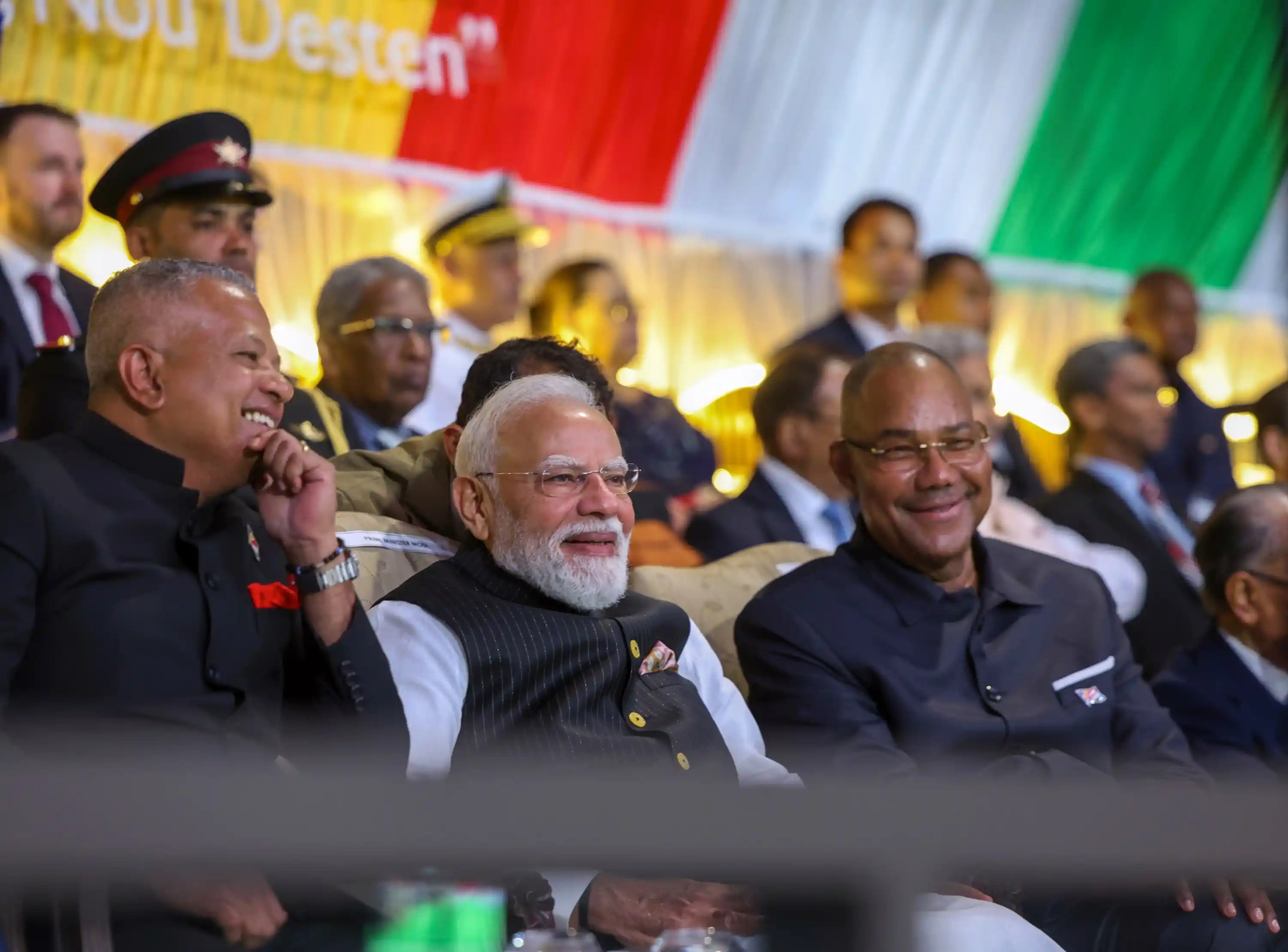
For India, however, the Indian Ocean remains the principal area of maritime-security concern, particularly as China’s presence in the region continues to grow. Instead of becoming entangled in a complex geostrategic debate, India appears to be charting its own course to safeguard its strategic interests in its immediate maritime neighbourhood. Prime Minister Narendra Modi’s visit to Seychelles last month was intended not only to strengthen bilateral relations but also to reiterate India’s commitment to serving as a net security provider in the Indian Ocean Region.
India was relatively slow to recognise the strategic value of the island nation. Prime Minister Modi became the first Indian prime minister to visit Seychelles in 2015 since Prime Minister Indira Gandhi’s visit in 1981. This long gap reflected India’s earlier preoccupation with continental-security concerns, its limited naval capabilities and the different geopolitical and economic circumstances of the time.
Consequently, Indian Ocean island nations beyond Sri Lanka took time to feature prominently in India’s maritime strategy. The strategy itself evolved gradually, in tandem with India’s expanding trade relations in the post-Cold War world. Today, these island countries, located along busy maritime trade routes, hold immense strategic value for India.
Seychelles, an archipelago of 115 islands in the western Indian Ocean, lies near vital sea lanes of communication connecting East Africa, West Asia and the wider Indian Ocean region. The security of these sea lanes is therefore crucial to India, making maritime cooperation with Seychelles indispensable.
During Prime Minister Modi’s recent visit, India and Seychelles expanded their defence and maritime partnership by strengthening cooperation in maritime security, surveillance and capacity-building. This included support for the Seychelles Coast Guard through the provision of equipment and the refitting of vessels.
Strategically, the island countries of the Indian Ocean are becoming increasingly important to India as New Delhi reinforces its commitment to being a net security provider in the region. The international security architecture is currently experiencing considerable disorder, with established norms being undermined by regional conflicts and deeper uncertainty marked by periodic episodes of coercion and retaliation.
India therefore recognises the need to formulate a comprehensive maritime-security strategy capable of responding to emerging contingencies. The Indian Maritime Doctrine 2025 highlights the concept of “No War, No Peace” (NWNP), which refers to a security situation arising from deteriorating relations with another state or a non-state actor and requiring heightened military readiness.
India can neither manage the region’s maritime-security challenges single-handedly nor afford to create unease among its maritime neighbours through an overtly aggressive naval strategy. The alternative is to invest in defence diplomacy and promote cooperative security mechanisms with Indian Ocean littoral states by strengthening their defence capabilities.
In the case of Seychelles, India gifted and installed six coastal surveillance radar systems across the country in 2015. These systems significantly enhanced the island nation’s ability to monitor its coastline and surrounding waters, thereby strengthening its maritime-surveillance capabilities. Such assistance is particularly valuable because India cannot monitor the vast maritime expanse of the Indian Ocean solely from its own coastline.
During Prime Minister Modi’s visit this June, India handed over a fast patrol vessel, ten utility vehicles and five Laser Radial boats. These assets are intended to strengthen Seychelles’ maritime security and improve its ability to address emerging security challenges.
India has also been assisting the Seychelles Coast Guard in enhancing its operational capabilities. Coast guards are increasingly being strengthened as law-enforcement agencies responsible for tackling illicit activities such as smuggling, piracy and illegal or unregulated fishing. Their role in regional security cooperation has also expanded, as has been seen in the Pacific theatre.
India gifted Seychelles the patrol boats PS Topaz in 2005 and PS Constant in 2014. In 2016, it gifted the Fast Interceptor Boat C-405, while in April 2021 it handed over the Fast Patrol Vessel SCG PS Zoroaster to the Seychelles Coast Guard, further strengthening the country’s maritime fleet. In 2018, India also gifted Seychelles a second Dornier 228 aircraft to enhance its maritime-reconnaissance capabilities.
Since India is not yet the sole security provider in the Indian Ocean Region, it has developed a cooperative-defence strategy with littoral states through defence assistance. This reinforces India’s commitment to serving as a net security provider by helping these countries improve their security preparedness.
In some respects, this strategy resembles the approach adopted by the United States towards its Pacific allies, whom Washington assists in strengthening their defence capabilities. Both strategies also have China in their sights.
Over the past two decades, China has expanded its presence across the smaller states of the Indian Ocean through infrastructure loans, port projects and defence agreements, thereby extending its influence into India’s maritime domain.
India cannot realistically seek to contain China in the Indian Ocean Region in the same manner that the United States seeks to do in the Pacific. This is due not only to India’s naval limitations but also to the reluctance of Indian Ocean littoral states to choose sides, unlike some countries in the Pacific theatre.
India consequently had to abandon its plan to establish a naval facility on Assumption Island in Seychelles following public opposition to a project that could have turned the country into an arena of Sino-Indian rivalry. Unlike several East Asian and Pacific nations, Indian Ocean countries generally do not display the same degree of strategic wariness towards China.
India has therefore chosen to respond to the China challenge by strengthening the defence preparedness of neighbouring Indian Ocean states such as Seychelles. This involves enhancing their patrol and maritime-surveillance capabilities and conducting joint military exercises.
Through this approach, India seeks to integrate Seychelles into its broader Indian Ocean maritime-security architecture without generating the kind of overtly confrontational atmosphere associated with the United States’ Indo-Pacific strategy.
India must also respond to growing scepticism regarding its claim to be a net security provider, particularly in the context of the spillover effects of the recent conflict in West Asia. It has therefore judiciously opted for defence diplomacy as a means of fulfilling its security role through the construction of a cooperative regional-security architecture.