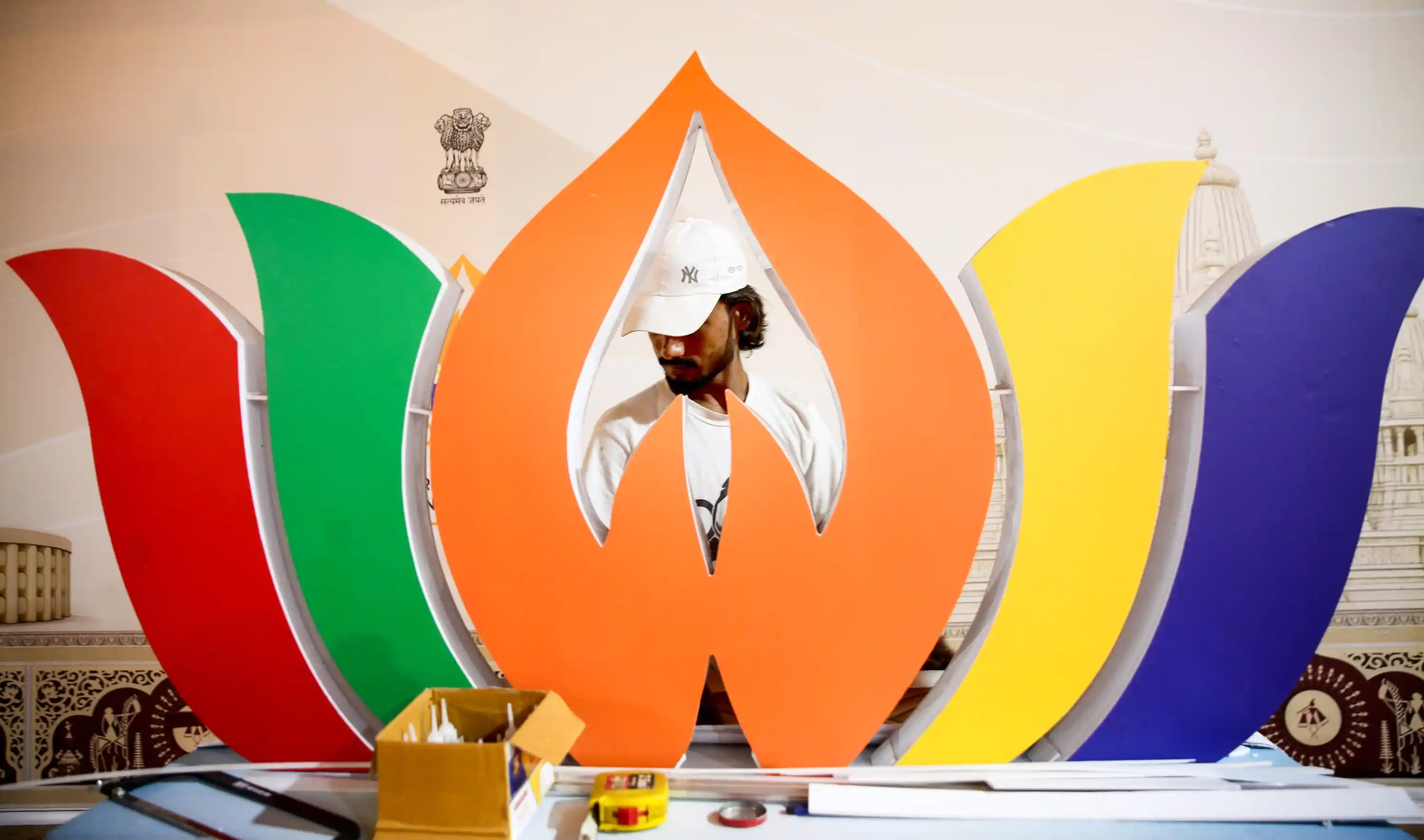
India prepares for the 18th BRICS Summit in New Delhi next month, the timing of which carries immense significance. It is being held amid crisis-ridden international relations entering an era dubbed ‘global un-order’, where shared rules are beset by episodic bursts of coercion and retaliation. As the system looks intoxicated with ‘might is right’ temerity, the onus increasingly falls on peace-loving emerging powers to salvage it from another macabre episode of bloodbath and destruction. India has traditionally been at the forefront of advocating international peace and cooperation and, as BRICS’ Chairman, upholds its theme of “Building for Resilience, Innovation, Cooperation and Sustainability”. India’s prudence in mustering support for the mission is also reflected in its invitation to non-members Bangladesh and Nepal to the BRICS outreach session. BRICS has a regular practice of inviting chairs of regional groupings to its summit, and Bangladesh is currently the BIMSTEC chairman, of which Nepal is also a member. Apparently, this gesture supplements the promotion of multilateral dialogue on shared global challenges, economic growth, and regional connectivity in the Global South, but it also offers an opportunity to both India and the invitees to reset their bilateral relations in a post-uprising era for the maximum benefit of each other and the subcontinent.
Post-uprising, both Nepal and Bangladesh present a different situation for India, with Nepal electing a mere five-year-old political party to power with a greenhorn leader as premier, while Bangladesh opted for one with whom India’s relations have historically remained frosty. However, India is determined to navigate through the mist to reset relations. But it seems easier said than done under the current circumstances. The newly elected Nepalese premier, Balendra Shah, refused to meet Indian Foreign Secretary Vikram Misri this May over a reported ‘stature issue’, which resulted in the postponement of the visit. Ultimately, the young prime minister held a meeting with the Indian envoy to Kathmandu, Ambassador Naveen Srivastava (whom he had refused to meet before), which was termed an effort to correct course and reclaim the customary diplomatic role of the prime minister’s office. Previously, the Nepalese premier triggered controversy by inviting the UK to mediate a territorial dispute with India, to which New Delhi objected, insisting against third-party mediation. While these gaffes on the part of the Nepalese prime minister may be the result of naïveté regarding diplomacy, the parallel diplomacy of his party chief, Rabi Limachhane, visiting India in early June underlined the new government’s inclination towards starting relations afresh. With curiosity running wild over whether Balen Shah will uphold the tradition of choosing India as his first foreign destination as prime minister, opinions in Nepal suggest that a delay in the visit complicates the process of ironing out wrinkles in relations. Meanwhile, India has pledged over Nepali Rs 800 million to Nepal for eight high-impact development projects in areas including education, health and agriculture. There is speculation about External Affairs Minister S. Jaishankar’s possible visit to Nepal to extend an invitation to the Nepalese premier for the upcoming BRICS Summit in New Delhi. Nepal’s invitation to the summit will help the Himalayan republic integrate further with the Global South initiative and will also boost its traditional balanced foreign policy approach, with New Delhi and Beijing available on the same platform.
The case is far more complicated with Bangladesh, as Prime Minister Tariq Rahman reportedly plans to skip the BRICS Summit over the extradition issue involving Sheikh Hasina. There is a positive note in Bangladesh over the BRICS invitation to the country, which is interested in becoming a BRICS member, and the fact that it would give the Bangladeshi premier an opportunity to hold discussions with leaders including Prime Minister Narendra Modi, Chinese President Xi Jinping and Russian President Vladimir Putin. However, there are opinions in Bangladesh pushing the ball into India’s court for creating a conducive ambience for any positive outcome regarding the visit. This author had predicted previously that the issue of extradition of the former premier would cast a shadow over bilateral relations. The process of the visit got ‘vitiated’ amid the latest controversy over Sheikh Hasina’s 5th August press meeting in India, which outraged Dhaka. Dhaka’s insistence on a ‘propitious environment’ for Rahman’s visit underlines its demand for the resolution of the issue. The fact that discussions between the two governments over the visit got disrupted by the Hasina event indicates that the issue will remain a glitch in relations until resolved. The 2024 uprising in Dhaka was triggered by the alleged misrule of the Hasina government, with India also considered culpable for supporting the regime. As the election early this year was conducted amid strong anti-Hasina and anti-India sentiment, Dhaka feels the Rahman government cannot appear to compromise the country’s national dignity by going against public sentiment, nor can it risk criticism from the opposition. Opposition Jamaat has already accused the government of rehabilitating the Awami League.
However, bilateral relations, especially between neighbours so contiguously situated, cannot be run on a single issue. If Hasina is an emotive affair for Dhaka in view of domestic compulsions, it has more pressing issues, such as renewing the Ganges water treaty (which expires this December), settling border tensions and reviving commercial contacts with India (in FY2024-25, Bangladesh’s exports to India went up by 12.1%, reaching $1.76 billion, amid a strong anti-India ambience). Besides, Tariq Rahman’s priority of tackling the economy requires non-confrontational relations with India. Dhaka recently turned to India for help with additional diesel supplies to tackle the power crisis in the country. The matter is equally serious for India, which has a new Bangladesh to handle, with no Awami League on the scene for the foreseeable future. India, of course, cannot hand over a political figure like Sheikh Hasina to Bangladesh, where she awaits capital punishment, in the wishful expectation that Bangladesh would turn into an all-weather friend afterwards. However, there are opinions in India favouring transcending the Hasina border.
It is important for both the Nepalese and Bangladeshi premiers to attend the BRICS Summit, since it will not only boost the South Asian joint effort to integrate with the Global South mission but will also unveil a new era of bilateral relations among the three neighbours committed to a prosperous future for the subcontinent. However, given the tumultuous nature of bilateral relations among the South Asian neighbours, they all have a responsibility to handle relations with care and caution while advancing regional collaboration to promote the Global South mission.