
In the global imagination of revolution, Che Guevara stands as a conflicted, often distorted, symbol: a guerrilla who later governed, a militant who became a minister, a man who picked up the gun but also built schools, led land reforms, addressed the United Nations, and headed Cuba’s National Bank and Ministry of Industries. His afterlife in pop culture has been shaped by the photograph that captured his charismatic defiance, cigar in hand, asthma inhaler in pocket – an image that allowed the world to romanticise the revolutionary even when they disagreed with his methods.
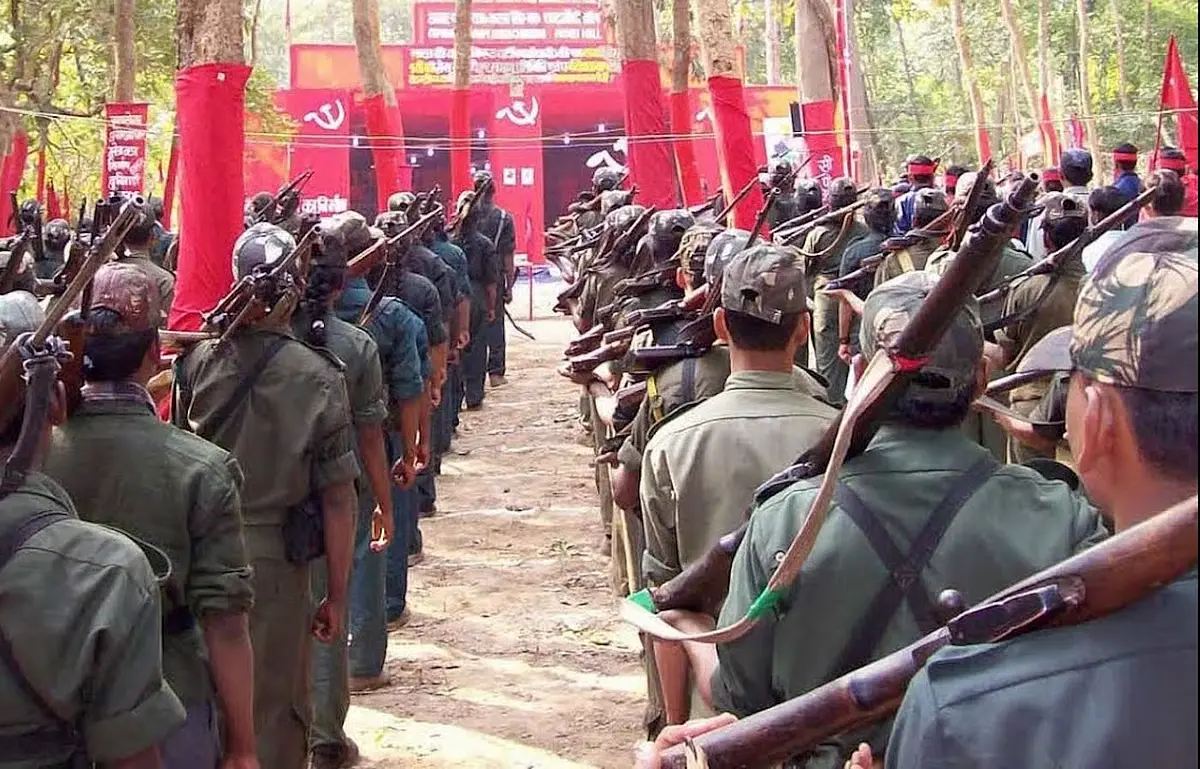
Contrast this with the figure of Madvi Hidma, the elusive commander of the Maoists’ Battalion No. 1 in Chhattisgarh. There is no charismatic portrait, no mystical aura, no political programme beyond violence. His legacy is not one of statecraft or reform but of terror, ambushes, massacres, and the systematic destruction of the very institutions that keep a society alive. He held no administrative role, instituted no policy, drafted no roadmap for tribal welfare. When he died in an encounter on 18 November 2025, there were few protests in Maoist circles, but outside that echo chamber, he left behind no cult of admiration, only a trail of blood and one of the worst development records in India.
And yet, ironically, it is not the people of Bastar, those who suffered his violence, who romanticise Hidma. It is the urban, privileged, often English-speaking youth scrolling on Instagram and debating in university cafeterias who project revolutionary purity onto a man whose actions ensured that an entire region remained trapped in medieval levels of poverty and fear.
This dissonance demands a reckoning, both with who Hidma was and with what his so-called “people’s war” actually did to the people in whose name it was waged.
The Commander of Nothingness
A roll call of Hidma’s operations reads like a grim political almanac of the 21st-century Indian state.
In April 2010, 76 CRPF personnel were killed in a ravine in Dantewada—one of the deadliest attacks on Indian security forces. Three years later, a Congress convoy was shredded in Jhiram Ghati, taking with it 32 lives, including senior political leaders. In 2017, Maoist squads under his direction executed hit-and-run assaults on Burkapal and Sukma, killing dozens. In 2021, a massive ambush involving up to 500 Maoists left 22 security personnel dead in Sukma–Bijapur. The pattern continued through 2023 and 2024: IEDs, encirclements, sniper fire, improvised explosives hidden under red soil and fallen leaves.
Nowhere in this ledger is there a vaccination camp protected, a school rebuilt, a water line restored. Guerilla war can be romanticized only by those who never witness its banal cruelty. For Hidma, the gun was not a detour on the way to statecraft; it was the entire journey.
The Devastation Under Maoist “Rule”
To understand Hidma’s impact, one must leave the cities where his legend circulates and travel into the geography that produced him: the southern districts of Chhattisgarh—Sukma, Bijapur, Dantewada—home to some of the most disenfranchised communities in India.
Between 2005 and 2025, the period of peak Maoist dominance, these districts experienced what can only be described as engineered underdevelopment. Maoism in Bastar was not merely a rebellion against the state; it became a systematic demolition of everything that might have allowed tribal communities to escape the forest’s isolating gravity.
Schools Reduced to Ash and Memory
More than 1,200 government schools in the region were blown up, burned, or forcibly shut down by Maoists. In Sukma, the gross enrolment ratio for classes 9–10 fell to 19.4 percent, the lowest in India. By 2023, literacy in the district stood at 42 percent—with female literacy at a shocking 33 percent.
Revolution, in this version, required children to remain uneducated because educated children might dream beyond the forest.
Health Infrastructure Crushed Under Fear
Over 650 anganwadis and 120 health centres were destroyed or abandoned. Infant mortality in Sukma reached 52 per 1,000 live births, nearly double the national average. Institutional deliveries languished at 38 percent, leaving women to give birth in unsafe conditions because nurses feared Maoist reprisals.
The romance of insurgency has little patience for pregnant women.
A Banking Black Hole
In Abujhmad—the dense Maoist sanctuary—banking was a prohibited act. Maoists punished attempts to open accounts or bring in mobile banking services. By 2019, only 11 percent of Sukma households had an operational bank account. MGNREGA wages went unpaid for years because workers feared travelling to government camps.
The forest canopy became a ceiling deliberately kept low.
Markets Extorted into Collapse
Hidma’s squads levied a “revolutionary tax” of 5–15 percent on everything from tendu leaves to construction contracts. Bastar’s extortion economy touched ₹200–300 crore annually. Tendu leaf collection—a vital source of tribal income—dropped by 60–70 percent as traders refused to enter Maoist zones.
Revolution rarely survives the price of logistics.
Hunger as a Political Strategy
Nearly half of all children in Sukma and Bijapur were stunted by 2021. Hundreds of PDS shops never opened for years; rations were looted or blocked. People walked miles for rice that never arrived.
When ideology meets the stomach, the stomach always loses.
Jobs Banished by Bullets
For two decades, not a single medium or large industry emerged in the region. Rail lines, pipelines, and mines faced repeated attacks, delaying projects for a decade or more. Tribals were not protected from displacement; they were protected from employment.
The Geography of Abandonment
By 2023, NITI Aayog’s poverty index ranked Sukma, Bijapur, and Dantewada among the five poorest districts in India, with more than 70 percent of their population facing multidimensional poverty.
If this were liberation, one shudders to imagine oppression.
The Urban Myth of Hidma
So why, despite all this, does a sliver of India’s educated youth project onto Hidma a fantasy of revolutionary purity?
Partly, it is the allure of rebellion without consequence. In cities, rebellion has become a lifestyle accessory—something to wear on a tote bag or announce in a panel discussion. Many of Hidma’s urban admirers have never spent a night in a village without electricity, never walked a forest path mined with IEDs, never met the widow of a CRPF jawan killed in an ambush. Their knowledge of Bastar is filtered through WhatsApp summaries and seminar syllabi that freeze Maoism in the amber of 1960s romanticism.
There is also the matter of performative guilt. Liking a social-media post about Maoist “resistance” is the cheapest way to wash away the stain of privilege. It neatly reorganizes the moral universe: the state becomes fascist by definition, the insurgent righteous by default. That this formula collapses when confronted with data—literacy rates, infant mortality, malnutrition—rarely matters. Algorithms reward posture, not statistics.
Finally, there is the seductive asymmetry of violence. Urban radicals admire the gun precisely because it is fired in someone else’s forest. It is easier to fetishize the AK-47 from a city balcony than to understand what it means for a teacher in Dantewada who fears entering a village, or for a tribal mother who cannot reach a hospital because the road has been blown up.
Hidma promised liberation. What he delivered was terror and fear.
And yet, from distant cities, the fantasy persists: a revolutionary who never betrayed his cause, a soldier of the people. But to believe this, one must never ask what became of the people themselves.
In Bastar, the legend of Hidma ends where the real revolution should have begun—at the school door that never reopened, at the health centre that never rebuilt, at the child who learned the alphabet of hunger before any other.
Revolution, it turns out, is easy to romanticize from afar. It is much harder to endure up close.

