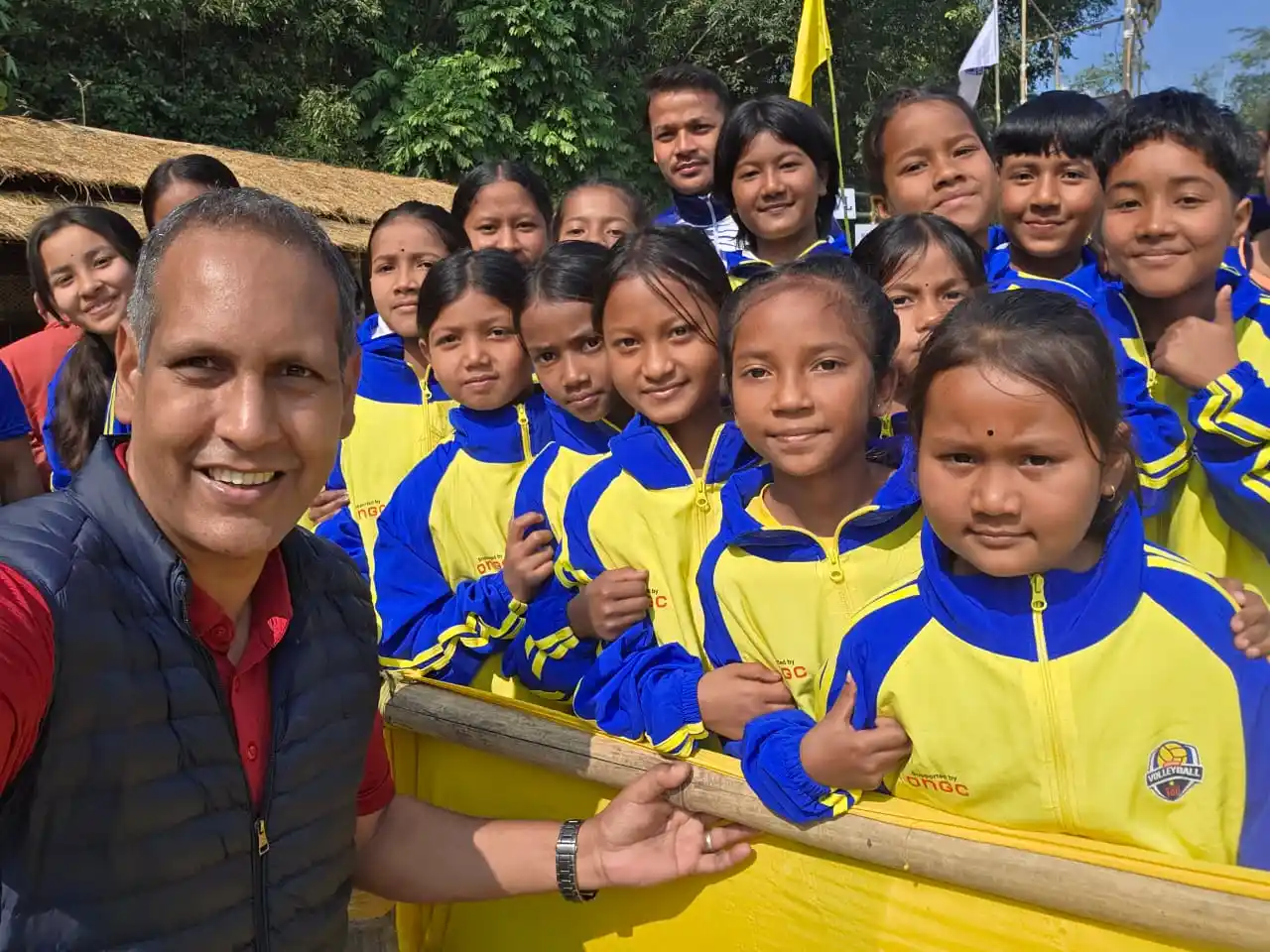
When Abhijit Bhattacharya conceived the idea in 2019 of taking volleyball to the grassroots level in Assam, few believed in him. Even those who encouraged him were uncertain about the prospects. Many thought it was nearly an impossible dream for the former national volleyball player.
One of the main reasons was that, unlike football and cricket, volleyball was not particularly popular in the state’s villages.
Moreover, his target group consisted of boys and girls up to the age of 16, most of whom came from economically disadvantaged backgrounds. Besides school activities, many children — especially girls — were heavily involved in household chores and helping their parents with day-to-day work, leaving them with little time for sports and extracurricular activities.
But Abhijit, an alumnus of Sainik School Goalpara, former captain of the Indian volleyball team, and currently serving with ONGC, was determined to take volleyball to the remotest villages of Assam.
Thus began the Brahmaputra Volleyball League (BVL) in 2020, with the objective of providing a platform for rural children and encouraging grassroots community participation. The league is organized by Assam Volleyball Mission 100, a non-profit public charitable trust specifically aimed at nurturing young boys and girls from villages.
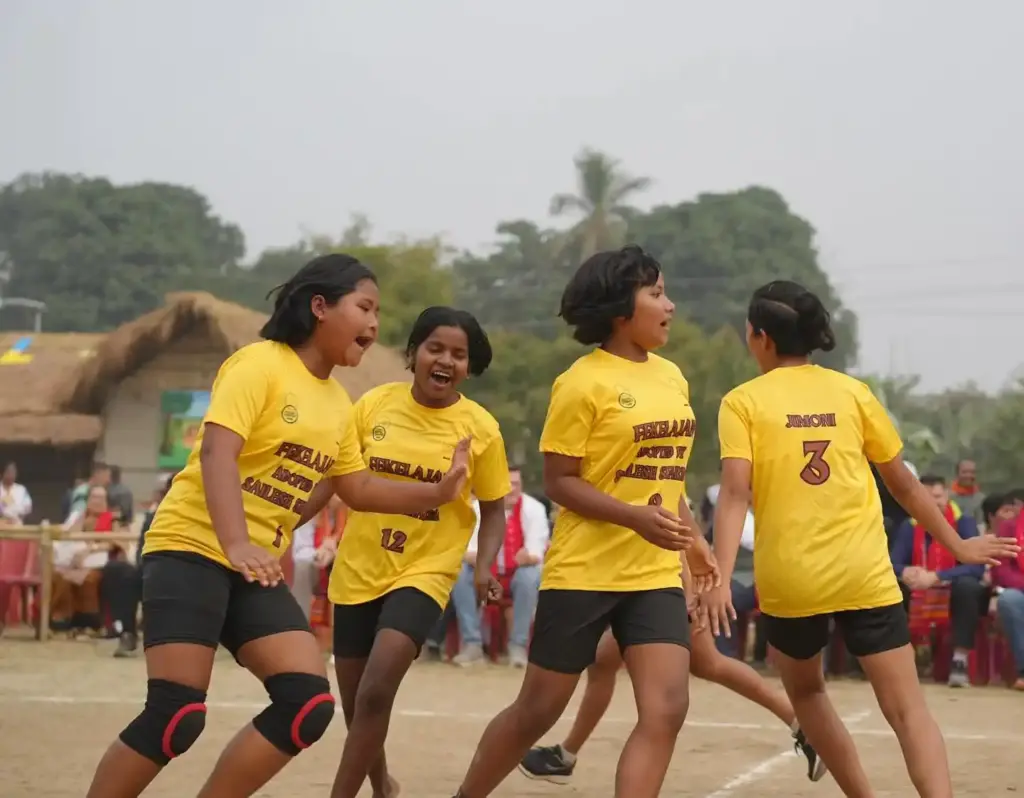
The journey, however, was far from easy.
Abhijit had to motivate parents, teachers and, most importantly, children to take up volleyball. He needed volunteers and former players who could not only train the children but also mentor them — all without remuneration. Financial resources were required to provide basic necessities such as volleyballs and nets.
Unlike football and cricket, space was not a major challenge, as a volleyball court requires comparatively less area. However, other difficulties included arranging accommodation during tournaments, transportation, food, and logistics.
Impressed by the success of BVL Seasons 1 and 2, corporates such as ONGC, OIL, and Philips Radio Company came forward with support in the form of sports kits, lighting arrangements, and other assistance, giving further impetus to the tournament. Yet, the primary support continues to come from the local communities, particularly in organizing home-level matches under the district-level home-and-away format.
Though the initial phase was difficult, Abhijit remained convinced that he could make the initiative succeed. He reached out to sports enthusiasts and well-wishers for contributions of volleyballs. In the beginning, he managed to collect 100 balls, which were distributed among 100 villages — marking the start of his unique journey.
He also devised an innovative “team adoption” model, under which any individual or group could adopt a team through a one-time contribution of Rs 15,000.
For the smooth conduct of the league, the state has been divided into eight zones. Each zone includes three to four districts, and the best teams from each category qualify for the Super League. Thus, eight top teams compete at the state level.
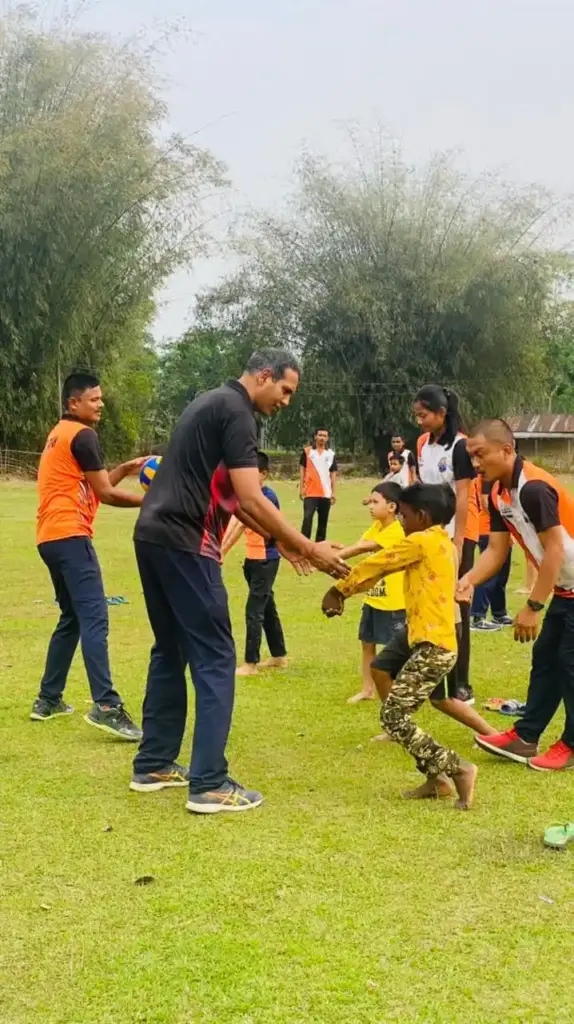
The teams are divided into two age categories — below 12 years and 12 to 16 years. Abhijit even introduced customized volleyballs for children under 12 so that they would not struggle with or get injured by standard-sized volleyballs.
The competition is conducted at three levels — District, Zonal, and State (Super League). Match schedules are decided by the participating teams themselves, depending on their convenience, rather than by the central committee. Every match is broadcast live on internet platforms using smartphones.
When the project began in 2020, only 50 teams participated in Season 1. By 2025, the number had increased to 428 teams. By the end of the year, Abhijit expects participation to rise to 600 teams.
He is confident that the numbers will continue to grow as more sponsors, impressed by his determination and commitment, have come forward to support the initiative.
In 2025, BVL took another major step forward with the introduction of the BVL Plus Challenger Series, organized on a franchise model. During the BVL season, which concluded in early 2026, nearly 800 matches were played, with more than 4,500 players participating.
In 2025, the Brahmaputra Volleyball League was recognized by the FIVB (Fédération Internationale de Volleyball) as the “Largest Community Grassroots League in the World”.
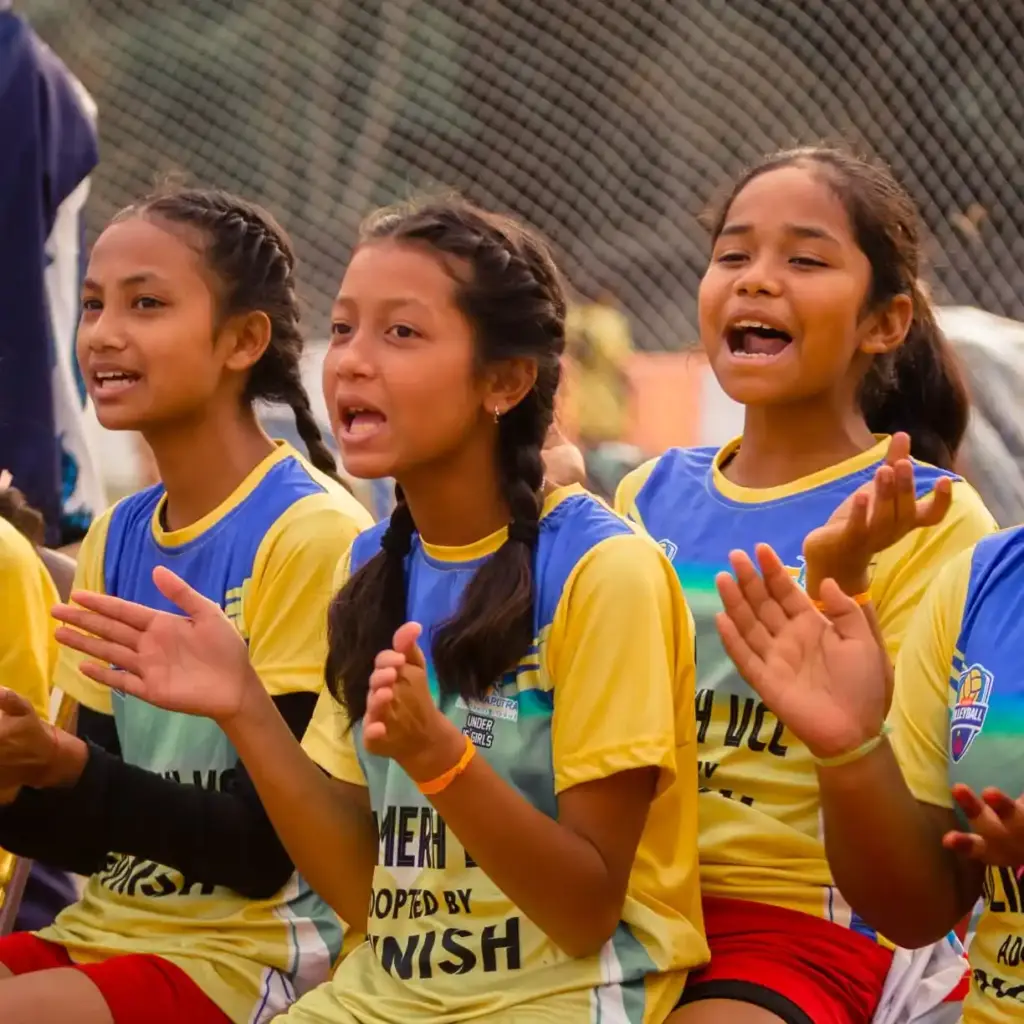
The same year also saw the beginning of the UNICEF-BVL collaboration, which uses volleyball as a platform for child development, inclusion, and social awareness. Through this partnership, BVL integrates sports with key messages related to health, education, gender equality, child protection, and the prevention of child marriage.
One of the most distinguished features of the BVL is that, unlike leagues such as the IPL and ISL, which are largely top-down models centered around cities, commercial interests, media, and profitability, the BVL represents a bottom-up movement that seeks to take sports from villages to cities.
Abhijit takes immense pride in the fact that many players in Assam’s state volleyball teams — both boys and girls — are products of the BVL system. Yet his objective is not merely to produce one or two outstanding players but to encourage as many rural boys and girls as possible to participate in sports.
It is hoped that many other states will adopt Abhijit’s model to inspire greater participation in sports among children in rural India.