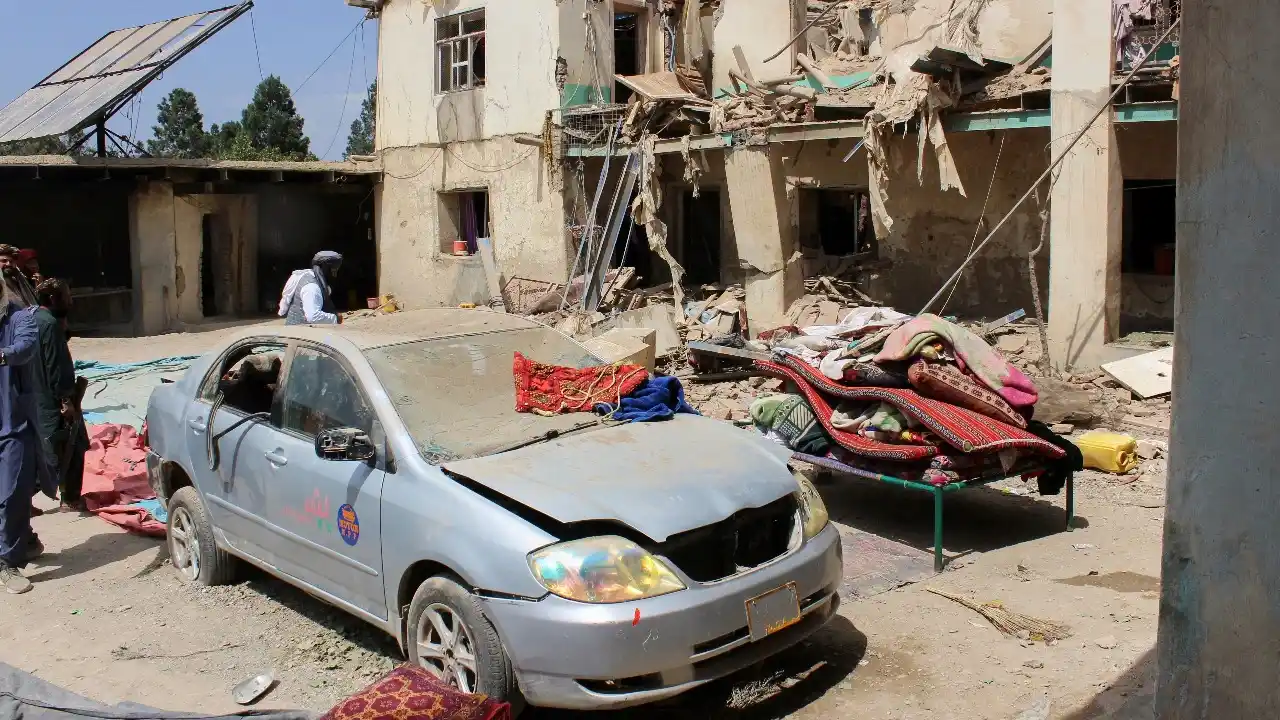
On 10 October, explosions occurred in Kabul and Afghanistan’s southeastern Paktika province. The Taliban government accused Pakistan of violating Afghan sovereign territory and national airspace. The Taliban Ministry of Defence characterised the attacks as violent and provocative. The Taliban condemned the incidents and stated that Pakistan would be held responsible for any escalation. Diplomatic tensions over the past decade have led to frequent conflicts and skirmishes between the two countries. Hostility intensified after August 2021, when the Taliban assumed control of the Afghan government.
What happened?
At approximately 10 PM on 9 October, an explosion occurred in the Abdul Haq Square area of Kabul, a location near government buildings and the national intelligence agency. Pakistan used “precision airstrikes over major urban and border areas in efforts to rupture insurgent leadership and hideouts in the Durand Line in Paktika, which were responsible for the attack on the sovereign land of Pakistan. They claim it as an act of self-defence. The Taliban Ministry of Defence reported no casualties but indicated that aerial attacks targeted civilian areas, with property destruction documented in Paktika. Taliban spokesperson Zabihulla Mujahid stated in press conferences that Afghanistan retains the right to defend its territory. The Taliban further asserted that such actions risk destabilizing the region and called for a thorough investigation.
Islamabad justified the airstrikes by citing an imminent terrorist threat originating from Afghan territory. At a press briefing, Pakistan’s military spokesperson, Lieutenant General Ahmed Sharif Chaudhry, stated that the operations were necessary to safeguard the Pakistani population and would continue as required. He urged Afghanistan to ensure that its territory was not used for acts of terrorism against Pakistan.
Islamabad’s stance
According to Pakistani officials, the strikes were aimed at preventing planned attacks by the Tehrik-e-Taliban Pakistan (TTP), including elements led by Noor Wali Mehsud, who was reportedly among those targeted in Kabul. Details regarding the operation were not disclosed.
Pakistan dismissed reports of civilian casualties, insisting that its actions were legitimate measures of national defence. Addressing Parliament, Defence Minister Khawaja Asif reiterated that, unless the Taliban government took concrete action against militant groups, Pakistan would be compelled to take whatever steps were necessary to protect its national interests.
What is India’s Stance?
The incident that took place late on Thursday, 09 October, comes at a very crucial time when Mr Amir Khan Muttaqi, the Taliban Foreign Minister, was on a six-day visit to India. This is the first time since the Taliban took over has a Minister has visited another country. He held separate meetings with Dr. S. Jaishankar, the External Affairs Minister of India, and Ajit Doval, the National Security Advisor.
After discussions in New Delhi with Afghan Foreign Minister Amir Khan Muttaqi, India’s External Affairs Minister, Dr. Jaishankar, described cross-border terrorism as a common threat faced by both India and Afghanistan. He stated that Pakistan’s recent actions had undermined regional stability. He called for collective efforts to address terrorism in all its forms.
Dr. Jaishankar also referred to Afghanistan as a “contiguous neighbour”, reaffirming India’s continued support for the country’s sovereignty, peace, and development. In its official statements, India expressed solidarity with Afghanistan and urged all sides to resolve their differences through dialogue and diplomatic engagement.
The recent airstrikes constitute a significant escalation in the already strained relationship between Pakistan and Afghanistan. India’s explicit support for Afghanistan was demonstrated through senior-level meetings and joint statements. Afghanistan has reiterated its commitment to territorial integrity and dialogue. Pakistan maintains that its military operations are acts of self-defence against terrorism. India continues to support Afghan sovereignty and advocates for regional cooperation against extremism.
Each government has articulated its response in accordance with domestic and strategic priorities. Despite divergent narratives, all parties have emphasized the need to manage the situation to prevent further instability. Pakistan’s airstrikes in Afghanistan underscore the interplay of strategic, security, and diplomatic factors shaping South Asian relations. Afghanistan has called for the protection of its sovereignty. Pakistan asserts the necessity of self-defence. India seeks to promote Afghan stability and collective action against terrorism. Official statements from Kabul, Islamabad, and New Delhi are essential for understanding the evolving situation and the underlying diplomatic dynamics in the region.