
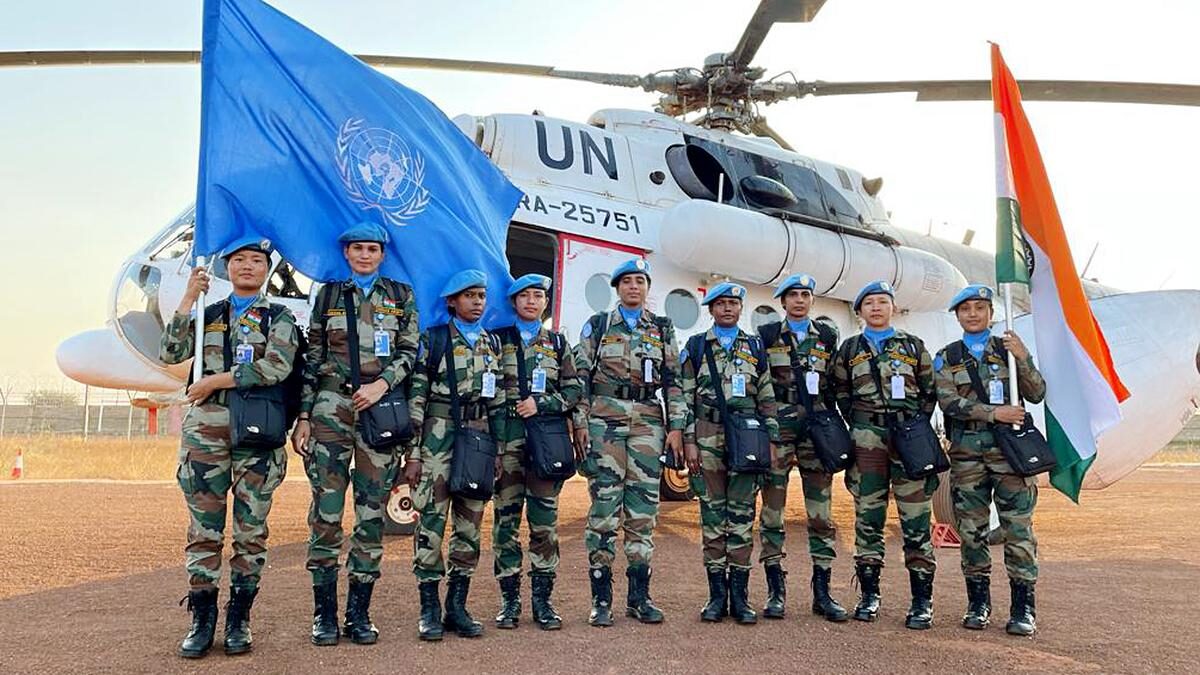
India stands at the cusp of a transformative moment on the global stage, poised to empower women peacekeepers in the United Nations while advancing gender parity and leadership with real institutional backing. This is not mere rhetoric; it reflects a profound shift in Indian society and its armed forces where women’s empowerment is a tangible, evolving reality deeply woven into the fabric of national pride and security.
The recent prominence of women officers during Operation Sindoor perfectly encapsulates this change. In a powerful and symbolic move, two distinguished women, Wing Commander Vyomika Singh of the Indian Air Force and Colonel Sofiya Qureshi of the Indian Army’s Corps of Signals, were chosen to lead the briefing on the precision strikes in Pakistan that followed the brutal April 22 terror attack in Pahalgam. The operation itself was named “Sindoor” as a tribute to the women who lost their husbands in the attack, making it a deeply resonant moment that women were leading India’s military response. Wing Commander Singh, a helicopter pilot with over 2,500 flying hours in challenging terrains, and Colonel Qureshi, the first woman to lead an Indian Army training contingent at the major Force 18 exercise, showcased not just operational authority but the strength of women leaders commanding strategic and communicative roles in the military sphere. This leadership is emblematic of a much broader change and sends a clear message: women are intrinsic to India’s defense narrative, not just as participants but as front-runners and role models.
India’s push toward gender parity in defense is backed by substantive policies and action on the ground. The rise of women in the armed forces has been remarkable: from a mere 3,000 women officers in 2014 to over 11,000 today across the Army, Navy, and Air Force. Domains once considered inaccessible, such as combat roles in the Air Force starting from 2016 and full branch participation in the Navy since 2022, including submarines and combat aviation, now have growing numbers of talented women officers proving their mettle. Crucially, the Supreme Court has mandated that women officers must have the option for permanent commission (PC), eliminating a discriminatory barrier and enabling women to pursue full career tenure and leadership responsibilities equivalent to their male counterparts.
India’s commitment to women’s leadership is also visible and active in peacekeeping. As one of the largest troop contributors to UN Peacekeeping Operations globally, India has been a pioneer in deploying women peacekeepers across military, police, and civilian roles. This legacy dates back to the 1960s when Indian women medical officers were among the earliest in UN missions. In 2007, India raised the first all-female formed police unit in Liberia, which not only bolstered local security but symbolized an empowered, inclusive model of peacekeeping. Today, more than 150 Indian women peacekeepers serve in vital UN missions across Congo, South Sudan, Lebanon, and beyond. Their work transcends traditional peacekeeping; these officers foster community trust, address gender-based violence, and enhance the credibility and effectiveness of peace missions worldwide. Major Radhika Sen’s recognition as the UN’s “Military Gender Advocate of the Year 2023” underlines the international impact and leadership India’s women peacekeepers embody.
Beyond the battlefield and peace zones, the stories of women like Flight Officer Gunjan Saxena—the first woman officer to fly in a combat zone during the Kargil War—and Lieutenant Colonel Priya Singh, who led covert operations in Special Forces, inspire countless young women to envision themselves as protectors of the nation and leaders in traditionally male bastions.
This makes India a compelling example of what real women empowerment entails—a blend of opportunity, recognition, policy, and visible leadership. Women officers are no longer relegated to secondary roles or limited tenure. They lead, inspire, and break barriers every day, be it commanding troops on foreign soils, piloting aircraft in combat zones, or orchestrating precision military operations. The Indian Armed Forces’ gradual and consistent inclusion of women in operational, combat, and leadership roles is matched by India’s external policy and practice to elevate women peacekeepers in UN missions, directly contributing to global peace and gender equality.
The ongoing United Nations Women Military Officers Course (UNWMOC-2025) hosted in New Delhi, with women officers participating from 15 countries alongside a dozen Indian women officers, stands as a testament to India’s increasing role in championing female leadership in peacekeeping. This initiative strengthens capacities, shares Indian experiences, and sets standards for other nations to follow in closing the gender gap in militaries worldwide.
India’s model is resonant because it is based on respect for equality enshrined in constitutional principles and reinforced by pragmatic, strategic reforms within one of the world’s largest militaries. It is far more than symbolic—it is structural and ongoing. Women officers are empowered not as a token but as essential leaders shaping India’s security outlook and the global agenda for peacekeeping.
To other nations and global leaders, India’s example sends a powerful call: true peace and security are achievable only when women have equal footing in defense and peace operations. Empowering women is not just about gender parity; it is a smarter, more inclusive, and effective way to lead and govern. India’s women peacekeepers and armed forces officers are proof that empowerment transforms societies by advancing justice, strengthening security, and inspiring generations.
As India continues to uplift women in the military and global peace efforts, the country stakes its claim as a champion of equality, leadership, and peace—showing that women’s empowerment is no abstract ideal but a dynamic force shaping the future of nations and the world.

