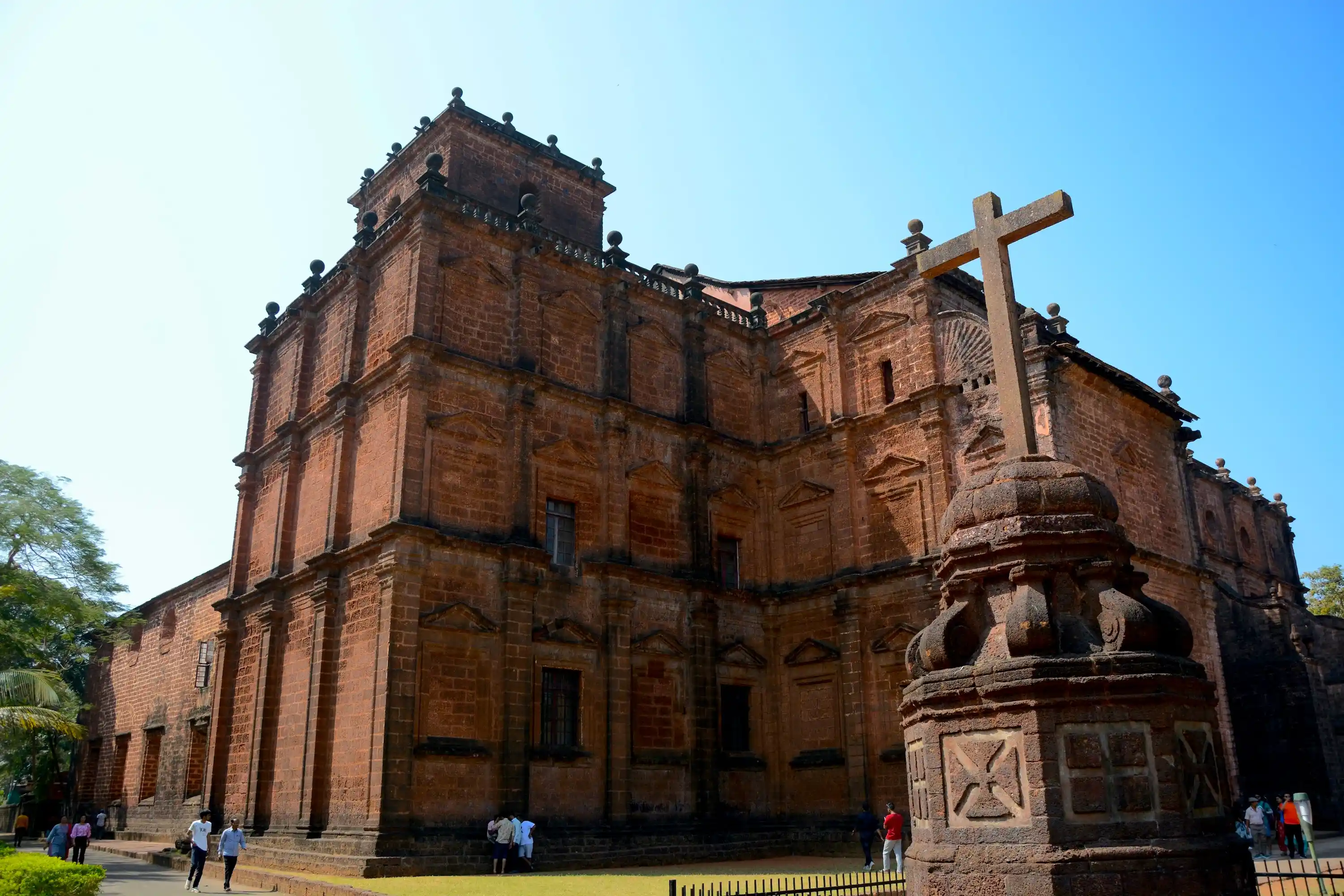
Tucked away in the historic heart of Old Goa, the Basilica of Bom Jesus stands as a towering testament to architectural brilliance, enduring faith, and India’s multifaceted history. With its unplastered, weather-stained laterite facade, the 17th-century edifice presents an imposing yet deeply inviting presence. While Goa is often celebrated for its sun-soaked beaches and laid-back coastal charm, the Basilica offers a profound counter-narrative—one that roots the region in a global web of spiritual, artistic, and cultural exchanges.
Constructed between 1594 and 1605, the Basilica of Bom Jesus—meaning “Good” or “Holy Jesus”—is a triumph of Baroque and Mannerist architecture in Asia. Emerging during the height of the Portuguese empire in India, the church was built by the Jesuits to serve as a spiritual anchor in the East. Its exterior, constructed from coarse reddish laterite stone alongside refined basalt accents, deviates from the traditional whitewashed structures typically associated with colonial Goan architecture.
Step inside, and the muted exterior gives way to breathtaking grandeur. The basilica features a towering, gilded main altar dedicated to St. Ignatius of Loyola, the founder of the Society of Jesus, overlooked by an emblem of the Infant Jesus. Below, intricate woodwork, delicate floorings, and historical paintings display a seamless fusion of European design and Indian craftsmanship. Local artisans brought their own nuances to the European motifs, leaving behind a subtle artistic synthesis that echoes throughout the nave.
The soul of the Basilica, however, lies in its connection to St. Francis Xavier, the co-founder of the Jesuit order who led extensive missionary efforts across Asia. Following his death in 1552 on Shangchuan Island in China, his body was brought to Goa. Today, his sacred relics rest within an ornate silver casket inside a magnificent multi-tiered marble mausoleum, crafted by the 17th-century Florentine sculptor Giovanni Battista Foggini.
For centuries, the presence of St. Francis Xavier—affectionately known locally as Goencho Saib (Lord of Goa)—has transcended strict religious boundaries. The Basilica is not merely a Christian sanctuary; it is a shared cultural landscape. Devotees of all faiths, from across India and the globe, flock to its halls to pay homage, seek blessings, or simply absorb the serene atmosphere. This harmonious blending of traditions highlights how seamlessly the monument has woven itself into India’s broader tapestry of pluralism, where sacred spaces frequently bridge diverse communities.
Recognized as a UNESCO World Heritage Site as part of the Churches and Convents of Goa complex, the Basilica is both a living place of worship and one of the nation’s premier heritage destinations. Millions of travelers visit each year, drawn by its historic weight and architectural splendor.
Preserving a 400-year-old structure constructed from porous laterite in Goa’s heavy monsoon climate is a delicate, ongoing endeavor. The custodian of this national treasure, the Archaeological Survey of India (ASI), undertakes systematic annual maintenance and conservation efforts to protect the fabric of the Basilica. These meticulously executed interventions ensure that the site retains its structural integrity without compromising its historical authenticity.
This dedicated stewardship was notably highlighted in 2024, when the ASI completed extensive conservation and restoration work ahead of the solemn decennial Exposition of the relics of St. Francis Xavier. Occurring only once every ten years, the Exposition draws millions of pilgrims and international visitors to Old Goa. The painstaking restoration—spanning waterproofing, delicate structural repairs, and the conservation of historical artwork—ensured the monument was fully prepared to welcome the global influx of pilgrims while safeguarding its heritage for generations to come.
As the morning light filters through the high windows of the Basilica of Bom Jesus, illuminating dust motes above centuries-old timber floors, the weight of history feels palpably alive. It stands not as a static relic of a bygone colonial era, but as a vibrant, breathing component of India’s living heritage. By marrying European architectural traditions with local artistry, and harboring a legacy that cuts across religious lines, the Basilica remains an irreplaceable gemstone in India’s cultural crown.