The famous Sanskrit poet Kalidasa, in his play Abhijnana Shakuntalam, mentions silk imported from China as a fabric favoured by the rich and the elegant. The word used is Chinanshuka, and for a long time, people thought silk reached India from China during the Gupta period, though earlier textual references suggest it arrived much earlier.
Kautilya's Arthashastra, the treatise on statecraft and administration that was compiled in the time of the Mauryas, mentions taxes on silk weavers.
Recent archaeological excavations have pushed the story of Indian silk even further back. Traces of this thread have been found in recent excavations at Indus Valley sites. It is reasonable to conclude that Indians had discovered how to weave silk at almost the same time as the Chinese.
The Sanskrit word for silk is kausheya — yarn obtained from a cocoon. In Tamil, patta identified the same material used for the robes of royalty, high priests and monks. However, the mystique of Chinese silk is so overpowering that history has highlighted only the Chinese contributions to sericulture.
The untold story of Indian silk is how the weaving of silken yarn triggered internal migration in India more than a millennium ago, in the days of the Pallavas and Cholas. These mighty rulers invited master weavers from the Saurashtra region of Gujarat, who had honed their skills on fine cottons, to elevate silk weaving to sublime heights in their realm.
Al-Biruni chronicled in his travelogues that many weavers had migrated to Chanderi, a settlement at the crossroads of trade routes that connected the northern part of the subcontinent to the peninsular south and linked its eastern and western borders marked by nature.
This internal trade on land and along waterways seamlessly extended the reach of the historic Silk Road and the maritime Spice Route. Indian silks have played a very significant role in inter-civilisational encounters in East Asia, Arabia and Europe.
The demand for silk remained strong through the rise and fall of empires. Silk robed the ‘living gods’ who ruled by divine birthright and adorned their tents and palaces with luxurious drapes. Silken banners and flags fluttered ceremonially—an integral part of the pageantry on battlegrounds.
Indian silks were in high demand during the Byzantine period. Not only were silks exported to Rome and Egypt, but Indian silk weavers were also much sought after. This was not a one-way street. Silks and brocades from Baghdad and Constantinople were imported into India. In the 16th century, Akbar the Great set up a unique karkhana in Fatehpur Sikri and invited weavers from Gujarat to interact with other masters. Technology and aesthetic sensibility evolved constantly due to such exchanges.
Silk, like gold, the noble metal, enjoys the status of a noble fabric. It resists moths, is not easily inflammable and is exceptionally durable. It is not surprising that, like devdaru (cedarwood, considered the timber of the gods), it is associated with divinity. Traditionally, sacred books and manuscripts were wrapped in silk.
Silk can be worn year-round. Cool to the touch in summer, it allows the body to breathe naturally. In winter, it can wrap you in a pleasantly warm embrace.
Different parts of India are famous for different varieties of silk — mulberry-based heavy silk with rich hues, muga, eri, and tussar.
Bhagalpur in Bihar is famous for tussar, also called raw silk. It has a slightly coarser texture and a natural off-white complexion that is quite appealing. Tussar silk is also produced in Jharkhand, Chhattisgarh and Odisha. The silkworms that produce this yarn feed not on mulberry but on the leaves of arjun, asan and sal trees in the jungle.
Assam takes pride in its muga silk, which has a natural golden sheen recalling a pleasing shade of coral.
An exotic variety of ‘non-violent’ eri silk is produced in Assam and Meghalaya. For this, the silkworms are fed on castor leaves. These insects emerge from their cocoons on their own and do not have to perish to part with the precious thread.
Silk came to Kashmir via the proximate Silk Road, though many ancient texts mention the local production of silk from worms fed on mulberry. Kashmir pioneered the blending of silk and pashmina yarns to create exotic textiles, further embellished with colourful embroidery recalling patterns encountered in papier-mâché.
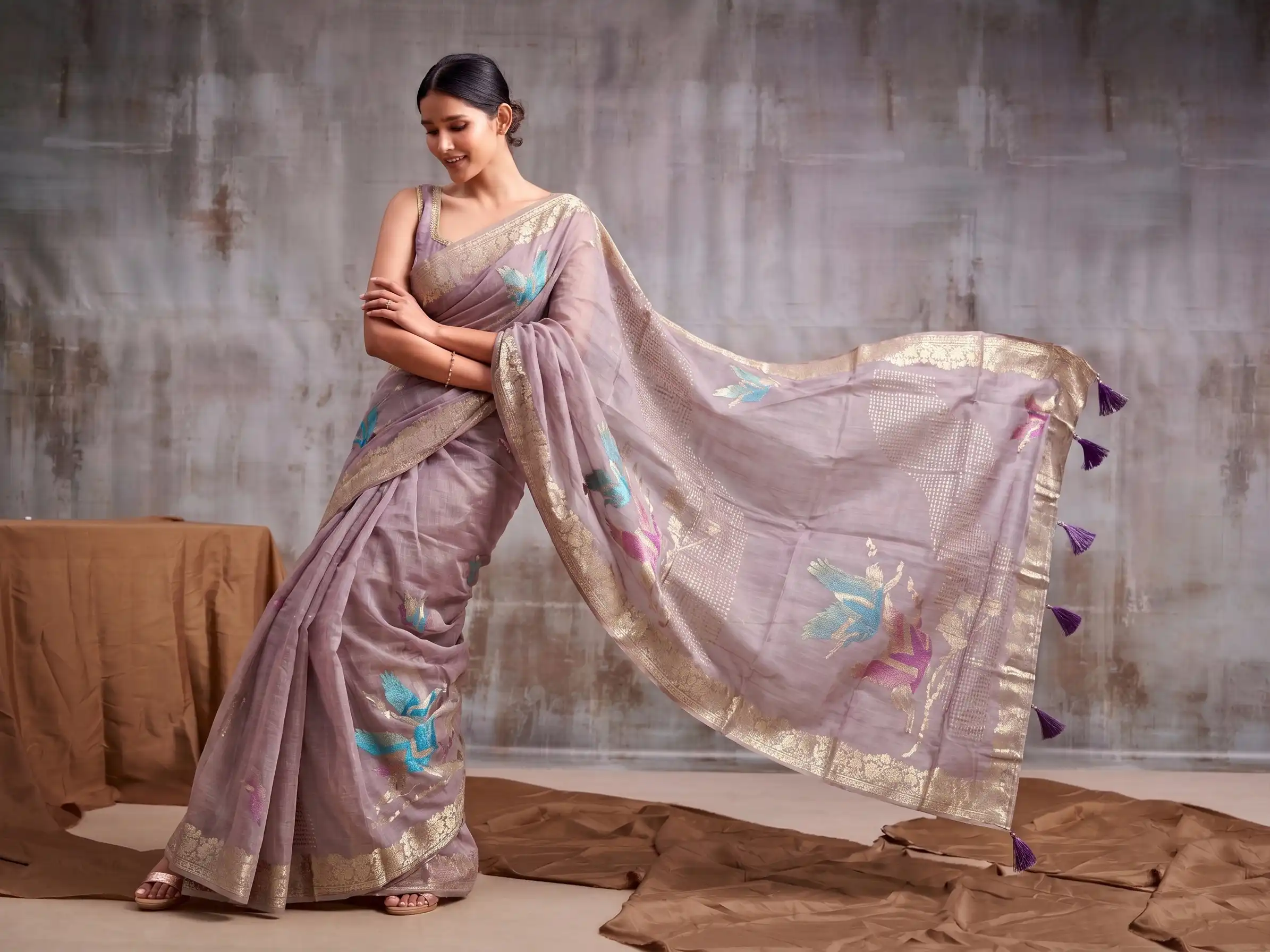
Heavy silk saris, also known as bridal or temple saris, woven in the temple town of Kanchipuram, have for centuries been treated as priceless heirlooms to be passed on from one generation to another. The same is true of Banarasi silk saris, with intricate designs woven in threads of pure silver and gold. The intermingling of motifs, patterns and designs bears testimony to cross-border cultural exchanges.
India, the second-largest producer of silk in the world today, has conserved this priceless legacy well.