As a concerned Indian citizen who hails from the Kashmir Valley, I cannot ignore the glaring hypocrisy of the Pakistani government. Islamabad routinely lectures New Delhi on the administration of the Union Territory of Jammu and Kashmir, internet restrictions, and counter-terrorism operations against cross-border militancy. Yet in Pakistan-occupied Jammu and Kashmir (PoJK), the same state has responded to civic demands for better governance, affordable electricity, political representation, and implementation of earlier agreements with bans under anti-terrorism laws, lethal force, prolonged communication blackouts, and assaults on press freedom.
The current unrest, led by the grassroots Joint Awami Action Committee (JAAC), intensified around June 2026. Protesters sought practical improvements in daily life and greater local autonomy rather than any cross-border agenda. Pakistani authorities proscribed the JAAC under anti-terrorism legislation, placed hundreds of activists and others on the Fourth Schedule watchlist (affecting identity documents, banking, and movement), arrested scores, and imposed internet and mobile shutdowns that lasted weeks or longer.
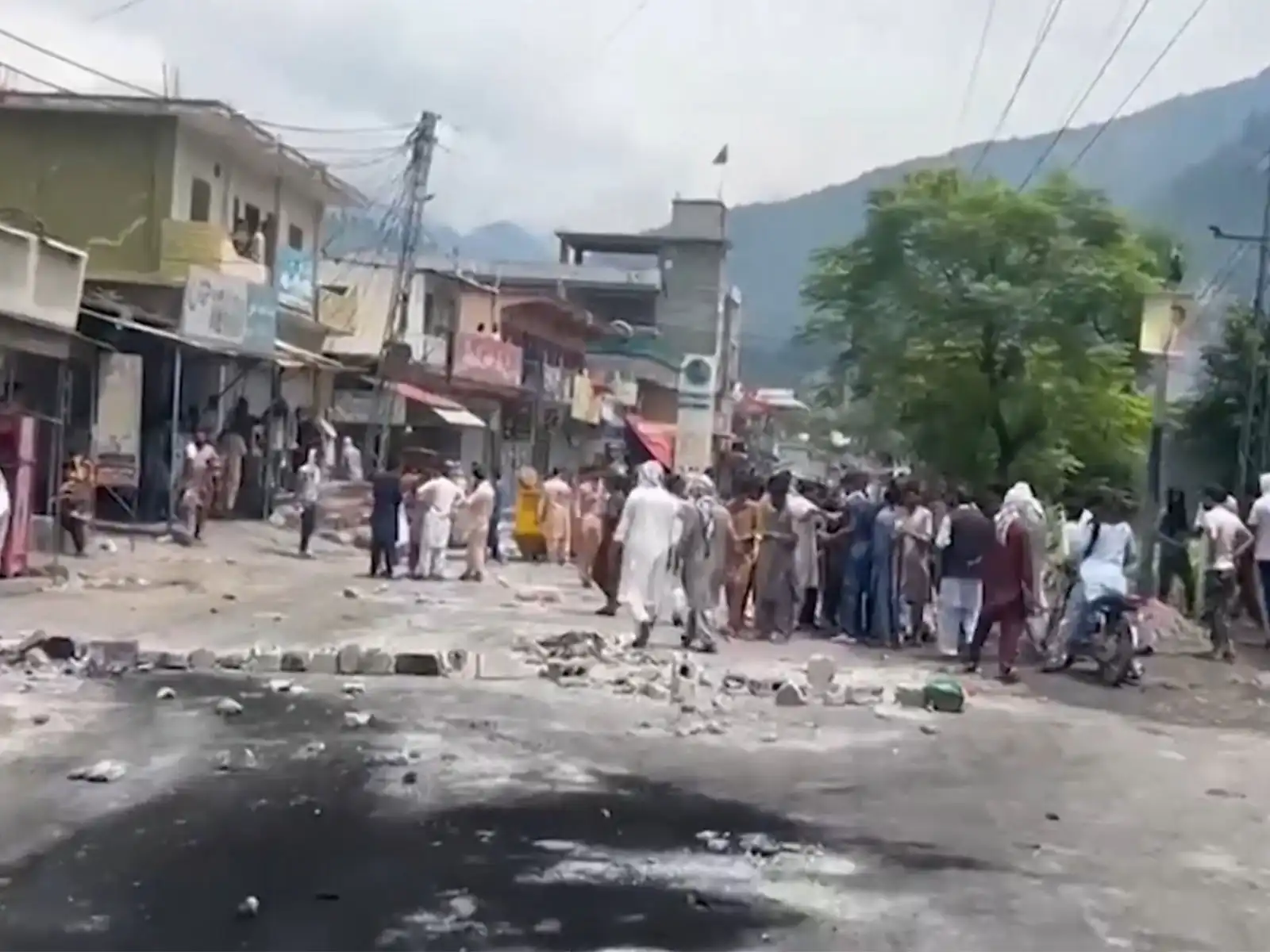
The most recent flashpoint came on 5 November 2026 in Rawalakot. Security forces (including Pakistan Rangers and local police) moved against months-long sit-ins. Reports cited by Amnesty International and local activists describe the use of live ammunition and drones, resulting in the deaths of at least three protesters and injuries to more than a dozen others. Broader tallies from UN human rights experts earlier noted around 96 protester deaths since June (plus security personnel), while groups such as the Jammu Kashmir Human Rights Observatory and diaspora activists have documented higher cumulative figures amid the blackouts.
Amnesty International’s open letter of 13 November 2026 to the newly elected PoJK Prime Minister Syed Iftikhar Ali Gilani highlighted “swift and systematic measures” since June that restricted civic freedoms. It argued that the JAAC ban violates rights to association, expression, and peaceful assembly under the International Covenant on Civil and Political Rights, and called for prompt, independent investigations into the use of lethal force. Six UN human rights mandate holders had already questioned the terror designation of the JAAC in September, expressing concern that counter-terrorism powers were being used against political and labour advocacy.
Press freedom has been a particular casualty. Journalists including Sohrab Barkat, Razi Tahir, Muhammad Saif, and Syed Farhad Ali Shah were detained or targeted for covering the protests—some under cybercrime or preventive detention laws, with reports of individuals seized from offices or held without proper production in court. Reporters Without Borders documented internet outages, the blocking of Al Jazeera’s website, and the new Foreign Media Facilitation Guidelines 2026, which require prior no-objection certificates for reporting outside major Pakistani cities and allow accreditation to be revoked for vague reasons related to “ideology” or “public order.” The Human Rights Commission of Pakistan (HRCP), in its August 2026 fact-finding report “Civic Spaces under Strain in AJK” and subsequent statements, linked the unrest to governance failures, institutional distrust, and a forceful response that included arrests of journalists and severe connectivity restrictions. HRCP’s recent annual meeting also called for the withdrawal of the JAAC proscription.
On-the-ground chronicling has been severely constrained by these blackouts and restrictions. Local journalists have described difficulties verifying casualties and reaching affected areas; some independent or YouTube-based reporters faced detention precisely for attempting to document events. Diaspora voices such as those from the United Kashmir People’s National Party and activists like Dr Amjad Ayub Mirza have amplified allegations of enforced disappearances, withholding of bodies (sometimes contingent on families declaring the deceased “terrorists”), and the deployment of paramilitary forces against peaceful civic sit-ins. Independent verification remains difficult precisely because of the communication controls Pakistan has imposed—controls it frequently condemns when India deploys them against terror-related threats in the Union Territory.
This is the core of the hypocrisy. Pakistan positions itself as the champion of Kashmiri self-determination and human rights while maintaining tight military and political control over PoJK. Demands for electricity, jobs, and genuine local representation are met with the same toolkit—anti-terror labelling, internet blackouts, mass detentions, and lethal force—that Islamabad decries across the Line of Control. Meanwhile, Pakistan has long faced credible accusations of nurturing cross-border terrorism into Indian-administered Jammu and Kashmir, a reality that has necessitated security operations and, at times, temporary connectivity restrictions on the Indian side. India’s post-2019 integration of the Union Territory has been largely peaceful, with free and fair elections and democratic institutions set up to combat rampant corruption due to terror funding. The contrast with PoJK’s “Azad” (free) branding and the suppression of civic protest there is stark.
The pattern is not new, but the scale and duration since mid-2026, the involvement of international bodies such as Amnesty and UN experts, and the documented pressure on journalists make it impossible to dismiss. Pakistan’s government cannot credibly lecture India on Kashmir administration, internet policy, or counter-terrorism while its own forces treat civic governance demands in PoJK as an existential threat requiring drones, live fire, and media blackouts. Authentic accountability requires independent investigations, restoration of communications and press access, dialogue with local voices rather than proscription, and an end to the double standard. Until then, the loudest Kashmir rhetoric from Islamabad will continue to ring hollow to those watching events on both sides of the Line of Control.