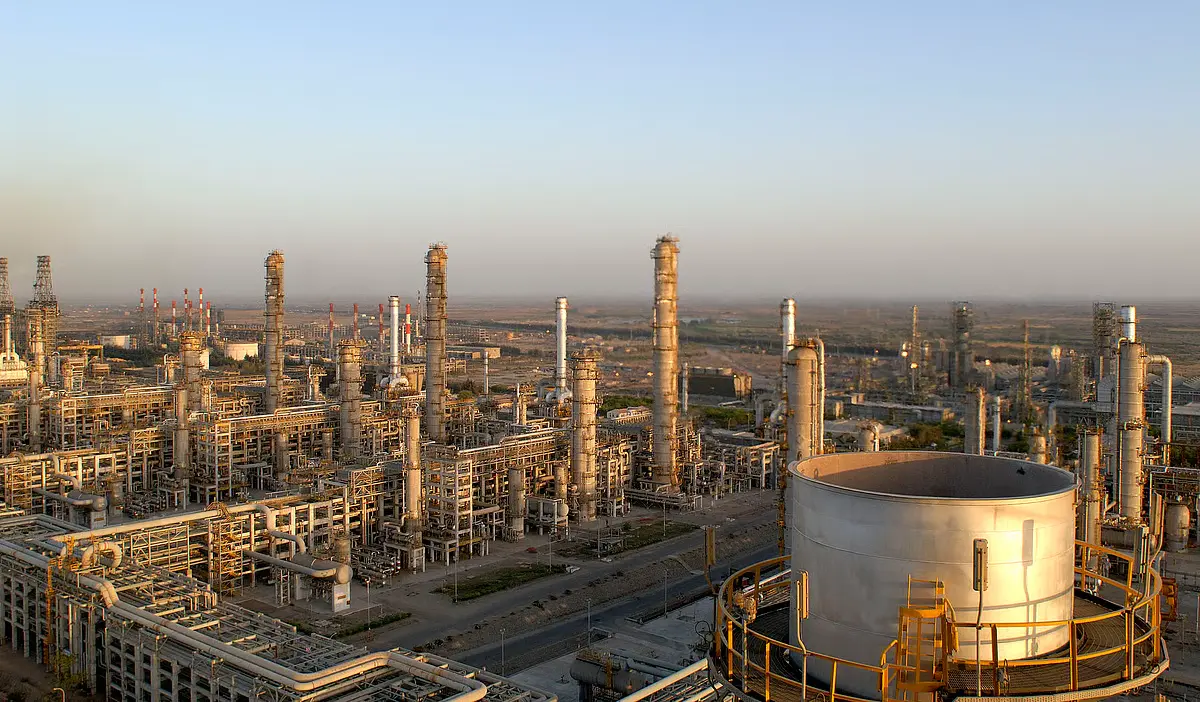
As Washington threatens secondary tariffs and lectures New Delhi over Russian crude, it is overlooking the structural shift that gives India genuine leverage: refining capacity. While the United States and Europe close or mothball plants, India is expanding into a global refining hub. That asymmetry turns India’s oil import dependence into a strategic asset rather than a pure vulnerability.
India’s installed refining capacity stood at 267.1 million tonnes per annum (roughly 5.3–5.6 million barrels per day) as of April 2026, ranking it fourth globally behind the United States (~18.2 million bpd), China, and Russia. Government targets call for roughly 300 million tonnes by 2030, with longer-term ambitions of 400 million tonnes. Reliance’s Jamnagar complex alone processes more than 1.4 million bpd and ranks among the world’s most complex single-site refineries, capable of handling heavy and sour grades that many Western plants struggle with. Minister Hardeep Singh Puri has noted that Europe is losing at least 250,000 barrels per day of refining capacity annually; OECD capacity has been contracting for years while India’s continues to grow. BloombergNEF and RBN Energy project India accounting for a large share of net global capacity additions through 2030—around 900,000 bpd in some estimates—precisely when Western systems are shrinking.
This capacity underpins both domestic security and export power. India imports roughly 5.4–5.6 million barrels per day of crude (record levels in October 2026) and meets about 88% of its needs through imports. Russian volumes have hovered around 1.8–2 million bpd recently (roughly 35% of total imports, down from peaks above 50%), driven by price. Official trade data show Russian mineral fuels (mostly crude) at about $47.8 billion in FY 2025-26. Direct savings from discounted Russian barrels totaled at least $12.6 billion over 39 months through mid-2025, according to analysis of Indian Express data; more recent discounts have narrowed to a few dollars per barrel, implying annual gains closer to $2–3 billion. Broader effects matter more: Russian barrels redirected eastward helped prevent a sustained global price spike that would have cost India tens of billions more. India’s crude import bill still reached $90.6 billion in April–September 2026 for nearly identical volumes to a year earlier, driven by higher prices—an illustration of how sensitive the current-account impact remains.
On the export side, the numbers are material. Petroleum product exports earned roughly $27.2 billion in the six months to September 2026, with diesel alone contributing $12.6 billion despite lower volumes, as regional benchmarks surged. Monthly product exports have run in the $6–7 billion range at peaks. India has emerged as the world’s second-largest seaborne diesel exporter in some periods, with September 2026 shipments around 620,000 barrels per day—nearly half of which went to Europe amid regional tightness. Private refiners, especially Jamnagar’s export-oriented units, dominate these flows. Indian diesel has filled gaps created by Russian product constraints, European closures, and Middle Eastern maintenance. In short, Indian refining capacity has become a swing supplier that stabilizes markets the United States and its allies care about.
This is the leverage. The United States has repeatedly threatened secondary sanctions and tariffs of up to 100% under legislation targeting major buyers of Russian oil, only to issue waivers when domestic fuel prices rose ahead of political deadlines. Washington has itself arranged Russian diesel supplies for global markets while criticizing Indian refiners for processing Russian crude into products that often end up in Europe. Indian officials have rejected the pressure, stating purchases remain commercial and that India has not felt meaningful coercion. The inconsistency is obvious: American policy treats Indian refining of Russian oil as profiteering while relying on the resulting product flows to ease shortages.
India should treat this refining position as a deliberate trump card. Continued expansion—state refiners alone plan substantial diesel capacity additions by 2027—widens the gap with declining Western systems. Complex units give flexibility to process discounted or constrained grades (Russian, potentially Venezuelan or others) and convert them into high-value products. Export earnings partially offset the import bill and generate foreign exchange. In bilateral trade talks, New Delhi can note the mutual dependence: India is already a major buyer of U.S. LPG (around two-thirds of its imports in recent statements) and other energy, while its product exports help contain diesel and gasoline prices that affect American consumers and European allies. Any sustained attempt to force India off Russian barrels risks tighter global product balances, higher crack spreads, and political pain in the United States—precisely the dynamic that produced the recent waivers.
Energy policy autonomy is not optional for a country whose oil import dependence remains near 88% and whose annual crude bill routinely exceeds $100–150 billion in high-price environments. The refining complex converts that dependence into optionality: India can source the cheapest available crude, process it efficiently, meet domestic demand, and supply the world. As Western capacity erodes and geopolitical disruptions multiply, the countries that can still turn barrels into reliable fuel hold increasing influence. India’s expanding refining system is that asset. Used with clarity in negotiations with Washington, it is a stronger card than rhetoric about “strategic autonomy” alone.