
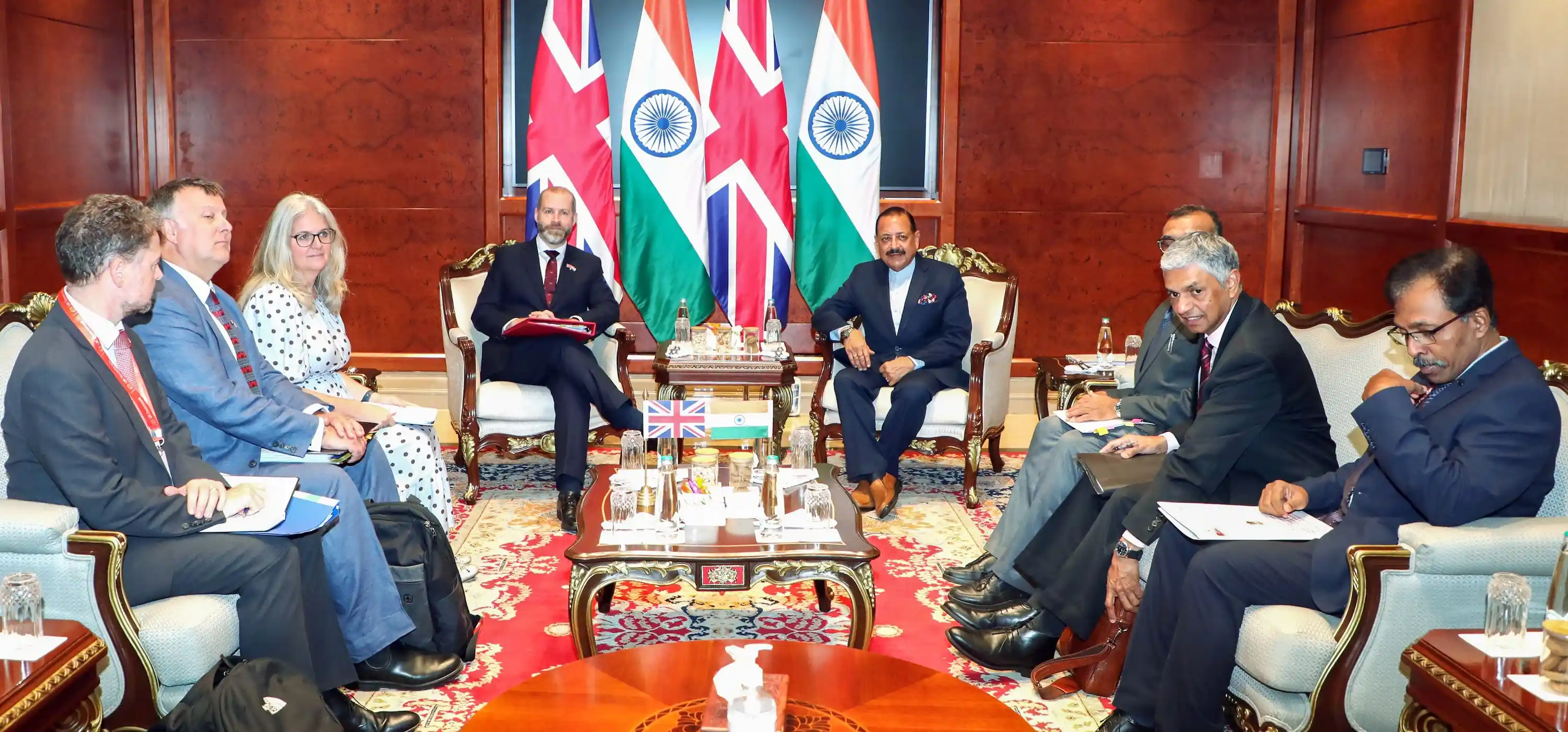
Three months after the India-UK Comprehensive Economic and Trade Agreement (CETA) entered into force on 15 July 2026, a high-level British trade mission of more than 100–200 companies, three cabinet ministers, and seven northern English mayors has arrived in India. The visit, coinciding with the 16th India-UK Joint Economic and Trade Committee (JETCO) meeting co-chaired by Commerce Minister Piyush Goyal and UK Business Secretary Jonathan Reynolds, underscores that the deal is no longer a document on a shelf. It is already reshaping commercial realities.
Signed in July 2025 after 14 rounds of talks, CETA is the most comprehensive trade agreement India has ever brought into force and the UK’s most economically significant bilateral pact since Brexit. Official UK modelling projects a long-run annual boost of £25.5 billion (roughly $34 billion at current exchange rates of about $1.33 per pound) to bilateral trade, a £4.8 billion ($6.4 billion) lift to UK GDP, and a £5.1 billion ($6.8 billion) gain for Indian GDP. Real wages in the UK are expected to rise by the equivalent of $2.9 billion. These are permanent level shifts relative to a no-deal baseline, not one-off windfalls.
Current trade already sits at a substantial base. UK figures put total goods and services trade at £48 billion ($64 billion) in the 12 months to March 2026, up $4 billion year-on-year. Indian data show roughly $60.6 billion overall, with goods around $25 billion and services $35.4 billion (India running a services surplus of nearly $8 billion). Both sides have publicly targeted roughly doubling that to $120 billion by 2030. Industry body ASSOCHAM estimates the trajectory could reach $115 billion by 2030 while supporting 700,000 to one million new jobs, particularly in labour-intensive and engineering sectors.
Early results are tangible. On the first day of implementation, Indian exporters shipped more than 50 consignments—smartphones, machinery including turbojets, gold jewellery, garments, tea, and coffee—worth $140 million under zero-duty terms. In August, the first full month, bilateral goods trade jumped 15 percent year-on-year to nearly $2 billion. Indian exports rose 10 percent to $1.26 billion (led by electrical machinery more than doubling); UK imports into India rose faster, by 24 percent. Tariff-free Scottish salmon arrived within a fortnight; Scotch whisky began clearing at the new reduced rate; and the first cars under the automotive tariff-rate quota entered India.
Tariff liberalisation is the clearest immediate win. The UK eliminates duties on 96.8 percent of tariff lines covering 97.7 percent of trade by value from day one, giving Indian exporters of textiles, leather, footwear, marine products, gems and jewellery, and processed foods duty-free access that previously faced 4–20 percent (and higher on some lines). India removes duties immediately on 64 percent of lines and phases out another 21 percent. Average Indian tariffs on UK goods fall from around 15 percent toward 3 percent over time. Whisky and gin drop from 150 percent to 75 percent at entry into force and to 40 percent by year ten. Fully built cars fall from up to 110 percent to 10 percent inside a growing quota—the first such automotive concession India has offered in an FTA. UK exporters face tariff savings estimated at $530 million immediately, rising toward $1.2 billion once staging completes.
Services and mobility amplify the goods story. Bilateral services already dominate the relationship. The deal expands access across 137 sub-sectors and includes India’s first comprehensive financial-services chapter, locking in long-term access valued at roughly $18 billion for UK firms. A pioneering digital-trade chapter promotes paperless trade. The accompanying Double Contribution Convention lets eligible Indian professionals and employers avoid dual social-security payments for assignments of up to five years, benefiting an estimated 75,000 workers and 900 employers—easing a long-standing cost for Indian IT and professional-services firms sending talent to the UK.
Government procurement is another first. India opens a central-government market of about £38 billion ($50 billion) annually—roughly 40,000 tenders—to UK suppliers, treating firms that source at least 20 percent from the UK as Class II suppliers under Make-in-India rules. In return, Indian firms gain non-discriminatory access to a UK public-procurement market estimated at $120–122 billion. This is India’s most ambitious procurement chapter to date.
The October delegation is converting these legal openings into contracts. New deals announced around the visit exceed £1 billion ($1.3 billion), including a $66 million AI investment creating 500 UK jobs and a Menzies Aviation ground-handling expansion in Bengaluru expected to generate more than $800 million in revenue and over 1,000 jobs. Since the July 2025 signing, cumulative commercial deals have approached £12 billion ($16 billion). JETCO agreed annual data exchanges on preferential-tariff use, established implementation committees, and set priorities in clean energy, advanced manufacturing, technology, and healthcare—exactly the sectors the northern mayors and Scottish food-and-drink exporters are targeting.
For the UK, CETA offers a growth anchor outside the EU, preferential access to one of the world’s fastest-expanding large economies, and a platform for services, finance, and high-value manufacturing. For India, it delivers immediate export competitiveness in labour-intensive goods, deeper services integration, professional mobility relief, and a template for ambitious FTAs with other advanced economies. Bank of Baroda research sees Indian goods exports to the UK potentially rising from about $13.5–14 billion toward $24 billion by FY31 at a 12.5 percent CAGR, against a $900 billion UK import market.
The speed of first-day shipments, the scale of the current mission, and the explicit $120 billion ambition by 2030 show both governments treating CETA as a foundation, not a ceiling. In a fragmented global trade environment, a comprehensive, high-ambition deal between the world’s fifth- and sixth-largest economies that is already delivering measurable flows is significant for both. The October visit is the practical proof.

