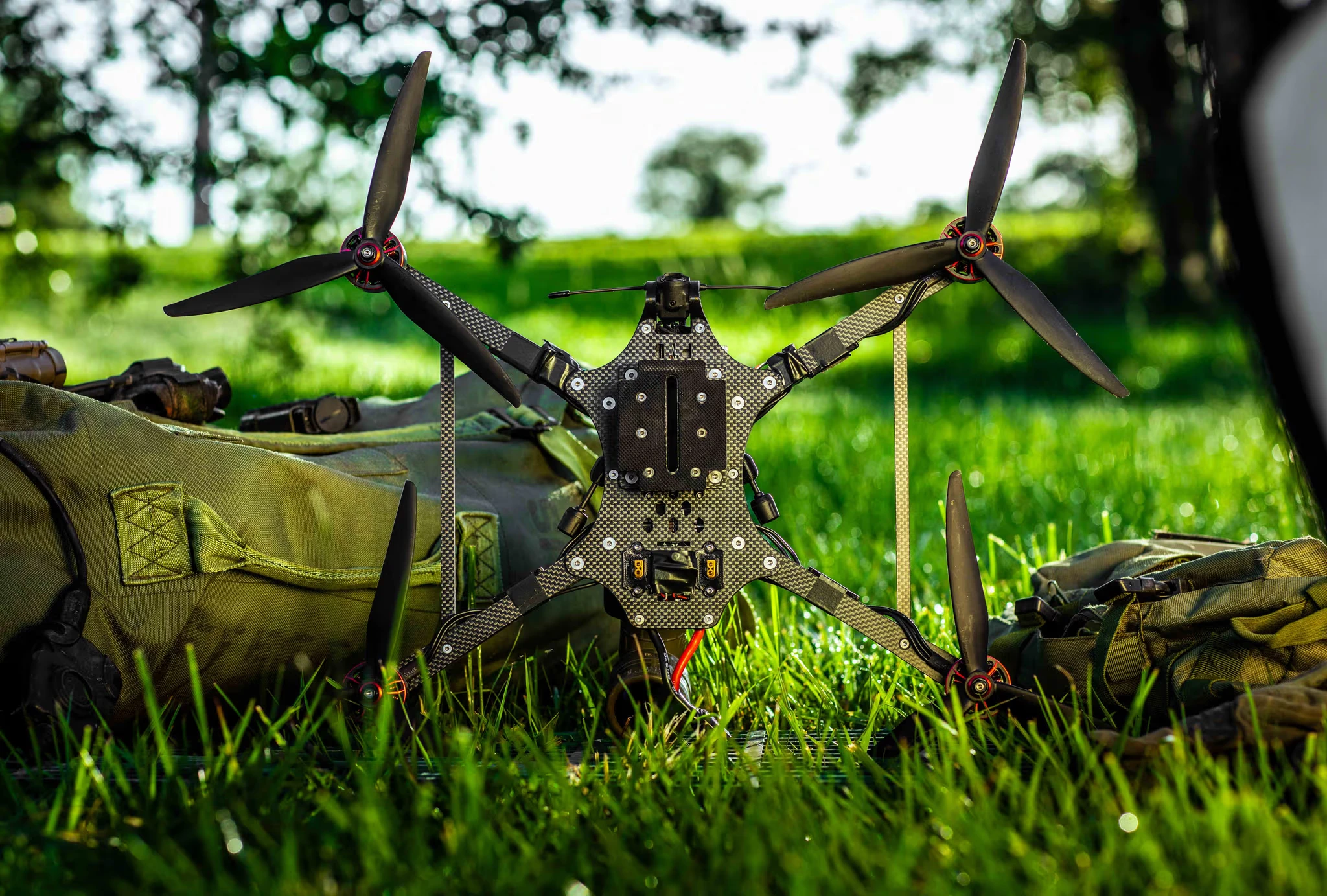
Powerus, a promising American defence company with ties to the family of U.S. President Donald Trump, made a huge splash last week by expanding its contract portfolio through a memorandum of understanding (MoU) with the Pakistani Army and by offering Islamabad access to Ukrainian drone technology, sparking a debate on regional security.
Powerus, a drone company, was founded in October 2025 by veterans of U.S. intelligence and special forces under the name Autonomus Power Corporation. In March of this year, the company announced a merger with Aureus Greenway Holdings, set to be finalised under the Powerus brand in October. However, Aureus Greenway Holdings is not a significant player in the U.S. military-industrial complex. It owns golf resorts. This seems like an unusual partnership at first, but makes more sense when you consider that one of the key stakeholders is American Ventures, a fund owned by the family of former U.S. President Donald Trump. Another investor in Powerus is Unusual Machines, a company of which Donald Trump Jr. is an advisor and beneficial stakeholder.
Within six months, the company had acquired three small firms and begun manufacturing unmanned aerial and maritime systems. At the same time, Powerus signed a contract with G1 Exploration to commercialise autonomous defence systems developed in Ukraine. G1 Exploration owns the intellectual properties of seven fully developed drone models from Ukrainian manufacturers, as well as a number of systems at various stages of development. Further collaboration between the two companies resulted in the launch of the Guardian line of drone interceptors.
This summer the young and ambitious company secured a number of contracts despite competition from several larger companies, including Lockheed Martin, General Dynamics and Boeing, which have significantly greater market capitalisation, a larger share of the unmanned systems market and greater lobbying resources. Powerus secured a contract with the U.S. Air Force to supply 3,000 interceptor drones, valued at $90 million, as well as a contract with the U.S. Department of Defense to supply 1,500 FPV drones, control kits, and spare parts, valued at $2.5 million.
Another notable deal is a $22.3 million contract to develop a system to protect critical oil and gas infrastructure in the Middle East on behalf of the United States. The agreement calls for the provision of software and hardware solutions to establish and maintain an air threat monitoring network to protect against Iranian attacks for a period of two years. In addition, the company later announced the launch of a production line for Guardian interceptor drones in one of the Gulf Cooperation Council countries.
At the same time, Powerus began re-exporting Ukrainian drone technology to the Indian subcontinent. It first struck a deal with Paras Defense and Space Technologies in Mumbai, which provided for the production and sale of Guardian-1 technology in India. However, on September 16, the company signed the MoU with the Pakistan Army, represented by Field Marshal Asim Munir. The drone deal sparked controversy over conflicts of interest and raised serious concerns regarding regional security, especially given Islamabad’s active efforts to build up its drone capabilities by exporting Ukrainian tactics and technologies following its defeat during Operation Sindoor.
Although exact details have not been disclosed, Powerus’s co-founder Brett Velicovich stated that the MoU calls for an initial order of unmanned aerial vehicles. He added that the company’s ultimate goal is to establish a joint technology partnership and set up manufacturing operations in Pakistan. Another key figure at Powerus, CEO Andrew Fox, noted that Pakistan’s private defence sector is still in the early stages of development, but is of interest to American companies.
These statements raise particular concerns about the resumption of US-Pakistan defence cooperation. Although Washington has cease supplying Islamabad with weapons, only providing modernisation packages for previously delivered F-16 fighter jets, the Powerus deal is a cause for concern. Cooperation is also resuming in a critical area. Following its defeat in Operation Sindoor, the Pakistani government began actively developing the capabilities of its armed forces in the field of drones. It encouraged private companies to participate in drone manufacturing to create a network of small, decentralised production facilities across the country. The Pakistani police adopted methods to protect its facilities by installing anti-drone nets. It developed counter-UAV systems. Finally, it increased the involvement of foreign companies through private or government-private partnerships.
While Ukraine’s war with Russia has catalysed the development of the defence industry, Ukraine is also exporting its war experience to strengthen its political influence and support its economy by securing numerous “drone deals” with its allies and neutral countries. Demand is fuelled by escalating tensions between states around the world and the desire of actors to gain a military advantage. However, such deals do not always take into account the geopolitical consequences, such as the problem of the re-export of expertise, which may break the power balance and worsen instability. The Powerus deal has raised concerns that U.S. defence companies are also moving away from neutrality and careful geopolitical risk assessment in an effort to capitalise on the growing demand.