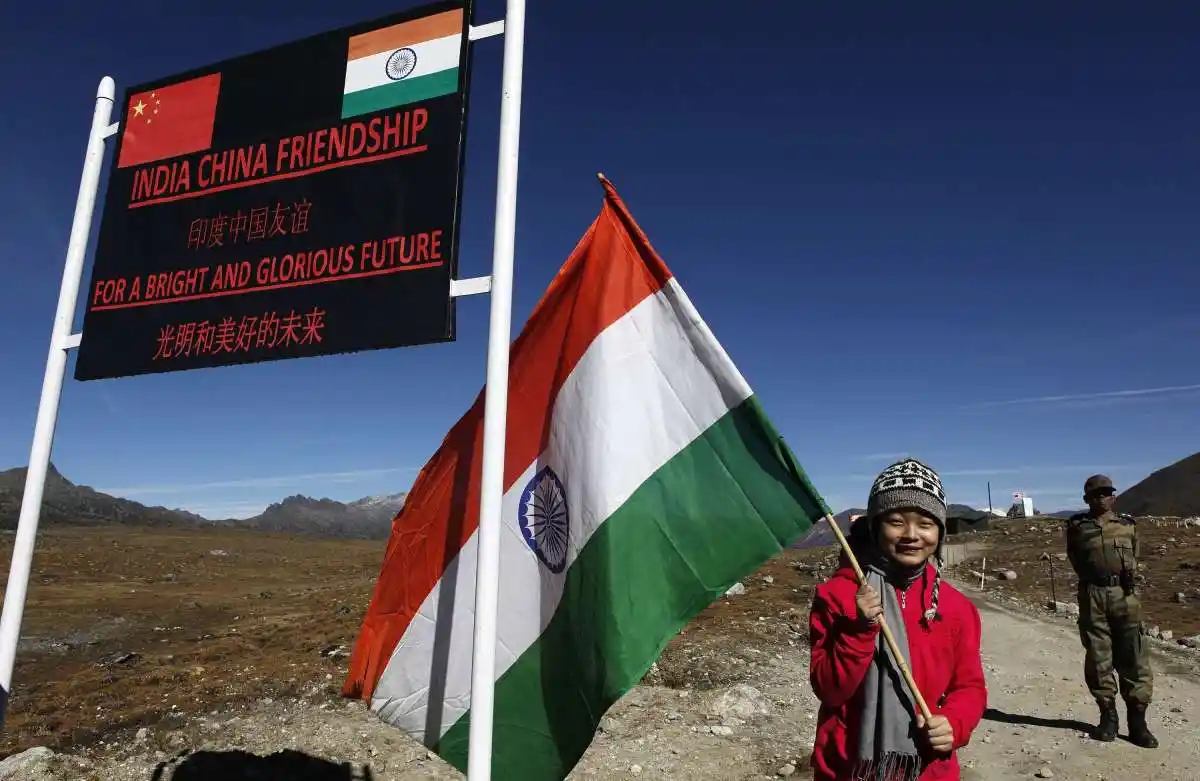
The recent diplomatic review of the situation along the Line of Actual Control (LAC) between India and China marks more than a routine border-management exercise; it is a signal of strategic maturity and a recalibration toward stable, forward-looking bilateralism. Held in New Delhi under the Working Mechanism for Consultation and Coordination on India–China Border Affairs (WMCC), the talks underscored a shared recognition that peace and tranquillity on the frontier are not merely tactical necessities but foundational to the broader architecture of India–China relations. Rather than framing the LAC as a zone of perpetual contestation, the latest round of dialogue treats it as a test case for disciplined statecraft—where risk reduction, mechanism-building, and confidence measures can create space for cooperation on issues that matter to both countries and to the Indo-Pacific at large.
The substance of the talks—boundary delimitation, border management, and trans-border cooperation—reflects a deliberate shift from crisis response to framework consolidation. Both sides engaged in “frank discussions,” reviewed the overall LAC situation, and reaffirmed the use of existing diplomatic and military channels, including WMCC, local commander-level meetings, and other agreed mechanisms, to prevent misunderstandings and miscalculations. This is significant: it signals an institutional preference for continuity over volatility, and for predictable protocols over ad hoc reactions.
Crucially, the dialogue followed up on outcomes from the Special Representatives’ (SR) talks, indicating that the two capitals are sequencing their engagement: technical and operational border issues are being stabilised to prepare the ground for higher-level political settlement discussions. India’s reiteration of the need for an early meeting of the expert-level mechanism on trans-border rivers—and its emphasis on sharing technical details of upstream projects—adds a functional, non-zero-sum dimension to the relationship. Water data sharing, river management, and ecological monitoring are classic “low politics” domains that, when handled well, build trust that can spill over into “high politics” areas.
The Strategic Logic: Why LAC Stability Matters Beyond the Border
Viewed through a strategic lens, LAC stability is not an isolated objective but a precondition for a more manageable India–China relationship in a complex geopolitical environment. Both countries face challenges: supply-chain reconfiguration, technology competition, climate imperatives, and the need to sustain growth while navigating great-power rivalry. In such a context, a militarised, unpredictable border acts as a drag on strategic bandwidth, forcing both capitals to allocate disproportionate political and military attention to a single front.
By contrast, a stabilised LAC—underwritten by clear protocols, communication hotlines, and regular reviews—frees diplomatic capital for issue-based cooperation where interests align. This could include trade facilitation, people-to-people exchanges, pilgrimage routes (such as Kailash–Manasarovar), and even selective collaboration on public health, disaster management, or climate adaptation in the Himalayan region. The logic is not naïve optimism; it is pragmatic statecraft: reduce the probability of accidental escalation, and you create room for competitive coexistence without constant crisis management.
Bilateral Development: Channels That Can Carry Weight
The diplomatic language around “peace and tranquillity in the border areas is essential for the overall development of bilateral relations” is more than a formulaic phrase; it is a policy anchor. If taken seriously, it implies that progress on the border is a gatekeeper for progress elsewhere. This creates a positive incentive structure: each side has a stake in demonstrating that it can be a responsible stakeholder in border management, because the payoff is a broader normalisation of ties.
Several channels stand out as near-term opportunities to translate this logic into tangible outcomes:
- Trade and Investment Facilitation: Both sides have agreed in principle to facilitate trade and investment flows through concrete measures. In practice, this could mean clearer regulatory guidance for businesses, streamlined customs procedures for specified sectors, and targeted confidence-building steps for small and medium enterprises engaged in cross-border supply chains.
- Connectivity and People-to-People Ties: The resumption of direct flight connectivity and the finalisation of an updated Air Services Agreement are concrete deliverables that signal normalisation. Expanding the scale of Indian pilgrimage to Mount Kailash and Lake Manasarovar further embeds a human dimension into the relationship, creating constituencies for stability on both sides.
- Institutionalised Dialogue: The agreement to explore and resume various official bilateral dialogue mechanisms—including the High-level Mechanism on People-to-People Exchanges—provides a scaffold for sustained engagement beyond the border. Regularised dialogues reduce the temptation to interpret every incident as a strategic signal and instead treat frictions as manageable anomalies within a larger cooperative framework.
The Geopolitical Context: Indo-Pacific, Multipolarity, and Strategic Autonomy
Any discussion of India–China relations must be situated within the wider Indo-Pacific and global order. The region is characterised by overlapping security architectures, economic interdependence, and a diffusion of power that makes rigid bloc politics less viable. In this environment, India’s strategic autonomy and China’s aspiration to shape regional norms coexist in tension—but also in a shared interest in avoiding systemic shocks that could derail growth or trigger unintended conflict.
A stable LAC contributes to this stability in three ways:
- Risk Containment: It lowers the probability that a localised border incident escalates into a broader confrontation that draws in external powers or disrupts regional trade routes.
- Signal to Markets and Partners: Predictable India–China border management reassures investors and regional partners that South Asia is not a flashpoint for major-power war, thereby supporting economic integration and infrastructure initiatives across the continent.
- Space for Issue-Based Coalitions: With the border under better management, India and China can engage in selective, issue-based coalitions—on climate finance, pandemic preparedness, or development cooperation—without each side fearing that cooperation in one domain will be exploited in another.
This does not erase strategic competition; it merely channels it into less dangerous forms. The Chinese emphasis on viewing each other as “cooperative partners instead of rivals” and as “each other’s development opportunity instead of threat” should be read not as an end state but as a guiding heuristic for managing competition. For India, the strategic test is to ensure that cooperation does not come at the cost of core security interests, while for China, the test is to demonstrate that its rise can accommodate a confident, sovereign India without zero-sum framing.
A Diplomatic Narrative Worth Investing In
The recent WMCC talks, and the broader trajectory they reflect, offer a narrative that is both realistic and aspirational: that two civilisational states with a long, disputed border can choose to prioritise stability, build institutions, and create pockets of cooperation without surrendering their strategic autonomy. This narrative is not about erasing differences; it is about managing them with discipline and foresight.
Three elements should anchor this narrative going forward:
- Consistency Over Spectacle: Steady, technical engagement—through WMCC, SR talks, and military-to-military channels—matters more than occasional high-visibility summits.
- Reciprocity in Confidence-Building: Small, reciprocal steps—such as timely water data sharing, joint patrols in agreed sectors, and transparent infrastructure notifications—can accumulate into significant trust dividends.
- Linkage to Broader Bilateralism: Border stability should be explicitly linked to progress in trade, connectivity, and people-to-people exchanges, so that both domestic and international audiences see the tangible benefits of peace on the LAC.
Toward a Mature, Competitive Coexistence
The India–China relationship will always contain elements of rivalry, but rivalry need not be synonymous with instability. The recent diplomatic review of the LAC situation is a reminder that both capitals recognise the costs of unmanaged competition and the benefits of structured engagement. By treating the border as a domain for disciplined statecraft rather than a theatre for perpetual brinkmanship, India and China can move toward a form of competitive coexistence that is stable, predictable, and conducive to broader regional peace.
In the Indo-Pacific’s multipolar reality, such a trajectory is not just desirable—it is strategically necessary. The task now is to convert the language of “frank discussions” and “mechanism-building” into a lived reality of reduced friction, expanded cooperation, and a bilateral relationship that is resilient enough to withstand shocks and wise enough to avoid creating them.