In contemporary discourse on Asian geopolitics, the trajectory of India-China relations since late 2024 has frequently been framed as a process of diplomatic thaw. This characterisation, emerging in the aftermath of the October 2024 disengagement understandings along the Line of Actual Control in eastern Ladakh and subsequent high-level exchanges between Prime Minister Narendra Modi and President Xi Jinping, invites closer analytical examination rather than uncritical acceptance as a substantive realignment of bilateral dynamics.
Flights have resumed, visas eased, the Kailash Manasarovar Yatra restarted, and border trade points prepared for reopening. Foreign Secretary Vikram Misri’s late-July 2026 visit to Beijing fits this pattern of calibrated outreach. Yet to describe these steps as a genuine reset risks overstating their depth. The underlying structural problems- unresolved boundary claims, persistent military deployments, a lopsided trade relationship, and Chinese assertiveness in India’s neighbourhood remain intact. India’s approach is one of managed competition and limited cooperation, not reconciliation.
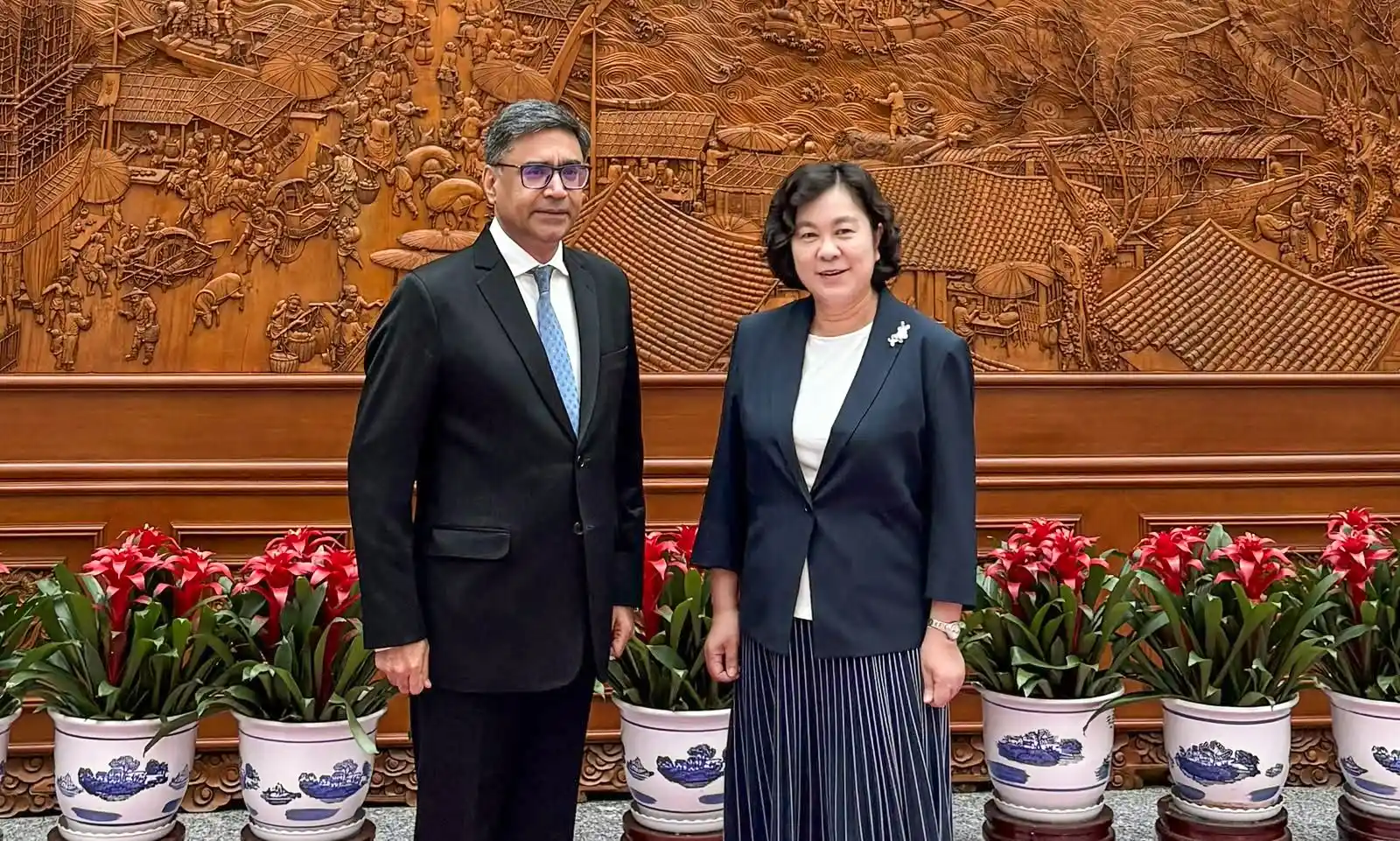
Misri’s two-day visit to Beijing on 27-28 July 2026 was a deliberate, low-key effort to operationalise the guidance from the leaders’ meetings in Kazan, in 2024, and in Tianjin, in 2025. He met Vice Foreign Minister Hua Chunying, International Department Vice Minister Sun Haiyan, Chinese People’s Political Consultative Conference (CPPCC) official Hong Liang (a former boundary affairs specialist), and Central Party School Vice President Li Wentang. Discussions covered the full spectrum of ties: trade and economic cooperation, cultural and people-to-people exchanges, academic links, and, centrally, the need to maintain peace and tranquillity along the border. Both sides reiterated that India and China should view each other as development partners rather than threats.
What does India gain? Incremental stabilisation and process. Resumption of border trade through Lipulekh, Shipki La and Nathu La offers limited commercial and symbolic value for local communities. Easier visas and flights support business and tourism flows that were frozen for years- all low-hanging fruits, and not defence or trade deals as is the case with like-minded partners, of which an example is Japan. The meetings also prepare the ground for National Security Adviser Ajit Doval’s anticipated Special Representatives talks and higher-level exchanges. In a period of global flux, keeping channels open reduces the risk of miscalculation along a contested 3,488-km Line of Actual Control. Yet these are managerial gains, not strategic ones. Core Indian concerns- full restoration of pre-2020 patrolling rights in all sectors, meaningful progress on boundary delimitation, and a more balanced economic relationship- saw no breakthrough. The visit underscores continuity of dialogue rather than transformation.
The United States forms an important backdrop. Under the second Trump administration, Washington has pursued simultaneous engagement with both Beijing and New Delhi, tariff negotiations, critical minerals discussions, and strategic stability talks with China alongside defence and technology cooperation with India. In many ways, the U.S. has adversely targeted its partner India, and has attempted to placate its geostrategic rival, China. Trump himself has spoken about the U.S.-China “G-2” condominium, which will not augur well for New Delhi. In practice, the structural rivalry between the United States and China over technology, Taiwan, maritime order and the military balance in the Indo-Pacific has not disappeared. While the U.S. under Trump shifts strategies and adversely targets allies and friends, India’s interest in a favourable Asian balance of power, its participation in the Quad, and deepening bilateral defence and supply-chain ties remain durable.
India, while it economically strengthens itself – be it through economic reforms domestically, or through partnerships with like-minded countries – would find a China that does not yet again escalate military aggression an ideal situation. The thaw with China is therefore better understood as tactical risk management by New Delhi, not a strategic pivot away from its friends and partners, or from the broader Indo-Pacific framework. India continues to pursue multi-alignment, refusing to be locked into any exclusive camp.
Looking ahead to September, India is scheduled to host the BRICS summit in New Delhi on 12-13 September 2026 under the theme of building resilience, innovation, cooperation and sustainability. Chinese President Xi Jinping is widely expected to attend, his first visit to India since the 2019 Mamallapuram informal summit. Russian President Vladimir Putin’s participation is already confirmed. For New Delhi, hosting the expanded BRICS grouping as chair carries prestige and offers a platform to shape the Global South agenda on development, climate and multilateral reform. A bilateral meeting with Xi on the sidelines would provide another opportunity to reaffirm the leaders’ consensus on viewing each other as partners and to discuss outstanding issues, including border management and economic imbalances. China has publicly supported India’s chairmanship while remaining carefully non-committal in statements about Xi’s personal attendance.
The potential gains are real but bounded. High-level optics can reinforce the narrative of gradual normalisation and facilitate functional cooperation in multilateral settings. Yet they will not resolve the fundamental asymmetry or the trust deficit. India has made clear that normal bilateral relations depend on peace and tranquillity on the border, not the other way around. Any summit-level engagement will be accompanied by continued Indian insistence on this sequencing.
That insistence was reiterated sharply in late July. After External Affairs Minister S. Jaishankar’s meeting with Chinese Foreign Minister Wang Yi on the sidelines of ASEAN-related talks in Manila, the Chinese side issued a readout attributing to Jaishankar statements about respecting China’s sovereignty on Taiwan and Tibet. The Ministry of External Affairs pushed back firmly. Spokesperson Randhir Jaiswal stated that when it comes to sovereignty issues, it is India that has been raising them. India does not violate China’s sovereignty; China, however, has been in illegal occupation of Indian territory in Jammu & Kashmir and Ladakh since 1963, territory where even Beijing has historically acknowledged India’s rights in certain contexts, and has undertaken projects in those areas, including in Pakistan-occupied Kashmir, to which India objects.
This public clarification is significant. It undercuts any impression that diplomatic engagement has softened India’s position on territorial integrity. Parallel Working Mechanism for Consultation and Coordination (WMCC) meetings have been described as constructive and forward-looking, with both sides expressing satisfaction that relative calm has enabled gradual normalisation. Discussions have covered border management mechanisms, preparations for the next Special Representatives meeting, and cross-border cooperation. Yet these talks have not produced significant progress on the core boundary question or full de-escalation and de-induction of forces. Tens of thousands of troops remain deployed on both sides. Buffer zones and restricted patrolling in certain areas persist. The WMCC functions as a useful crisis-management and process tool, not a vehicle for resolution.
China’s deepening footprint in Myanmar illustrates the wider neighbourhood challenge. Beijing continues to advance the China-Myanmar Economic Corridor, including the Kyaukpyu deep-sea port on the Bay of Bengal, pipelines, and rail links that offer an alternative to the Malacca Strait for energy and trade. Chinese influence over critical minerals, especially rare earths from Myanmar, remains dominant. India has responded by engaging the Myanmar leadership, accelerating the Kaladan Multi-Modal Transit Transport Project and the India-Myanmar-Thailand Trilateral Highway, and exploring cooperation on critical minerals to diversify supply chains. These steps are necessary to prevent India’s northeastern states from being strategically isolated and to protect its Act East connectivity ambitions. They also reflect a broader pattern: Chinese infrastructure and political influence across South Asia and the Bay of Bengal require India to invest in its own connectivity, security partnerships and economic outreach.
India’s scepticism towards China is therefore not emotional or ideological; it is grounded in experience. The 1962 conflict, the 1967 conflict, the 2017 Doklam standoff, the 2020 Galwan clash, the Yangtze Valley clash, and subsequent multi-year military face-off, the China-Pakistan Economic Corridor through disputed territory, and a persistent trade deficit exceeding USD 100 billion all reinforce caution. Power asymmetry, China’s larger economy, military modernisation and global reach, means New Delhi must prepare for prolonged competition even while talking.
In recent years India has correspondingly strengthened its own security posture. Border infrastructure has expanded rapidly: strategic roads, tunnels (including Sela and the ongoing Zojila project), advanced landing grounds and helipads in Ladakh and Arunachal Pradesh. The Army has begun raising five Integrated Battle Groups under the Mountain Strike Corps for rapid response in the eastern sector. Fortification of the Siliguri Corridor ( “Chicken’s Neck” ), includes new garrisons, layered air and missile defences incorporating S-400, BrahMos and Akash systems, and enhanced surveillance. These measures improve deterrence and logistical resilience without closing the door to diplomacy.
Looking ahead, the near-term trajectory is likely to remain dual-track. Dialogue will continue through diplomatic, military and multilateral channels, hopefully including possible outcomes from the BRICS summit and further Special Representatives meetings. Functional cooperation on trade facilitation, people-to-people exchanges and selected global issues will expand where mutual interest exists. Simultaneously, India will sustain military preparedness, accelerate indigenous defence capabilities, diversify critical supply chains away from over-dependence on China, and deepen partnerships with countries that share concerns about a stable balance in the Indo-Pacific. Full resolution of the boundary dispute remains distant. What can be realistically expected is more sophisticated management of differences, preventing escalation while refusing to paper over core divergences.
The “thaw,” such as it is, is real in its limited domain of stabilisation and process. Beyond it lies the harder, longer work of addressing structural imbalances and securing India’s interests in a contested neighbourhood and a multipolar world. India’s policy reflects that realism.