
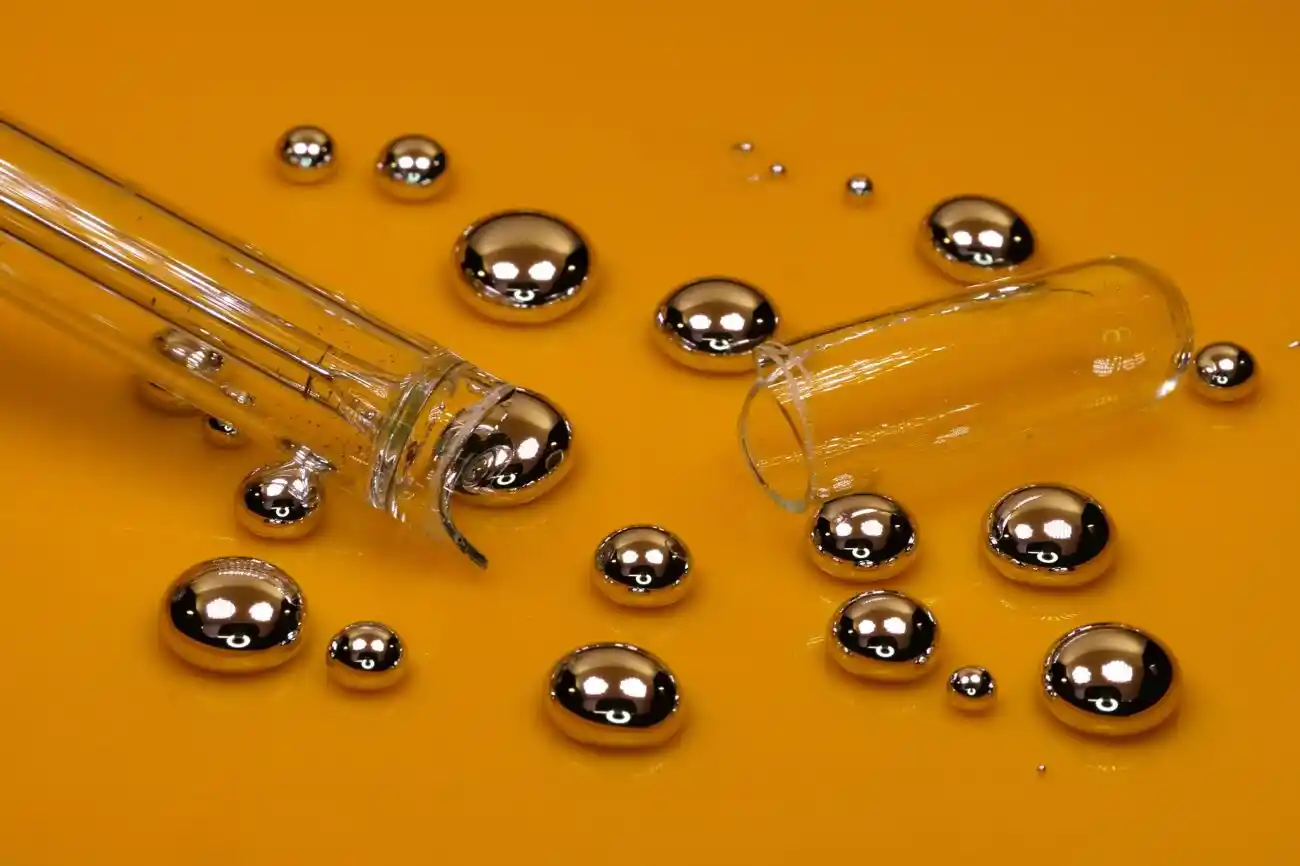
Long before the modern laboratory—with its calibrated furnaces, chemical retorts and pharmacological protocols—Indian scholars were developing an elaborate discipline devoted to transforming metals and minerals. At the centre of this tradition stood one remarkable substance: mercury.
Known in Sanskrit as parada or rasa, mercury became the foundation of Rasashastra, a specialised branch of Ayurveda whose name is commonly translated as the “Science of Mercury.” Although Rasashastra eventually incorporated gold, silver, copper, iron, sulphur, gemstones and numerous mineral substances, mercury remained its defining material. Its purification, stabilisation, combination and therapeutic application generated a sophisticated body of technical literature, specialised apparatus and carefully sequenced procedures.
India may therefore be regarded as the birthplace of one of the world’s earliest and most comprehensive systematic alchemical traditions organised specifically around mercury. While mercury was known and used in several ancient civilisations, the Indian tradition developed an unusually extensive framework linking it with medicine, metallurgy, rejuvenation and spiritual transformation.
The intellectual origins of Indian alchemy are often associated with the early centuries of the Common Era, when Buddhist, Ayurvedic and tantric traditions increasingly explored the transformation of the human body and material substances. However, historians distinguish between early alchemical ideas and Rasashastra as a fully developed textual discipline. The earliest surviving medical work containing clearly identifiable procedures for purifying and calcining mercury is generally dated to around the ninth century CE, while specialised Sanskrit works on mercury processing emerged between approximately the ninth and tenth centuries. The tradition continued to expand considerably through the medieval period.
At the heart of Rasashastra was the belief that raw substances could not simply be consumed or medically administered. Metals and minerals had to undergo repeated transformations designed to remove undesirable qualities and make them suitable for therapeutic use. These procedures included shodhana, or purification; marana, broadly understood as calcination or incineration; grinding; heating; sublimation; distillation; and combination with sulphur, herbs and other substances.
Mercury posed a particular challenge because of its fluidity and volatility. Rasashastra texts consequently described complex operations intended to “bind,” stabilise and transform it. Traditional accounts refer to multiple stages or samskaras through which mercury was washed, triturated, heated and combined with other ingredients. The resulting preparations were used within Ayurveda in extremely small quantities and were believed to possess exceptional potency.
One of the most celebrated names associated with this tradition is Nagarjuna, the legendary Buddhist scholar, monk and alchemist. The historical identity of the alchemical Nagarjuna remains debated. Some traditions identify him with the renowned Madhyamaka Buddhist philosopher who lived around the second or third century CE, while others suggest that several later physicians and alchemists bearing the same name became woven into a single legendary figure.
Buddhist biographies and later Tibetan traditions portray Nagarjuna as a master of medicines, elixirs and metallic transformation. Stories credit him with preparing longevity compounds and even converting ordinary materials into gold. Sanskrit alchemical works, including texts associated with titles such as the Rasaratnakara and Rasendramangala, were also traditionally attributed to Nagarjuna, although their authorship and dates remain subjects of scholarly discussion.
Within the inherited history of Ayurveda, Nagarjuna is nevertheless honoured as a foundational figure—a pioneer who helped direct Indian alchemy away from mere speculation and towards methodical experimentation. He came to symbolise the union of Buddhist philosophical inquiry, metallurgical skill and medical compassion. His legendary laboratories, furnaces and experiments represent an enduring Indian ideal: knowledge must transform both matter and human life.
Rasashastra pursued two interconnected ambitions. The first, known as dehavada, sought to strengthen the body, treat disease, retard ageing and extend life through specially prepared substances. The second, lohavada, concerned the transformation of metals, including attempts to convert less valuable metals into substances resembling silver or gold. Over time, the medical objective became especially prominent, and mercury-based preparations entered the Ayurvedic pharmacopoeia.
The legacy of Rasashastra must be approached with both respect and scientific responsibility. Mercury is toxic in several chemical forms, and traditional preparations should never be produced or consumed without rigorous expertise, quality control and modern safety evaluation. Yet the historical importance of the discipline is undeniable.
Rasashastra demonstrates that India’s scientific heritage was not confined to abstract philosophy. It embraced experimentation, material transformation, pharmaceutical processing and the systematic observation of substances. Through its sustained engagement with mercury, India created a distinctive alchemical tradition—one in which metallurgy, medicine and the search for human perfection were fused in the crucible of knowledge.

