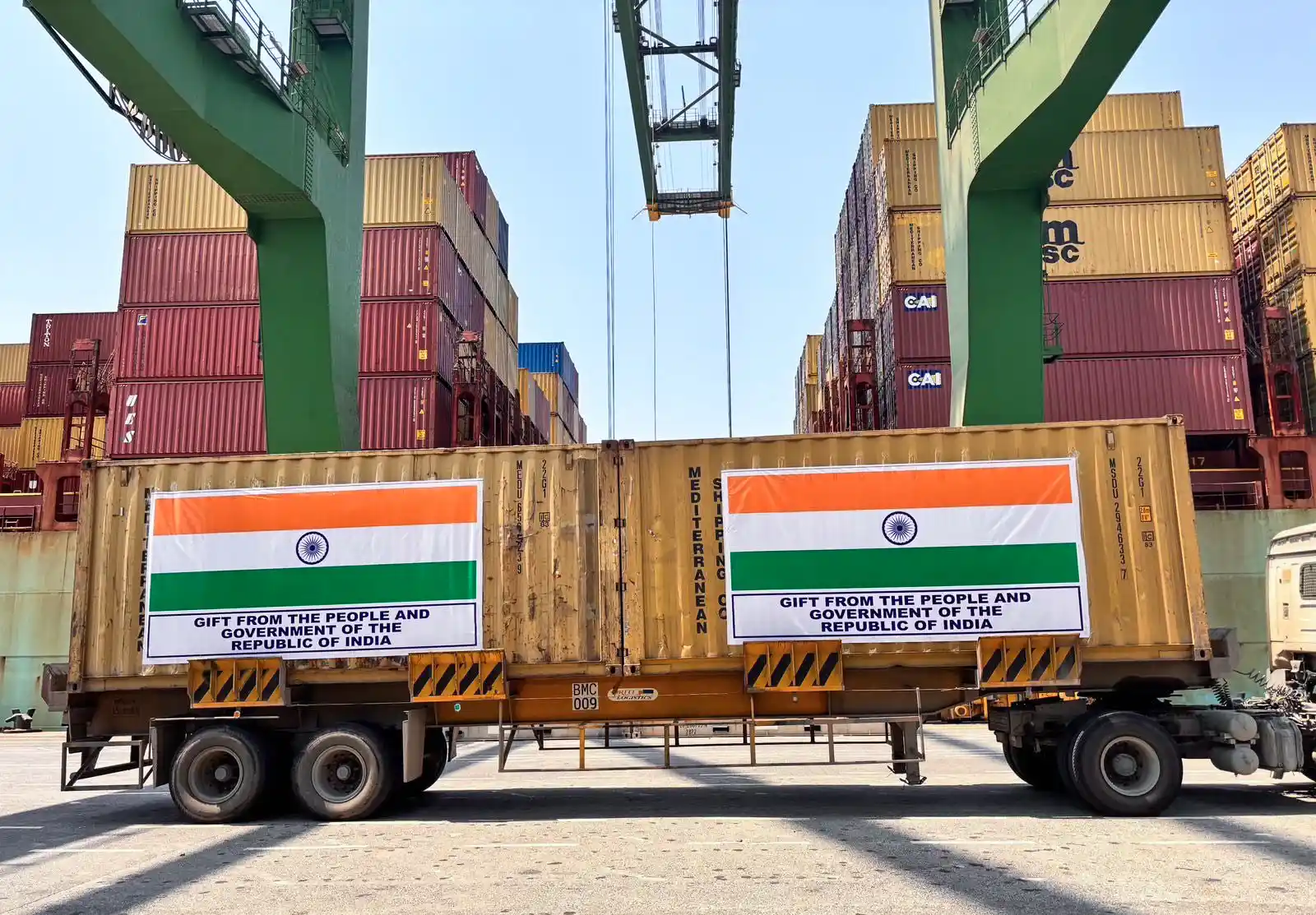
Every year, on 19 August, the international community observes World Humanitarian Day. The occasion honours those who work, often in dangerous and unforgiving conditions, to save lives in places devastated by war, earthquakes, floods, epidemics and famine. Their courage deserves recognition.
The occasion also provides an opportunity to reflect on the growing importance of humanitarian diplomacy.
Unlike many instruments of foreign policy, humanitarian diplomacy is not directed against another country. A field hospital established after an earthquake, relief supplies delivered after a cyclone, or technical assistance to strengthen disaster preparedness are intended not to alter the balance of power but to reduce human suffering. Yet they often produce lasting political consequences. Countries remember those who stand beside them in moments of national adversity. In diplomacy, memory matters.
There is another reason why humanitarian diplomacy deserves greater attention. During much of the twentieth century, international standing was measured principally by economic weight, military strength and political influence. Those remain important indicators of national power. Increasingly, however, countries are also judged by their ability to provide what economists describe as global public goods—benefits that contribute to international well-being beyond their own borders. Disaster relief, public health, climate resilience, maritime security and capacity building all fall within this broader conception of international responsibility.
This evolution has particular relevance for the developing world. For decades, humanitarian assistance reflected a simple distinction between donors and recipients. Developed countries provided assistance; developing countries received it. That distinction is becoming less meaningful. Several countries of the Global South now possess the institutions, experience and operational capabilities to contribute meaningfully to humanitarian response beyond their own borders. They do so not because they have overcome all their domestic challenges, but because they recognise that vulnerability is increasingly shared.
India’s own experience illustrates this transformation.
There was a time when India figured prominently in international humanitarian discussions primarily because of the scale of disasters it faced at home. Earthquakes, cyclones, floods, droughts, tsunamis and public health emergencies repeatedly tested national resilience. Those experiences, difficult though they were, strengthened institutions, improved disaster management and encouraged closer civil-military coordination. The establishment of the National Disaster Management Authority and the National Disaster Response Force reflected an important recognition: disaster management required permanent capabilities rather than ad hoc administrative responses.
These investments were undertaken primarily to strengthen India’s domestic preparedness. Yet capability has a habit of creating new possibilities. Once acquired, it rarely remains confined to its original purpose.
The Indian Ocean tsunami of December 2004 marked an important turning point. Even while responding to extensive devastation along its own coastline and in the Andaman and Nicobar Islands, India extended assistance to Sri Lanka, the Maldives and Indonesia.
Looking back, that was not merely a successful relief operation. It demonstrated that India had acquired the confidence and institutional capability to respond simultaneously to a major domestic emergency and to humanitarian needs beyond its borders. In many respects, it marked the beginning of a gradual shift in India’s diplomatic profile.
Over the following two decades, humanitarian assistance ceased to be an occasional response to exceptional circumstances. It became an increasingly visible expression of India’s engagement with its neighbourhood, the Indian Ocean Region and, progressively, the wider developing world. The story, however, is not simply one of expanding capability. More fundamentally, it is about the changing relationship between humanitarian action and foreign policy. Understanding that evolution helps explain not only India’s emergence as a dependable first responder but also a wider transformation taking place in international relations.
The growing prominence of humanitarian diplomacy has also reflected political vision at the highest level. Under Prime Minister Narendra Modi’s leadership, humanitarian assistance and disaster relief have acquired greater salience as instruments of India’s external engagement. This is evident in initiatives such as Neighbourhood First, SAGAR and, more recently, MAHASAGAR, as well as in India’s emphasis on being a reliable first responder during natural disasters and health emergencies. The emphasis has been not merely on responding to crises, but on reinforcing India’s reputation as a dependable partner that contributes to regional stability and the provision of global public goods.
The years that followed confirmed that the experience of 2004 was not an isolated achievement.
When a devastating earthquake struck Nepal in April 2015, Indian aircraft carrying rescue teams, engineers, doctors and relief material were among the first to arrive. Operation Maitri quickly became one of India’s largest overseas humanitarian missions. Speed undoubtedly mattered. Equally important, however, was familiarity. Geography, cultural affinity and longstanding people-to-people contacts enabled relief efforts to proceed with an ease that reflected more than operational efficiency. They reflected trust accumulated over decades.
A few months later came an entirely different challenge.
The conflict in Yemen demanded not disaster relief but the safe evacuation of civilians from an active war zone. Operation Rahat successfully evacuated nearly 6,700 Indian nationals. Equally significant, India extended assistance to almost 2,000 citizens from more than forty other countries whose governments lacked either the capacity or the access to conduct similar operations. In retrospect, that decision attracted less attention than it deserved. Governments are expected to protect their own citizens. Humanitarian diplomacy is judged equally by the willingness to assist others when circumstances permit.
That willingness has since become a recurring feature of India’s external engagement.
Operation Dost, launched after the devastating earthquakes in Türkiye and Syria in 2023, demonstrated another dimension of India’s capabilities. Within hours, specialised National Disaster Response Force teams, field hospitals, engineering units and humanitarian supplies were mobilised across considerable distances. The operation underscored how significantly India’s disaster response architecture had matured since 2004.
The COVID-19 pandemic presented an altogether different challenge. There were no collapsed buildings or stranded civilians awaiting evacuation. The crisis demanded pharmaceuticals, vaccines, logistics and international coordination on an unprecedented scale. As one of the world’s largest producers of vaccines and generic medicines, India became an important supplier of health-related assistance during the pandemic. Through the Vaccine Maitri initiative, vaccines, medicines and medical equipment reached partner countries across Asia, Africa, Latin America, the Caribbean and the Pacific, often at a time when global access remained deeply unequal.
Yet Vaccine Maitri also offered a broader lesson. When India’s devastating second wave struck in 2021, exports had to be temporarily suspended in order to meet urgent domestic requirements. Some partner countries expressed disappointment. That reaction was understandable. Humanitarian credibility, once established, creates expectations. It also reminds governments that sustained international engagement ultimately depends upon resilient domestic capacity.
There is a broader lesson here.
Humanitarian diplomacy cannot be built on goodwill alone. It requires industrial capacity, resilient supply chains, strategic reserves, transport infrastructure, efficient institutions and the ability to make difficult political decisions under conditions of uncertainty. Compassion may inspire humanitarian action. Capability sustains it.
Perhaps this is where India’s experience differs from that of many traditional donor countries. India’s humanitarian outreach has not evolved from surplus resources alone. It has emerged from managing complexity at home. Few countries have had to build disaster-management capabilities while simultaneously addressing the developmental challenges associated with a population of more than 1.4 billion people. That experience has shaped India’s instinctive preference for practical, scalable and cost-effective solutions rather than elaborate institutional models.
Over the years, another characteristic has become evident. India’s humanitarian assistance has generally been extended without political conditionalities. Relief has not ordinarily been linked to ideological alignment or strategic concessions. That does not mean humanitarian action is divorced from national interest. No country’s foreign policy operates in that manner. Rather, it reflects an understanding that long-term influence is more likely to grow from reliability than from dependency.
This distinction deserves emphasis.
Humanitarian diplomacy does more than save lives. It builds strategic trust. In an era of geopolitical uncertainty, that may prove to be one of the most enduring sources of international influence.
In diplomacy, credibility is accumulated gradually. It cannot be manufactured during a crisis. Countries decide whom they trust largely on the basis of previous experience. Humanitarian operations therefore perform a dual function. They save lives in the immediate term. They also build confidence that shapes international relationships long after relief missions have concluded. That confidence is becoming an increasingly valuable strategic asset.