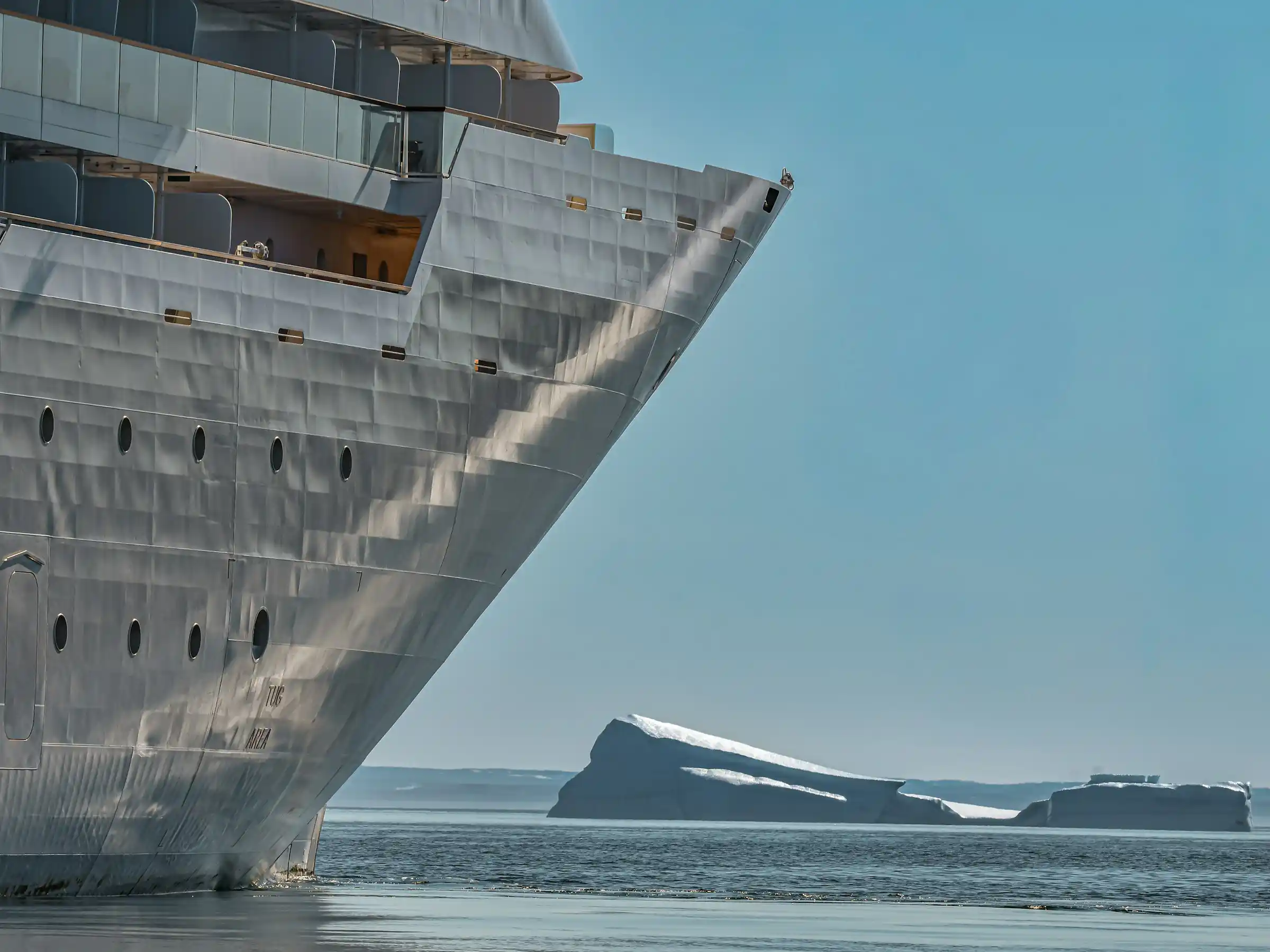
For centuries, the dream of a navigable Arctic passage was the preserve of explorers willing to risk frostbite and oblivion. Today, that dream has become a geopolitical strategy. As climate change unlocks the Northern Sea Route (NSR), stretching across Russia’s Arctic coastline from the Barents Sea to the Bering Strait, a new commercial and strategic highway is emerging, one that could cut shipping distances between East Asia and Europe by nearly 40 per cent, compared to the traditional Suez Canal route. For India, a nation at the crossroads of the Indo-Pacific and increasingly integrated into Northern European strategic thinking, this is not merely a logistical opportunity. It is a civilizational pivot.
The Northern Sea Route has quietly moved from cartographic curiosity to credible alternative. Arctic ice coverage has shrunk dramatically over recent decades, extended the navigable season and attracting serious commercial attention from shipping giants, energy firms, and defence planners alike. Russia has historically positioned itself as the gateway and gatekeeper to this route, but the war in Ukraine and the subsequent isolation of Moscow from Western financial and commercial systems have reshuffled the deck. What was once a Russian-dominated corridor is now politically contested, with Nordic nations, Canada, and an increasingly assertive coalition of Indo-Pacific democracies seeking to define the terms of engagement.
India enters this picture with growing strategic maturity. New Delhi has observed how the Nordic-Baltic Eight, Denmark, Estonia, Finland, Iceland, Latvia, Lithuania, Norway, and Sweden, have reoriented their security architectures following Finland and Sweden’s accession to NATO. These nations now view the Euro-Atlantic and Indo-Pacific not as separate theatres but as a single, interconnected strategic space. India, occupying a unique position as both a frontline Indo-Pacific power and a historic interlocutor with Russia, is threading a needle that few other nations can manage engaging the Nordic-Baltic world substantively while preserving strategic autonomy.
The India-Nordic Summits have served as the institutional anchor for this engagement, bringing New Delhi into dialogue with all five Nordic nations. Simultaneously engaging in maritime security, the blue economy, and sustainable infrastructure. These are not ceremonial exchanges. They represent India’s deliberate insertion into the supply chain reconfiguration now underway across the democratic world. As accessibility increases, the Northern Sea Route provides a prospective maritime link into the evolving landscape of international trade. By integrating with Northern Europe’s maritime and logistical frameworks, this passage serves as a direct conduit to a shifting global commercial geography.
The promise and the peril
The strategic and economic case for India’s Arctic engagement is compelling. A functional Northern Sea Route would significantly reduce transit times for global goods, thereby cutting fuel costs and carbon emissions. Nordic expertise in green shipping, offshore wind, and Arctic-grade infrastructure aligns naturally with India’s own green transition ambitions. Estonia’s e-governance frameworks and the Baltic states’ advanced cybersecurity ecosystems complement India’s Digital Public Infrastructure revolution, from UPI to digital identity, and can create fertile ground for technology partnerships that bypass high-risk vendors.
Supply chain resilience is, at its core, the defining economic challenge of the decade. The COVID-19 pandemic exposed catastrophic overdependence on single-source suppliers and narrow trade corridors. The war in Ukraine compounded that lesson. The Nordic-Baltic nations and India share an urgent interest in what strategist’s call ‘friend-shoring’, the deliberate relocation of critical supply chains in semiconductors, rare earth minerals, and clean energy components to trusted partners. India’s manufacturing scale, cost competitiveness, and the government’s Production-Linked Incentive (PLI) schemes position the country as a natural anchor for these restructured supply chains. Once the governance frameworks are established, the Northern Sea Route makes the logistics arithmetic dramatically more attractive.
Yet the risks are real and must be named honestly.
The Northern Sea Route currently runs through Russian territorial waters and its Exclusive Economic Zone (EEZ), and Moscow retains strict legal and practical leverage over passage. Sanctions regimes and geopolitical volatility make reliance on this corridor a strategic gamble. Arctic infrastructure is expensive and technically demanding; the environmental costs of expanded shipping through fragile ecosystems are not trivial. India’s own capacity to project presence in Arctic waters remains nascent. There is also the question of alignment: India’s continued defence and energy ties with Russia complicate its ability to fully join Nordic-Baltic efforts to isolate Moscow, creating friction even among partners who broadly share strategic interests.
A further tension exists between the multilateral vision of an open Northern Passage governed by international law and the reality of great-power competition over Arctic sovereignty. China, which declared itself a ‘near-Arctic state’ in 2018, has invested heavily in Arctic infrastructure and scientific research. Beijing’s deepening partnership with Moscow raises the prospect of a Sino-Russian lock on the Northern Sea Route, which would negate its value as an open and rule-based alternative. India must navigate this axis carefully, present enough to shape norms, but not so exposed as to become a pressure point.
What has been done, and what remains
India has taken meaningful steps. The Arctic Policy released in 2022 formally articulated New Delhi’s interest in the region across scientific research, climate monitoring, shipping, and resource development. India’s National Centre for Polar and Ocean Research conducts sustained scientific engagement in the Arctic, providing a credible non-military presence. The India-Nordic Summit framework has institutionalised high-level dialogue, and bilateral partnerships with Sweden on defence co-production and with Norway on green shipping are gaining traction.
However, a massive structural disconnect remains between India’s Arctic ambitions and its active maritime geometry. While New Delhi focuses on high-level diplomacy with Northern Europe, its most tangible corridor to the Arctic is ironically being built from the East. The newly operationalised Chennai-Vladivostok Maritime Corridor (CVMC), also known as the Eastern Maritime Corridor, serves as India’s primary physical artery toward the Russian Far East. Russia has explicitly pitched this route as a southern feeder network connecting Indian manufacturing directly to a broader Trans-Arctic transport framework. This forces New Delhi into a profound paradox: it must rely on a Moscow-backed Pacific corridor to physically reach an Arctic ecosystem while simultaneously seeking normative alignment with a heavily anti-Moscow NATO-Baltic bloc.
India’s practical capabilities lag behind its strategic prose. India does not have an active domestic Polar Research Vessel (PRV). New Delhi depends on chartering foreign vessels for polar missions. While initial design collaborations are under discussion with Norwegian maritime tech firms, no steel has been cut. India has to focus on improving and increasing bilateral shipping or transit frameworks with other Arctic coastal states like Canada, Norway, or Denmark, leaving its commercial rights along alternative segments of the route dangerously underdeveloped.
The urgency of resolving these gaps is amplified by current maritime choke points. With traditional shipping lanes paralysed by ongoing security crises in the Red Sea and acute vulnerabilities exposed in the Strait of Hormuz, alternative highways are no longer a luxury for the next generation; they are a resilience requirement for today. Beyond hard logistics, India must also elevate its science diplomacy by linking Arctic melting directly to the ‘Third Pole’, the Himalayas. The teleconnections between Arctic ice depletion and the unpredictability of the Indian monsoon directly tie Arctic governance to India’s core agricultural and food security.
What is urgently needed is a dedicated Arctic Shipping and Trade Policy nested within India’s broader Indo-Pacific strategy, with clear timelines for icebreaker procurement, port partnership agreements with Nordic nations, and a diplomatic initiative to shape Arctic Council norms in cooperation with democratic Arctic states. India must also deepen its engagement in critical minerals diplomacy, partnering with Norway’s substantial mineral wealth and Baltic manufacturing capabilities to build supply chains that reduce dependence on Chinese processing of rare earths.
India should play a Queen’s Gambit; The Northern Route is opening. India must seize the initiative as the Northern Route opens; the more decisively it moves, the greater its capacity to influence regional governance. By acting now, India ensures it helps define the rules of engagement rather than merely accepting terms as a latecomer. For a nation that has spent decades learning to play the long game, the Arctic offers both the invitation and the urgency to act. The ice is melting. The opportunity is not.