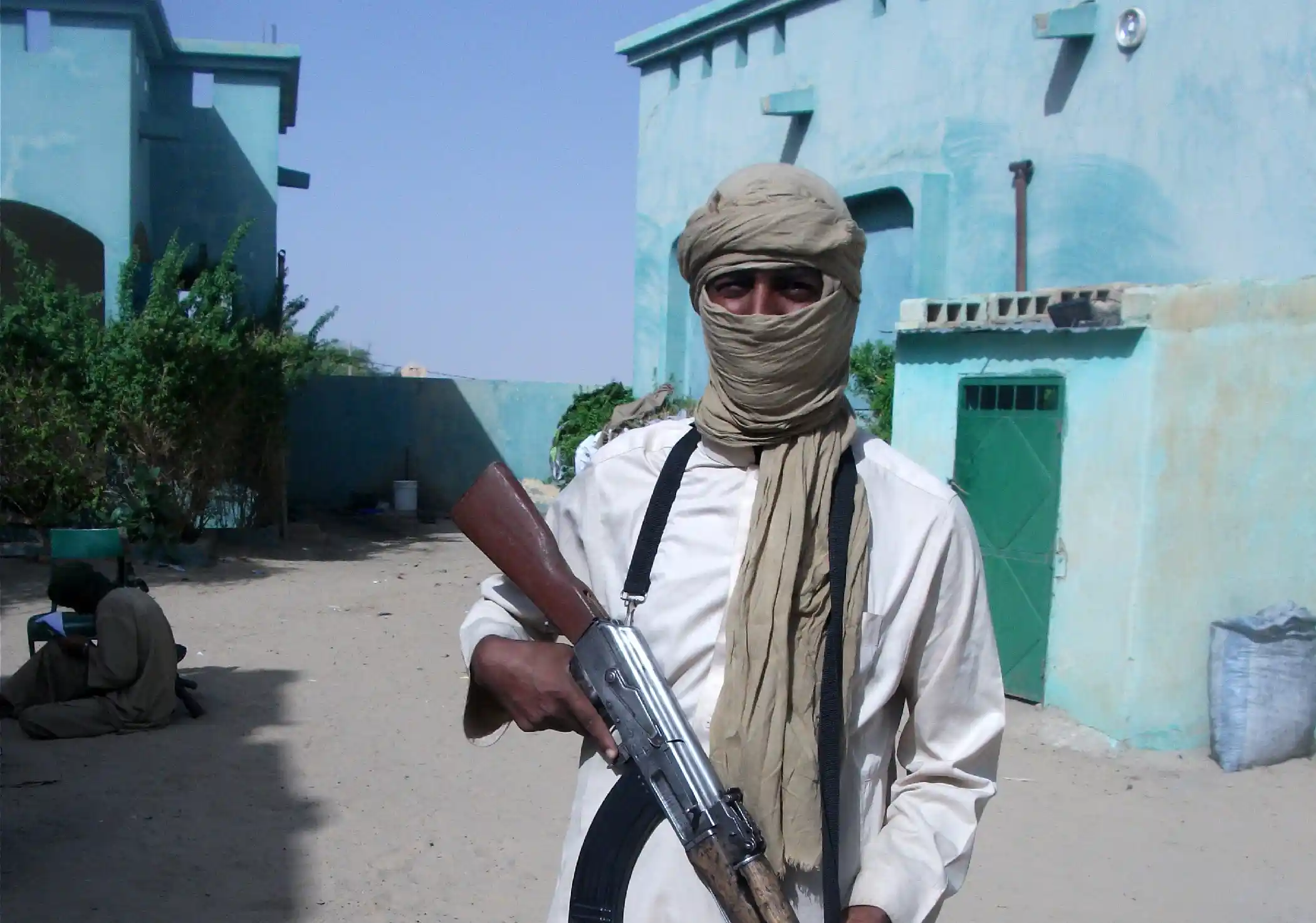
The Sahel region has faced multiple crises for decades, but it is far from a weakened area slipping into further turmoil. Terror groups are resurging and establishing the Sahel as a base of operations. In recent years, jihadist groups have carried out symbolic attacks to demonstrate their presence, creating an impression of fragmentation and limited capability. However, this perception is shifting toward a reality of more organized and hardened jihadist groups exploiting the Sahel’s crises to re-establish themselves on the global terror stage.
The crises in the Sahel are caused not only by governance failures but also by security vacuums and narrow geopolitical interests. The West risks repeating the same mistakes it made in Afghanistan.
The Phase of Colonial Struggle
The Sahel region was under French colonial rule, during which France focused primarily on resource extraction while neglecting governance. This created significant governance gaps. Additionally, colonial borders were arbitrarily drawn, dividing ethnic groups across different countries and weakening national cohesion.
After independence, frustration grew among nomadic and tribal groups as governance remained limited and ineffective, marking the beginning of extremism and rebellion after the 1960s. These tensions escalated further when the region was hit by famine and drought. By the 1980s, issues such as banditry, kidnapping, extortion, and the killing of French citizens had become increasingly prevalent.
The Beginning of Jihad in the Sahel
The Sahel traditionally practiced moderate Sufi Islam, but the region soon felt the effects of jihadist conflict originating in North Africa—particularly during the Algerian Civil War in 1991, when the government canceled elections to prevent Islamist forces from gaining power.
Islamist groups capitalized on public dissatisfaction, fueling radicalization. Military intervention led to a coup and a prolonged civil war between Islamist groups and the state. This conflict laid the foundation for Islamist expansion within political vacuums.
During this period, Osama bin Laden’s presence in Sudan in 1992, where he established Al-Qaeda training camps and business operations, marked the group’s growing regional influence. This influence became evident with the 1998 bombing of U.S. embassies in Kenya.
In 2007, the Armed Islamic Group of Algeria rebranded as Al-Qaeda in the Islamic Maghreb (AQIM) after pledging allegiance to Al-Qaeda. AQIM expanded southward into Mali and Niger, engaging in smuggling and banditry to finance operations.
Following 9/11, the U.S.-led War on Terror pushed jihadist groups from traditional strongholds in the Middle East and Asia toward Africa. The Sahel’s porous borders and weak governance made it an ideal environment. By the early to mid-2000s, a jihadist ecosystem had taken root, further solidified after the fall of Muammar Gaddafi in Libya.
Expansion of the Jihadist Landscape
In 2011, the fall of Gaddafi created a massive political and security vacuum. Large stockpiles of weapons were released, and Tuareg fighters—formerly employed as mercenaries—returned to the Sahel.
These fighters aligned with AQIM, strengthening jihadist capabilities. Their separatist ambitions in the Azawad region of Mali triggered a major rebellion in 2012, leading to the occupation of northern Mali. By April 2012, Islamist groups had seized key cities, ushering in a new wave of jihadist expansion.
Consolidation of the Jihadist Wave
In 2013, the West recognized the growing threat. France launched Operation Serval to eliminate jihadist groups in northern Mali. While tactically successful, it forced militants to disperse and regroup across the region.
France followed with Operation Barkhane (2014–2022), aimed at stabilizing the Sahel. However, it achieved limited success due to strong local resentment tied to colonial history.
Meanwhile, persistent poverty and weak governance fueled public anger, driving recruitment into extremist groups and strengthening Islamist forces.
A Dangerous Jihadist Unity and Series of Coups
In 2015, ISIS entered the Sahel, with a breakaway faction from AQIM forming the Islamic State in the Greater Sahara (ISGS).
By 2017, Al-Qaeda consolidated its position by merging AQIM with Ansar al-Dine and al-Mourabitoun to form Jama’at Nusrat al-Islam wal-Muslimin (JNIM), now one of the most powerful jihadist groups in the region.
Since 2020, six successful coups have further destabilized the Sahel, creating governance vacuums that jihadist groups have exploited. Criminal activities have merged with ideological extremism, producing “jihadist banditry,” where criminal groups adopt extremist ideologies.
The Sahel now accounts for over 50% of global terrorism deaths. Burkina Faso alone recorded 1,135 deaths in 2022, making it the world’s most terrorism-affected country.
Narrow Geopolitics and Limited Attention
Africa is increasingly central to global geopolitics due to its natural resources, including rare earth elements and gold. However, instability in the Sahel limits these benefits.
After France’s withdrawal, Russia’s Wagner Group entered the region, providing security support to military juntas. However, their focus on influence and resource extraction has yielded limited security improvements.
The United States, meanwhile, has maintained a low strategic priority for the Sahel, perceiving a limited direct threat. Past experiences—such as the failure of Operation Gothic Serpent in Somalia—have made U.S. engagement cautious.
Although the U.S. maintained a presence in Niger, focused on surveillance and reconnaissance, it withdrew in 2024 alongside France. Despite these withdrawals, terrorist groups remain resilient and capable of resurgence.
The Terror Threat Is Real: A Wake-Up Call for U.S. Counterterrorism
U.S. counterterrorism assessments have repeatedly underestimated emerging threats. Al-Qaeda’s transnational reach was overlooked prior to the 1998 embassy bombings. Similarly, the Algerian Civil War demonstrated how regional conflicts could evolve into global jihadist networks.
In Somalia, the U.S. underestimated Al-Itihaad al-Islamiya and its links to Al-Qaeda, contributing indirectly to the rise of Al-Shabaab.
In Colombia, the ideological overlap between narcotics networks and jihadist elements was also underestimated. Today, Al-Qaeda’s JNIM relies heavily on drug trafficking networks, yet the broader narco-terrorism threat remains underappreciated.
The risk is no longer just resurgence—it is the growing capability of these groups to conduct transnational attacks. The U.S. must learn from past miscalculations. The global community must move beyond narrow geopolitical interests and address the structural political and security gaps in the Sahel to prevent another wave of global jihadism.