In 1939, as the storm of World War II was gathering over Europe and Asia, the Neville Chamberlain government found itself overwhelmed while handling challenges in the nearby Mediterranean Sea and the far-off Pacific theatre. Winston Churchill—an imperialist and racist politician who would soon replace Chamberlain as Britain’s wartime premier—insisted that Britain’s primary wartime objective should be to secure complete command of the Mediterranean, even at the cost of (temporarily) losing Hong Kong and Shanghai in the Pacific.
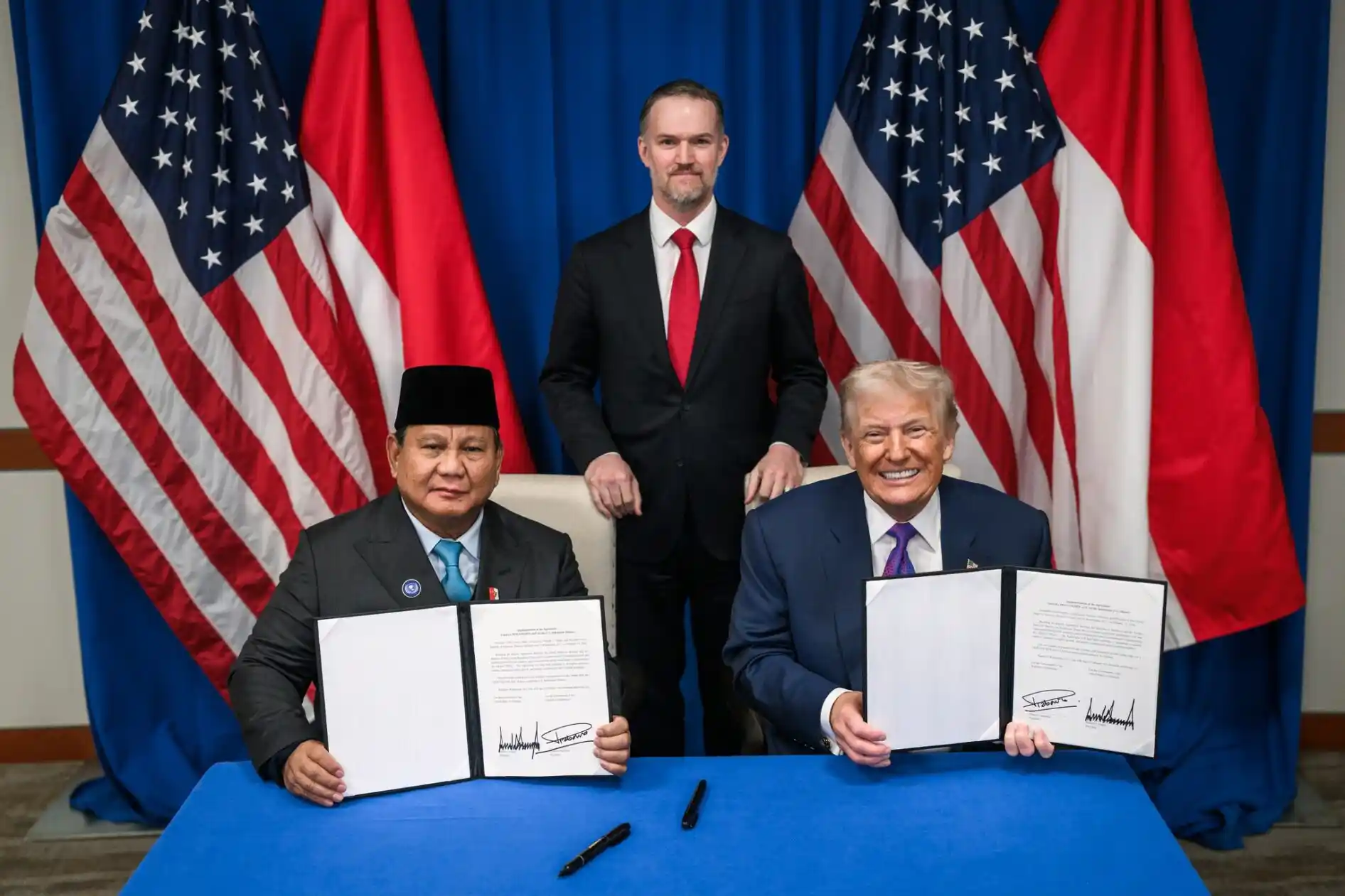
Fast forward to 2026, speculation has arisen about the United States abandoning its Pacific allies to the mercy of China after the Pentagon redeployed military assets from the Pacific theatre to West Asia to compensate for losses in the war with Iran. Indeed, the United States cannot sever its umbilical cord with Israel in its West Asia policy, and successive residents of the White House have remained consistently loyal to it. Thus, the war with Iran raises questions about where American geostrategic priorities truly lie—West Asia or the Pacific. Like Britain in 1939, the United States in 2026 finds its supremacy challenged in both geostrategically volatile regions. However, the recent conclusion of the Major Defense Cooperation Partnership agreement between the United States and Indonesia, amidst the war in West Asia, helps calm such anxieties.
The rise of China, both militarily and economically, has reinstated the Pacific theatre as a major flashpoint of this century. Beijing seeks to revise the region’s geostrategic map by dismantling the US-led security architecture. Much like the rise of Imperial Japan before World War II, China’s sustained efforts to strengthen its military—particularly its naval power—along with its growing assertiveness in the disputed South China Sea, are generating widespread concern across the Pacific. China’s territorial claims over Taiwan and the South China Sea, combined with its historical animosity toward Japan and its continued support for North Korea, are drawing the United States back into the Pacific theatre.
Within this complex strategic environment, Indonesia occupies a unique and crucial position as the world’s largest archipelagic nation, located at the crossroads of the Indo-Pacific. Analysts view the US–Indonesia defense deal as a pragmatic alignment of interests between Jakarta’s military modernization goals and Washington’s efforts to deepen ties with a strategically vital partner. The agreement includes provisions for military modernization and capacity building, training and professional military education, as well as joint exercises and operational cooperation.
According to Admiral Samuel J. Paparo, Commander of the US Indo-Pacific Command, interoperability with Indo-Pacific allies is key to creating a common operating system—one that connects defence systems, facilitates intelligence sharing, and enables coordinated responses. In essence, the United States aims to strengthen the defence capabilities of its Indo-Pacific allies to counter emerging threats.
One of the most significant aspects of the agreement is the provision granting US military aircraft expanded access to Indonesian airspace, which will enhance American surveillance over the Malacca Strait. Iran’s blockade of the Strait of Hormuz—Asia’s energy lifeline—has underscored the critical importance of securing strategic maritime chokepoints. The Malacca Strait, a vital trade and energy corridor, carries approximately 40 percent of global trade and 80 percent of China’s oil imports. US access to Indonesian airspace is therefore seen as part of an “energy denial” strategy aimed at pressuring China by potentially restricting its access to Iranian oil (of which it purchases an estimated 90 percent) through the Strait of Hormuz. This situation exposes China to significant vulnerability. Consequently, the US–Indonesia agreement has effectively transformed the Malacca Strait into an active zone of strategic contestation.
China’s concerns about this “Malacca Dilemma” date back to President Hu Jintao, who first used the term at a Chinese Communist Party economic work conference in 2003, highlighting the vulnerability of this critical chokepoint. These concerns extend beyond the United States to include India. C. Raja Mohan, in his book Samudra Manthan, notes Chinese analysts’ fears that India seeks military superiority at key maritime chokepoints, including the Straits of Hormuz and Malacca, which could place China in a vulnerable position if bilateral relations deteriorate.
Today, as these straits become increasingly entangled in geopolitical competition, such fears have resurfaced, further driving the militarization of these economic lifelines. China suspects that India aims to expand its influence into the South Pacific via the Malacca Strait, potentially with support from US allies like Australia. Beijing’s anxieties reflect the broader pressure it feels from the structured network of American allies stretching from the Korean Peninsula to Australia.
India’s recent interest in joining the Malacca Strait Patrol—welcomed by Singapore—has further heightened Chinese concerns, especially when viewed alongside growing India–US defense cooperation. The US–India Major Defense Partnership agreement, concluded last October, seeks to strengthen interoperability across all domains—land, sea, air, space, and cyberspace—to maintain peace and security in the Indo-Pacific and address regional challenges.
India–US maritime cooperation now extends from East Africa to the Malacca Strait and beyond, aligning with the strategic objectives of both nations. Meanwhile, India’s Andaman and Nicobar Islands—located at the entrance of the Malacca Strait—are undergoing significant military infrastructure development and are increasingly viewed by the United States as an “extremely valuable asset” for collaboration in countering Chinese expansionism. The Indian Navy already conducts coordinated patrols (CORPAT) with Thailand and Indonesia along their maritime boundaries.
India and Indonesia share a commitment to maintaining a free, open, peaceful, and stable Indo-Pacific, guided by international law and respect for sovereignty—a subtle reference to concerns over China’s assertiveness in the South China Sea. Although skepticism remains about India joining the Malacca Strait Patrol in the near future, US surveillance operations from Indonesia could significantly bolster India’s strategic objective of containing China in the Pacific.
The United States considers India an “indispensable” and “essential partner” for maintaining a favourable balance of power in Asia. The strengthening of US–India defense collaboration, combined with US–Indonesia operational cooperation, advances Washington’s broader vision of an Indo-Pacific “common operating system” that integrates defense systems, enhances intelligence sharing, and coordinates responses to counter Chinese expansionism—ultimately serving the collective security interests of the Indo-Pacific region.