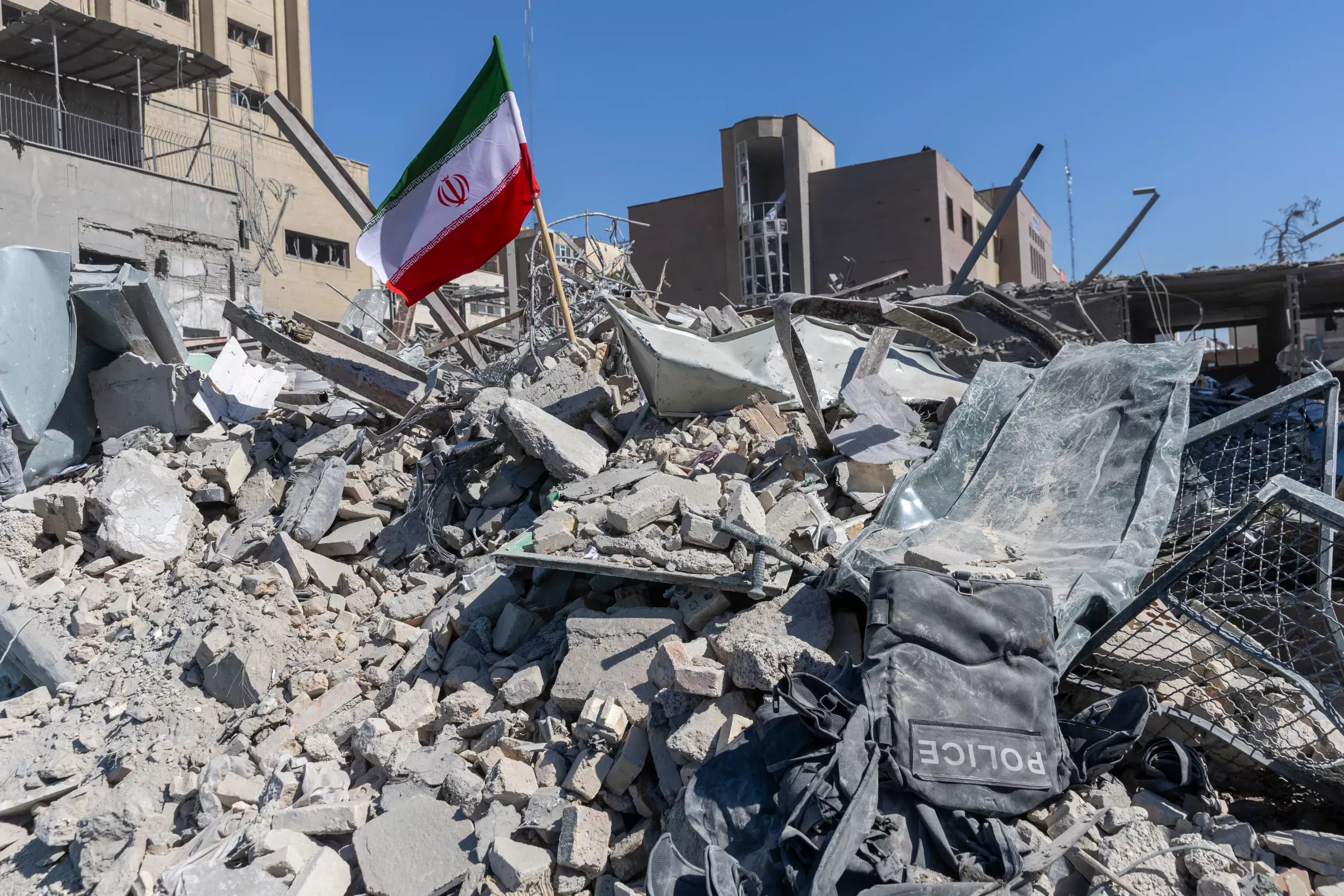
The ceasefire now being discussed in West Asia is best understood not as a comprehensive regional peace, but as a narrow and fragile pause in the ongoing conflict between Iran, Israel, and the United States that has, for the time being, reduced the larger energy and shipping shock. In a statement from the Ministry of External Affairs (MEA), on 08 April 2026, New Delhi officially welcomed the ceasefire and anticipated that the pause would lead to “lasting peace in West Asia.” This statement also underlined the significance of de-escalation, dialogue, diplomacy, and unhindered navigation through the Strait of Hormuz, indicating the need for restoring regional stability, maritime security, and commercial normality.
What makes this ceasefire strategically important is the geography of the conflict. The recent conflict disrupted the Strait of Hormuz through which the major energy trade of the West Asian region happens. In the case of India, its major oil and gas requirements are also fulfilled through this region, making it acutely vulnerable to any prolonged interruption in West Asian energy supplies. At the same time, this broader West Asian conflict could reduce global growth even if the ceasefire holds. This has led countries like India to secure emergency crude arrangements and diversify suppliers to cushion the impact of supply chain disruption. In the case of India, therefore, the ceasefire matters as an important factor in its energy security. Prior to the onset of this conflict, India had begun diversifying its crude oil sourcing base to around 40 countries. This diversification has clearly improved resilience, but it has not eliminated exposure as India still relies heavily on the Gulf shipping routes. In the FY 2025-2026, West Asian energy sources accounted for around 90 percent of India’s LPG imports. The current crisis, however, underscored how quickly a regional conflict can become a domestic supply problem for India.
The second major impact is primarily economic. This ceasefire can reduce the immediate pressure on oil prices, insurance, and freight rates. However, this relief is partial, not decisive. In other words, the ceasefire may stop India’s situation from worsening rapidly, but by itself, it does not restore the previous energy trade scenario between India and West Asia. This ceasefire can generate significant economic benefits for India by stabilizing a region that is cardinal for its energy security, trade flows, and diaspora. The reduced geopolitical tensions can typically lead to moderation in global oil prices, which would in turn ease the inflationary pressures, improve fiscal balances by reducing subsidy burdens, and support macroeconomic stability. The ceasefire would result in the secure vital maritime trade routes, particularly through the Strait of Hormuz and the Red Sea corridor. Stability would therefore ensure smoother trade flows, benefiting India’s exports and imports, including critical commodities and intermediate goods. Further, the large Indian diaspora in the West Asian region will also face a reduced risk. This would also lead to the region, which could revive investment opportunities, including infrastructure, energy partnerships, and connectivity initiatives, thereby deepening India’s economic engagement with the region.
The third impact is related to logistics. West Asia is not just an energy source for India, but it is also a market, a transit corridor, and a redistribution hub. During the current crisis, the Indian government initiated a weekly monitoring mechanism to track export-import trends and assess sectoral stress to manage because of the supply chain disruptions. Additionally, the World Bank has observed that the Red Sea shipping crisis significantly reduced maritime traffic through the Suez Canal and the Bab el-Mandeb Strait, thereby intensifying pressures on India’s westbound trade routes.
A fourth, and often understated, dimension is the Indian diaspora. The large Indian communities across the Gulf region, including over 4.3 million Indians in the UAE and almost 2.75 million in Saudi Arabia, are alongside substantial populations in Kuwait, Qatar, Oman, and Bahrain. These Indian citizens require not only protection, but also are the pillar of India’s remittance economy and wider Gulf linkages.
The ceasefire offers India a narrow but meaningful opportunity. New Delhi has tried to preserve balanced relations across the fractured West Asian region by promoting strong strategic ties with Israel, deep energy and diaspora ties with the Gulf monarchies, historic civilizational linkages with Iran, and an interest in regional connectivity and maritime stability. India’s official response was therefore carefully calibrated, which welcomed the ceasefire, promoting diplomacy and freedom of navigation rather than taking sides in the conflict’s political narratives. This is classic Indian crisis diplomacy in West Asia—pragmatic, interest-driven, and pushing for stability.
Still, the most challenging aspect right now is to predict whether the durability of this ceasefire will last. The evidence points to caution rather than confidence. This ceasefire arrangement can best be described as a conditional pause rather than a final settlement. The Core issues remain unresolved, i.e., the terms of the ceasefire are contested, Iran and the United States retain military readiness, and Israel has publicly disputed whether Lebanon is included in the ceasefire. Further, the ceasefire’s success depends not just on the restraint followed by the United States and Iran, but also on whether violence in adjacent theatres, especially Lebanon, can be contained. It is quite likely that the ceasefire will hold in the short term, but it is less likely to mature into a durable peace. The reason is simple: all sides have immediate incentives to avoid a catastrophic escalation in energy markets and maritime chokepoints, especially in the Strait of Hormuz. There is a possible chance that with the renewed contestation related to sanctions, nuclear issues, or maritime trade routes, the current pause could unravel quickly. In the case of India, the ceasefire reduces immediate pressure on oil, trade, shipping, inflation, and diaspora risk. But it does not remove the structural lesson of the crisis i.e., India’s rise will remain vulnerable to shocks in West Asia as long as energy dependence, maritime concentration, and supply chain fragility remain high. The real Indian takeaway is not that the crisis has passed, but that every future West Asian ceasefire must be treated as temporary until proven otherwise.
The views expressed belong to the author and do not represent the institution.