The ongoing US–Israel–Iran conflict has, on the one hand, sent shockwaves through global energy supply chains, especially in Asia. On the other hand, it has made US allies and partners in East Asia look askance at Washington’s security guarantees, as the Pentagon shifts its missile and naval assets from the Pacific to West Asia. This has triggered fears that such redeployments could leave the Indo-Pacific under-defended against Chinese assertiveness. Indeed, there is growing anxiety about the gradual demotion of Southeast Asia in the current US administration’s priority list, with the US National Security Strategy 2025 barely mentioning the region.
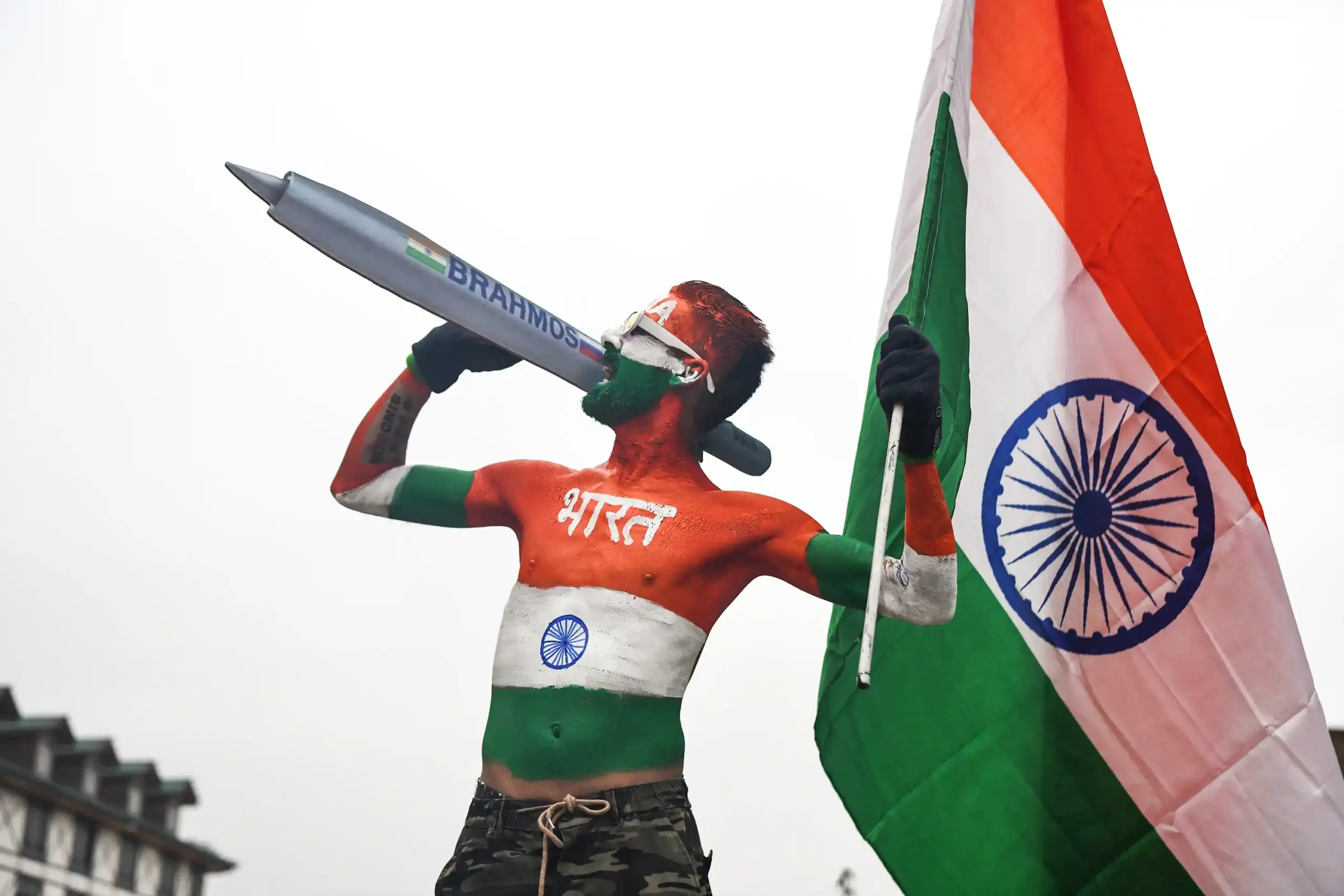
In this context, Southeast Asian countries are engaging with a broader array of external partners to enhance their military capabilities. Indonesia’s recent decision to procure the BrahMos missile from India is significant. India, along with Japan and South Korea, is offering capacity-building, training, and technological cooperation to Southeast Asian countries like Indonesia to strengthen their ability to respond to China’s growing assertiveness. India had earlier delivered BrahMos missiles to the Philippines in 2024 and is edging closer to a $700 million deal with Vietnam.
India appears to be targeting Southeast Asia as a key market for the BrahMos missile. This supersonic cruise missile, jointly developed with Russia, has generated considerable interest due to its speed, precision strike capability, and versatility, making it a formidable weapon for land, sea, air, and even submarine-based operations. Capable of reaching speeds between Mach 2.8 and Mach 3—significantly faster than many conventional cruise missiles used by naval forces worldwide—the missile can strike targets over 400 kilometers away and can be launched from multiple platforms.
The missile is gaining traction amid the growing urgency among South China Sea littoral states to strengthen their deterrence capabilities. Its deployment is aimed at countering any aggressive naval posture by China in asserting its territorial claims over the South China Sea, which overlap with those of other littoral states. One way to bolster such capacity is by enhancing Anti-Access/Area Denial (A2/AD) capabilities. An emerging pattern can be observed among countries like Vietnam, the Philippines, and Indonesia in this regard. While China’s People’s Liberation Army Navy (PLAN) has developed formidable A2/AD capabilities, anti-ship missiles such as BrahMos enable smaller countries to adopt similar strategies.
Indonesia, in particular, stands on the brink of its own A2/AD breakthrough, and the procurement of BrahMos missiles could become one of Southeast Asia’s most consequential coastal defense acquisitions.
Although not a formal claimant in the South China Sea dispute, Indonesia’s Exclusive Economic Zone (EEZ) around the Natuna Islands overlaps with China’s “Nine-Dash Line.” This overlap has led to tensions between Beijing and Jakarta, particularly when Chinese vessels operate within Indonesian maritime zones. In the North Natuna Sea, Chinese vessels have reportedly disrupted energy exploration activities conducted by Indonesia’s state-owned company, Pertamina.
China’s “grey zone warfare” tactics in the South China Sea have become a key instrument in expanding its territorial claims without resorting to outright military conflict. This strategy effectively pressures other countries into accepting gradual changes to the status quo in China’s favor. In response, Indonesia has been strengthening its maritime security infrastructure across key outer islands, with the Natuna and Rote Islands at the forefront of this initiative.
In 2016, Indonesia’s legislature proposed the construction of a military base on Natuna Island after an incident involving its maritime patrol vessel Hiu 11 and a Chinese fishing boat engaged in illegal activities within Indonesia’s EEZ. Although Jakarta does not openly label China as a threat, its 2015 Defence White Paper warns that tensions in the South China Sea could jeopardize the security of its outer islands. The procurement of BrahMos missiles is thus intended to strengthen Indonesia’s naval capabilities, while also reflecting its desire to diversify defense sources and maintain strategic balance with Western partners.
From India’s perspective, the deal represents an important milestone in enhancing its political and security role in Southeast Asia, thereby strengthening its Indo-Pacific strategy. Indonesia, by virtue of its size and geographic location, is central to India’s regional calculations. Situated between the Indian and Pacific Oceans, Indonesia plays a key role in India’s efforts to counter China’s expanding maritime presence in the Indian Ocean and the Malacca Strait.
India has been steadily developing defense and security cooperation with Indonesia since the early 2000s, including a defense cooperation agreement in 2001 and joint naval patrols in the Andaman Sea beginning in 2002. During Prime Minister Atal Bihari Vajpayee’s visit to Jakarta in 2001, both countries signed a defense cooperation agreement, followed by the announcement of a “New Strategic Partnership” in 2005, emphasizing political, defense, and security collaboration.
This partnership has become increasingly relevant in today’s realist international environment, where aggression is becoming more normalized. India and the South China Sea littoral states, including Indonesia, share concerns about potential Chinese aggression and the resulting disruption of maritime trade and communication routes. Consequently, India is strengthening military ties with these countries through advanced defense deals and expanded security cooperation. The BrahMos deal will enhance Indonesia’s ability to safeguard its maritime domain, including critical sea lanes and strategic straits.
India’s BrahMos deal is also seen as projecting the country as a major arms exporter, offering Southeast Asian nations a more collaborative and neutral alternative compared to China’s transactional model and the United States’ sanctions-prone approach. Indeed, the deal reflects India’s emergence as an alternative security partner for Southeast Asia—one that offers a third pathway free from sanctions risks, hegemonic overtones, and intrusive conditions.
This approach carries a non-aligned appeal, helping countries reduce dependence on an increasingly unpredictable Washington while avoiding the risk of US sanctions associated with defense purchases from Russia or China. At the same time, the United States itself is encouraging partners to become more self-reliant. In this sense, India’s growing security partnerships in Southeast Asia complement US Indo-Pacific objectives aimed at balancing China’s rise.
Thus, the BrahMos deal with Indonesia—following a similar agreement with the Philippines—underscores India’s expanding strategic role in the broader Indo-Pacific geostrategic landscape.