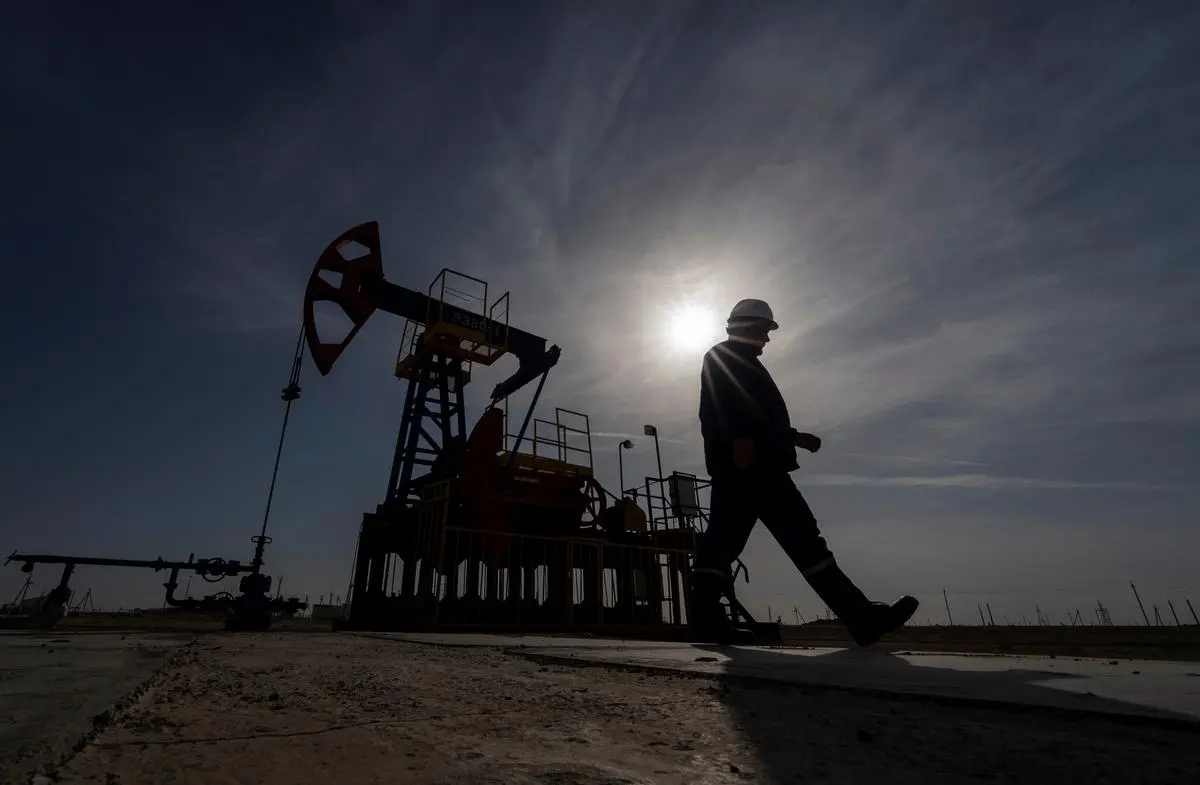
Oil India Limited (OIL) has achieved its highest-ever crude oil production from the Jodhpur sandstone formation in the Baghewala field, Jaisalmer, surging to a record 1,202 barrels per day (bpd). This represents an impressive nearly 70 per cent increase from the previous year’s 705 bpd. For the financial year 2025-26, the Rajasthan operations delivered 43,773 metric tonnes of heavy crude oil — a substantial rise from 32,787 metric tonnes the year before. In a world of energy uncertainties, this onshore triumph stands as a beacon of India’s growing domestic capabilities.
The Baghewala field, discovered in 1991 and covering 200.26 square kilometres, commenced commercial production in 2017. Today, with 52 wells drilled and 33 in active production, the field showcases the power of innovation in challenging geology. Heavy, viscous crude once difficult to extract now flows efficiently thanks to advanced techniques like Cyclic Steam Stimulation (CSS), a thermal enhanced oil recovery method perfectly suited to the Thar’s tight sandstone reservoirs. Steam is injected in cycles to reduce viscosity, dramatically boosting flow rates and recovery. The produced crude is efficiently transported by tankers to ONGC’s facilities in Mehsana, Gujarat, and then piped to Indian Oil Corporation’s Koyali refinery, integrating seamlessly into the national supply chain.
This achievement aligns beautifully with Union Petroleum Minister Hardeep Singh Puri’s forward-looking vision for energy self-reliance. Under his guidance and the leadership of Prime Minister Narendra Modi, India is steadily strengthening its domestic energy infrastructure, diversifying sources, and pursuing ambitious exploration and production goals to build long-term security and resilience.
Credit for stellar execution on the ground goes to OIL’s dynamic Chairman and Managing Director, Dr. Ranjit Rath. His strategic focus on technology deployment and operational excellence has unlocked the potential of this heavy oil asset, turning a once-marginal field into a shining example of what determined leadership and innovation can achieve.
India’s energy landscape gains fresh momentum from such milestones. The country’s domestic crude production receives a welcome boost from Rajasthan, which already contributes significantly to onshore output. OIL’s broader performance underscores this positive trajectory — the company recently hit an all-time high daily production of 1,47,159 barrels of oil equivalent, reflecting robust growth across its portfolio. Every additional barrel produced domestically enhances supply stability, supports refineries, and contributes to economic vitality in the region through employment, infrastructure development, and local economic benefits.
The Thar success highlights several uplifting realities. Public sector enterprises like OIL are delivering cutting-edge solutions by adapting global best practices to Indian conditions. Unconventional and heavy oil resources are proving to be valuable national assets when innovative recovery methods are applied. The desert economy benefits directly, with local communities gaining from sustained activity and related opportunities.
Oil India’s record-breaking performance in the Thar Desert exemplifies the progress India is making towards greater energy confidence. By scaling such technologies, expanding successful plays, and maintaining strong execution, the nation continues to harness its own resources effectively. The black gold beneath Jaisalmer’s golden sands is not just fuel — it is a symbol of determination, ingenuity, and a brighter, more self-assured energy future for India.