Chittagong, a hilly locality in south Bangladesh and adjacent to the north-east Indian States of Tripura and Mizoram, is emerging as a potential security threat to eastern India with an enhanced platform for armed outfits belonging to Bangladesh, Myanmar’s Arakan (Rahine) State, and northeast India. The Union government in New Delhi usually ignores the persistent suffering of the indigenous population in the Chittagong Hill Tracts (CHT), terming it an internal affair of Bangladesh. The persecution of Pahari people (as various CHT-based indigenous groups are collectively known) following the partial implementation of the CHT peace accord, signed in the late Nineties under the tenure of recently ousted premier Sheikh Hasina, still continues with different atrocious policies of the regime in Dhaka.
Nearly three decades after the signing of the CHT agreement, expected peace remains elusive in the region till date. Even though the accord formally ended a two-decade-long armed confrontation, the ultimate commitment for justice, meaningful autonomy, and land rights to Paharis (also known as Jumma people) is yet to be fulfilled. Heavy militarisation, unresolved land disputes, weakened civilian institutions, and persistent human rights violations in the CHT continue to draw international media attention. New Delhi’s foreign policy of not intervening in neighbours’ internal matters has indirectly helped the elements eventually grow. Moreover, with the proximity to sensitive international boundaries with India and Myanmar, a burning CHT always carries a stronger possibility of negative implications across the region, touching the Bay of Bengal.
It may be mentioned that the Chittagong locality, with over 95% non-Muslim population, was included in East Pakistan during the partition of Bharat/India. Later, a large number of Pahari families were displaced with the construction of the Kaptai hydroelectric dam in the 1960s. Various agencies estimated that no less than 1,00,000 individuals were evicted by the project and many of them entered India through the Tripura border. When the People’s Republic of Bangladesh was born as a sovereign country in 1971, the Chittagong tribal leaders urged the government in Dhaka for autonomy, but it was thoroughly rejected.
Adding more troubles to the Chittagong locals, over 4,00,000 landless Bengali Muslims were given settlement in the CHT and more than one hundred thousand Bangladeshi soldiers were also sent for their protection. The Pahari people started agitating against the incursion with democratic ways and soon the movement led by Parbatya Chattagram Jana Samhati Samiti turned violent. Bangladesh President Ziaur Rahman and later dictator Hussain Mohammad Ershad tried to resolve the issue with discussions, but their initiative did not succeed. Finally, Bangladesh Awami League leader Hasina, during her first premiership, came to ink the CHT accord on 2 December 1997 with an aim to end the prolonged armed conflicts.
But irony is that the Awami League, though it had made repeated promises, had not shown due political will to implement the peace accord. After returning to power again in 2009, Hasina took the same tricks to cheat the non-Muslim families in the CHT. However, the daughter of Bangabandhu Sheikh Mujibur Rahman often projected the CHT accord as a success story and she even expected a Nobel honour for her initiatives to bring peace to the southern Bangladesh region. Hasina, though deprived of such an honour, was awarded the Indira Gandhi Peace Award 2009 for her efforts to resolve the CHT crisis.
Dr Muhammad Yunus, the pioneer micro-finance banker, was honoured with the Nobel Peace Prize 2006 (jointly with Grameen Bank of Bangladesh), which annoyed Hasina and both of them grew personal enmities (which was reflected in their public outbursts and even actions). Prof Yunus, the lone Nobel laureate of Bangladesh, who took responsibility as the interim government head following Hasina’s escape from Dhaka after a massive public uprising took place in July-August 2024, also showed the same negligence towards the CHT issues.
One can remember that the CHT insurgency (1975–1997) resulted in the killing of over 30,000 people and the displacement of a large number of indigenous families. Shanti Bahini, an armed wing of PCJSS (formed in 1972 and a signatory to the CHT accord) lost nearly 2,000 rebels while fighting against the Bangladeshi security forces. Even though the accord granted some kind of autonomy and cultural rights to the Pahari people, they continue demanding its full implementation. Local Buddhists, Hindus, and other ethno-religious groups continue pursuing more autonomy, land rights, and protection from the state-encouraged Bengali-Muslim settlers in their localities.
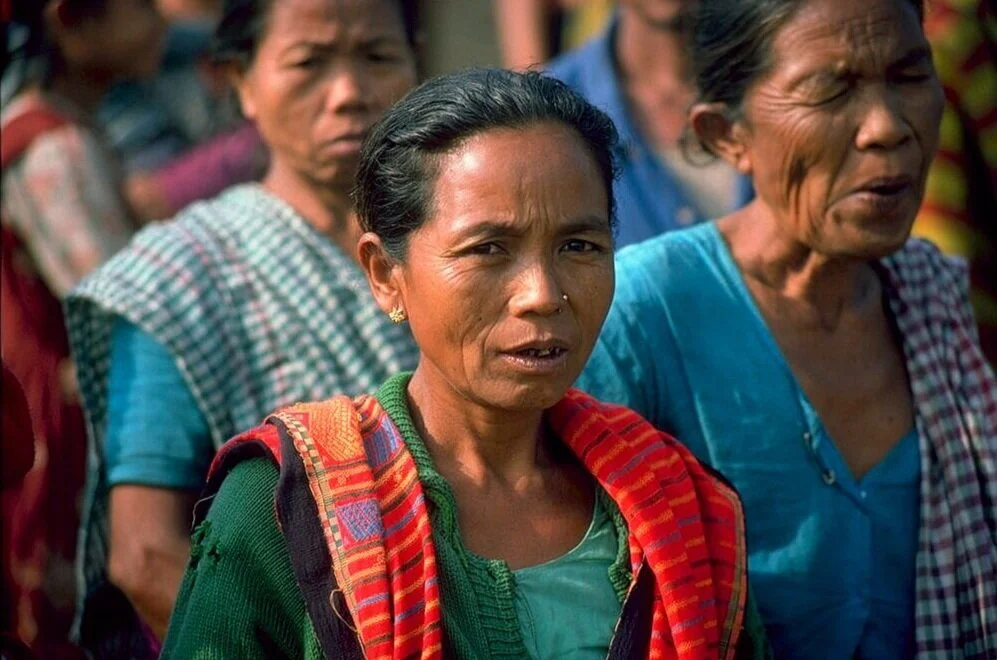
Comprising less than 1 % of the population of Bangladesh, which has more than 170 million people, with 91 % Muslims, these Pahari families primarily practice Buddhism, followed by Hinduism and Christianity. Migrated from Tibet, India, and Myanmar centuries back, the Paharis, comprising Chakma, Marma, Santhal, Mro, Tanchangya, Bawm, Tripuri, Khasi, Khumi, Kuki, Garo, Bisnupriya Manipuri, etc., maintain their own dialects even though they commonly use the Bengali language for larger communication.
Decades back, Chittagong was in the media for another wrong reason, as 10 truckloads of arms, ammunition, explosives, and other military hardware meant for the United Liberation Front of Assam were seized. The Bangladesh court sentenced Ulfa military chief Paresh Barua to death, but later in 2004, it was converted to life imprisonment in the arms smuggling case. In the last ten years, the CHT also faced the negative implications of the Rohingya Muslim’s exodus from Myanmar/ Burma. The Burmese military junta in 2017 chased and drove away nearly 7,00,000 Rohingyas from Rakhine/Arakan State, and all of them entered Bangladesh. The migration of Rohingyas continued for years, and today, Bangladesh claims to support over one million Rohingya refugees.
The current Bangladesh Nationalist Party-led regime in Dhaka is unlikely to show much interest in the CHT accord implementation, as both the ruling BNP and main opposition Jamaat-e-Islami in Jatiya Sangsad used to oppose the agreement. BNP leader and former premier Khaleda Zia, whose son Tarique Rahman is in the PMO now, often debated for its structural review. Some local leaders belonging to Pahari Gana Parishad, Pahari Chhatra Parishad, and Hill Women’s Federation also opposed the accord. Hence, it will be a matter of observation to see how the newly appointed CHT affairs minister Dipen Dewan (a Rangamati-based advocate turned politician belonging to the Chakma community and now in Tarique Rahman’s cabinet) addresses the issues.
There is another side of the story, as the CHT regional council, which was established in 1998 following the peace accord, remains under the control of the same group of people for decades. Similarly, three district councils of Khagrachari, Bandarban and Rangamati have been run by nominated members since 1989. Moreover, the people in power are also allegedly nurturing an armed group (Jumma Liberation Front). Now their militants are reportedly regrouping with the leaders from Arakan Rohingya Salvation Army, Rohingya Solidarity Organisation, as well as some separatist groups from far eastern India, which may pose a security concern for India too.
A volatile CHT may give an opportunity to the non-state actors and external forces to transform the entire region into a breeding ground for terrorists who would put south Bangladesh, eastern India, and western Myanmar in larger socio-political turmoil. They may also compel more indigenous families to leave the CHT and finally seek refuge in the Indian bordering areas. Probably, it’s high time for New Delhi to take a serious note of the CHT scenario and initiate pragmatic actions as early as possible.