
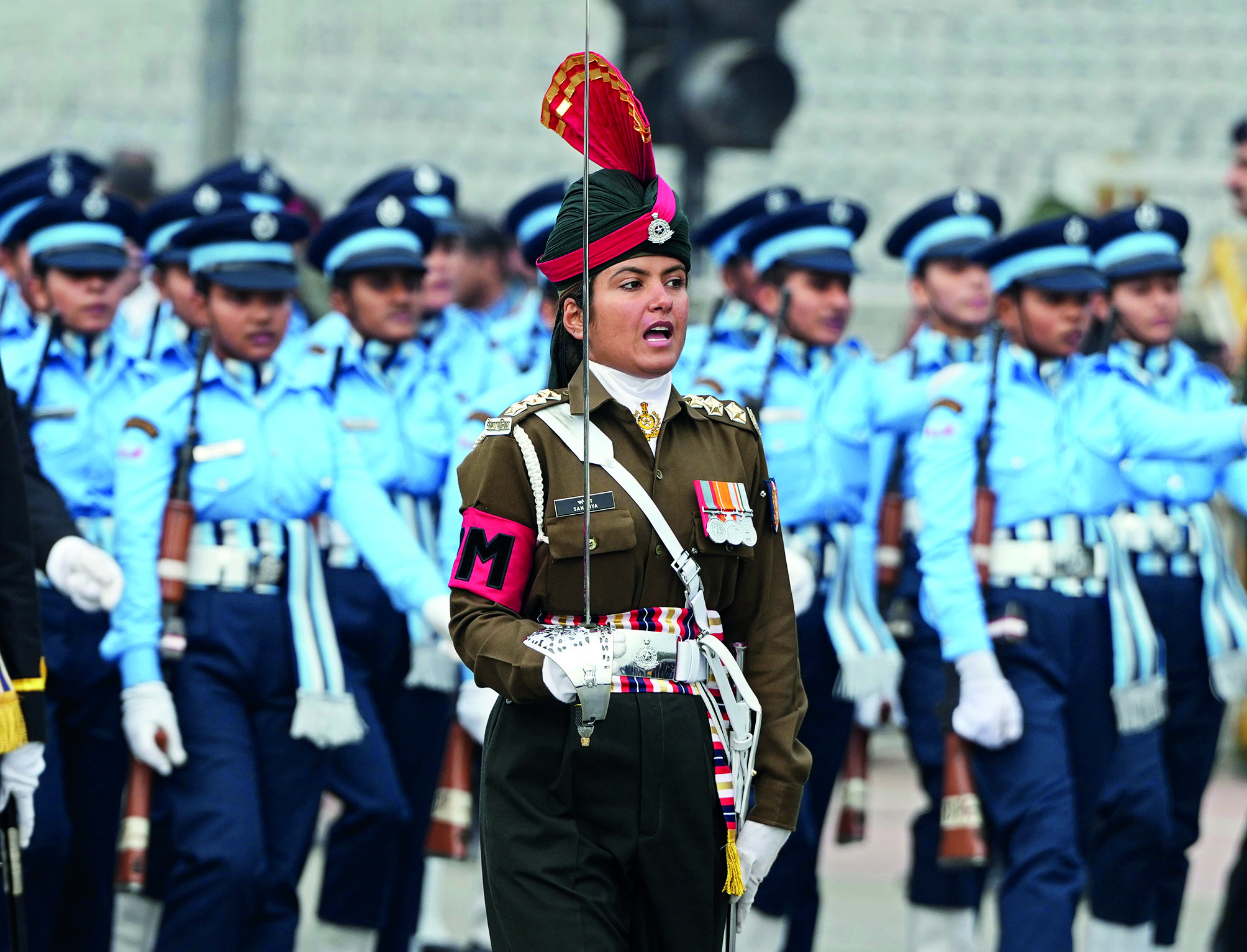
There is a photograph that has quietly become iconic. Flight Lieutenant Akshita Dhankar stands at attention beside the President of India, the tricolour unfurling from her hands into the Republic Day sky. It is a moment that would have been unimaginable a generation ago, and yet, for the thousands of women now serving across India’s Army, Navy, and Air Force, it is simply Tuesday.
As India counts approximately 11,000 women officers in its armed forces, it is worth pausing to understand just how extraordinary that number is, and how much further there is still to go.
A Century in the Making
The story of women in India’s defence forces begins not with fanfare, but with bandages. In 1888, ten British nurses arrived in Bombay to set up organised military nursing. By 1914, Indian women had joined their ranks. By 1926, the Indian Military Nursing Service was a permanent institution. For decades, this was largely where the story stayed: women as healers, not fighters; as support, not command.
The change came along in 1992, a year that deserves far more recognition in India’s gender equity history than it typically receives. That year, the Army introduced the Women’s Special Entry Scheme, the Navy inducted its first women officers, and the Air Force began commissioning women in flying, technical, and non-technical branches. It was a decisive institutional shift. Yet for years, the ceiling remained stubbornly low: short service commissions, non-combat roles, and no clear path to permanent careers or senior command.
What has changed since, especially in the last five years, is nothing short of a structural transformation.
Breaking Every Ceiling
Consider what Indian women in uniform have accomplished in just the past few years. Lt Gen Sadhna Saxena Nair became the first woman appointed Director General Medical Services (Army), the top position in the Army’s entire medical wing. Colonel Ponung Doming commands the world’s highest Border Task Force, stationed above 15,000 feet in the northern sector. Squadron Leader Shivangi Singh flies the Rafale. Squadron Leader Avani Chaturvedi participated in aerial combat exercises with the Japan Air Self-Defense Force. And Sub Lieutenant Aastha Poonia, in 2025, became the first woman pilot streamed into the Fighter branch of Naval Aviation, earning her Wings of Gold at INS Dega.
These are not symbolic appointments. They are operationally substantive roles in some of the most demanding environments on earth. Wing Commander Anjali Singh has gone further still, becoming India’s first woman military diplomat, posted as Deputy Air Attaché at the Embassy of India in Russia. Meanwhile, Lt Cdr Dilna K and Lt Cdr Roopa A spent 238 days at sea completing a 25,600-nautical-mile global circumnavigation aboard INSV Tarini. The world’s oceans, it turns out, do not much care about glass ceilings.
The Pipeline Is Being Built
Perhaps the most consequential development of this era is not what women officers are doing today, but who is being trained for tomorrow. In 2021, the Supreme Court ordered that women be admitted to the National Defence Academy, India’s most prestigious military training institution, which had been exclusively male since its founding. The government complied, and by early 2026, a total of 158 women cadets had joined the Academy. Seventeen graduated in May 2025; fifteen more in November. The Army has increased its annual intake of women cadets by 80 percent, from 80 to 144 vacancies, in 2024 alone.
The Navy has opened all branches except submarines to women, including as Agniveers under the Agnipath scheme, making it the first service to do so. Girls are now inducted into Rashtriya Military Schools as a feeder stream for NDA entry. Ten percent of seats in all 33 Sainik Schools are reserved for girls. The pipeline, for the first time in Indian military history, is being consciously constructed.
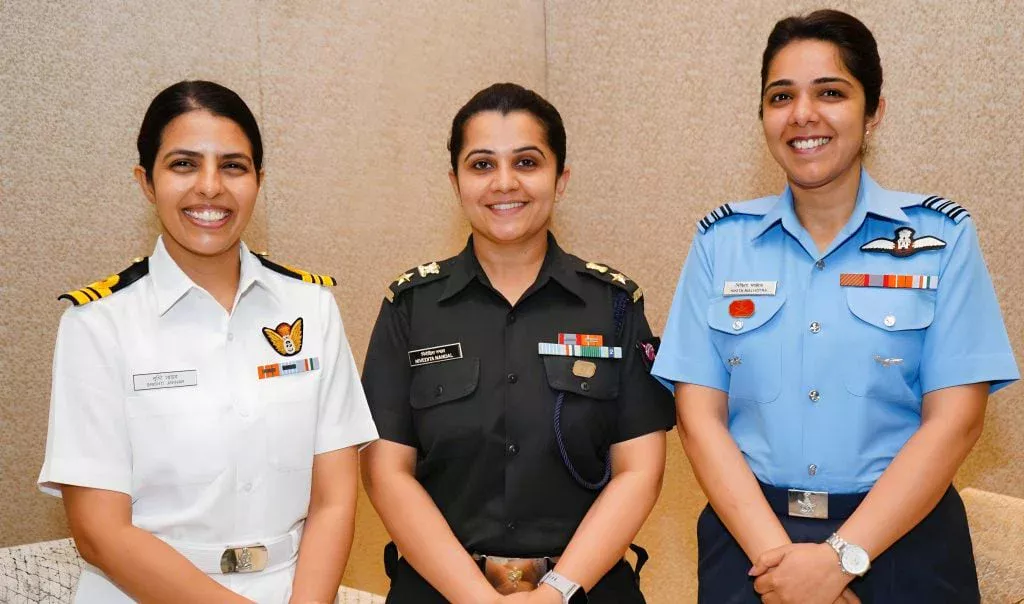
India’s commitment to women in defence is also earning international recognition. Major Radhika Sen was named the UN’s Military Gender Advocate of the Year 2023. In 2025, Major Swathi Shanthakumar received the UN Secretary-General’s Gender Award for her work on inclusive peacekeeping in South Sudan. As of mid-2025, more than 154 Indian women are deployed across six UN peacekeeping operations, and India has already achieved 22 percent representation of women as staff officers and observers, ahead of the UN’s own 2028 targets.
Yet honesty demands we acknowledge the distance still to travel. Women make up a fraction of the total armed forces strength. Submarines remain closed to women in the Navy. The “other ranks”, the non-officer enlisted grades that form the backbone of military strength, remain almost entirely male. And institutional culture, which outlasts policy by decades, will require sustained effort to shift.
What is encouraging, however, is that the reforms of the past decade have been structural, not cosmetic. Permanent commissions across 12 Arms and Services. Combat roles formalised as permanent policy, not experiments. Command appointments are opening up. These are not gestures; they are the architecture of genuine inclusion.
The story of women in India’s armed forces is, at its core, a story about what institutions can become when they are willing to evolve. From nursing tents on the Western Front to Rafale cockpits over the Indian Ocean, from support roles to Lieutenant General rank, the transformation has been real, it has been hard-won, and it is far from finished.
We should celebrate not just the milestones, but the women who forced them, through courts, through service, through sheer excellence in roles that the institution once said were not meant for them. They have not merely opened doors. They are building the house.

