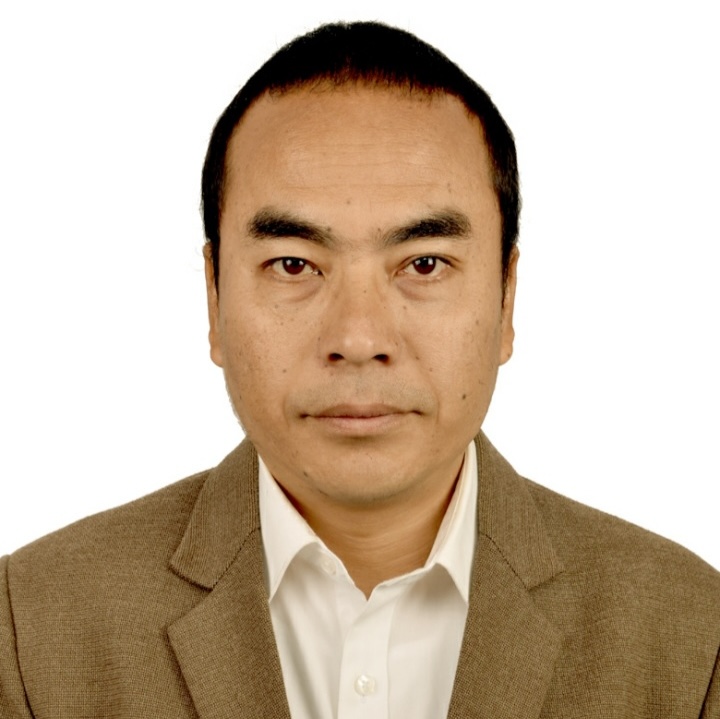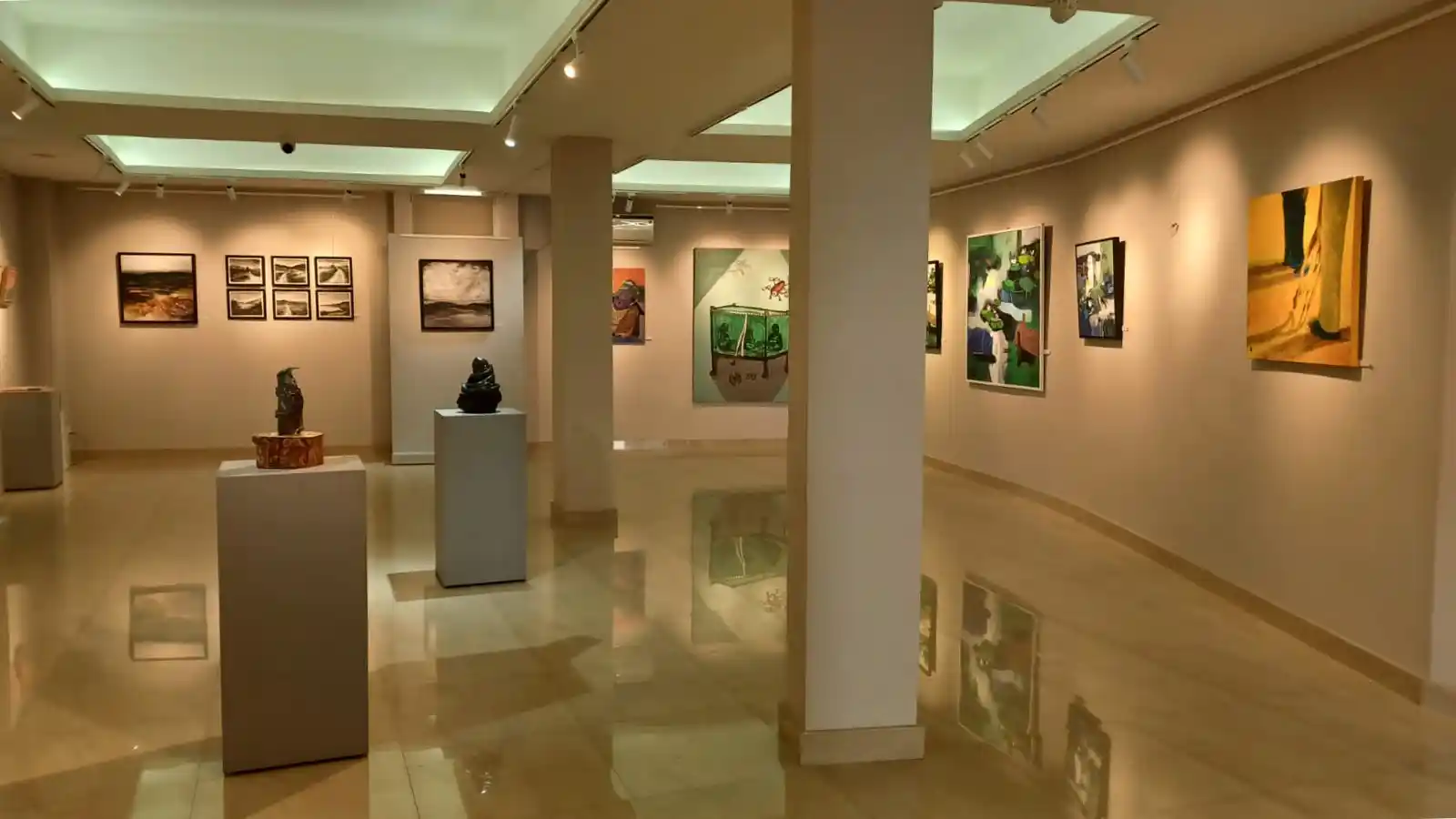
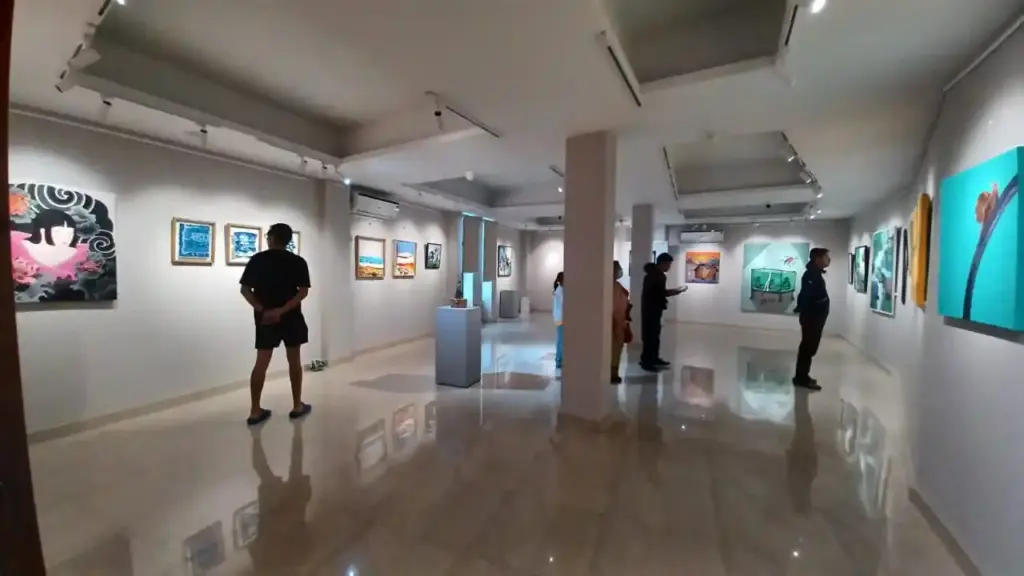
“The happiest thing to work in the gallery is seeing youngster enjoying their moments in the gallery. Most of them love to click pictures at the gallery to post on social media. I allow them to do so, as it gives them some belongingness, besides promoting the gallery”, remarks Robin Wahengbam, who owns Imphal Art Gallery. Founded on February 18, 2024, after a long-cherished dream, the gallery, with its ambience and display of various artworks, aims to provide its audience with the best recreational experience. Located along the airport road, the gallery, with a well-curated display of varied paintings, has also been telling regional stories to domestic and foreign tourists. However, Robin observes a significant difference in footfall at art galleries in Imphal and in larger cities. He believes that one day people in his town will acquire the habit of dropping by art galleries. He believes that his Art gallery is cultivating the habit of art appreciation among the general public. From contemporary painting to abstract art, the gallery has hosted works from the State, neighboring States, and Myanmar. It has collaborated with the Indira Gandhi National Center for the Arts in a regional art exhibition. Hosted art exhibition at the serene freshwater lake – Loktak Lake, besides collaboration works are in the pipeline with major art houses at New Delhi and Mumbai in the near future. He has a conviction, and to him, Imphal Art Gallery is a hallmark of an art movement in his town.
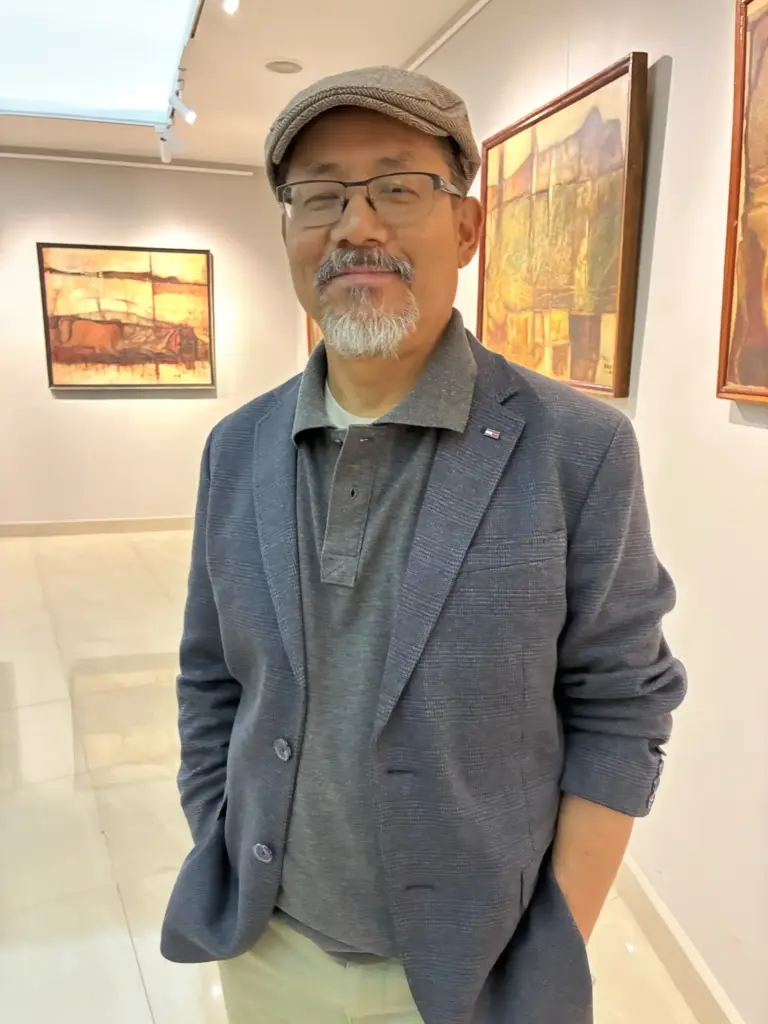
The Gallery is open to the public from the afternoon to the evening on all days, except Monday. Moreover, over the last two years, Robin has had a good experience in Manipur’s strong market. People are buying paintings from the gallery during the exhibition or from the daily display. Paintings are sold at an average price of Rs 30,000 per painting. Some artwork has also landed up in countries like Sweden. Being an artist himself, Robin finds happiness in his gallery, which somehow gives space to art lovers and helps the artists be heard and appreciated. The gallery was built from his savings and bank loans. The gallery has yet to have staff and is run by Robin himself, with a few artist colleagues, some of them filmmakers, who would volunteer during exhibitions. In the evening, the gallery’s reception would be filled with artists’ colleagues, who would often drop by for a cup of coffee or tea and interesting conversation.
Robin himself had a turbulent start as an artist. At school, he started winning prizes for his drawings in the fifth standard. His parents received complaints about Mr. Robin spending more time scribbling and doodling than reading textbooks in school. The only person who supported him was his father, Ibohal, a retired college teacher. At a tender age, his father bought him books of famous painters like Leonardo Da Vinci, Michale Angelo, etc. Robin would copy the paintings from the book, though he could not understand the great works. He learnt fine arts from a basic course at Imphal Art College and from artists from his locality. One of his paintings was selected by Manipur State Kala Academy for its annual exhibition. The jury that selected his painting was renowned Indian painter and sculptor Jatin Das. Intrigued and curious about the paintings of the outside world, he plunged himself into a five-year course at Visva – Bharati University, Santiniketan, West Bengal. After the course, he worked in art studios in Kolkata for two years and became an art teacher at a Delhi Public School branch in Assam. He came across an advertisement from the Manipur government calling artists to submit drawings for the mascot for the Fifth National Games. He drew a Sangai, or the Brow Antlered Deer, the State animal of Manipur, as Mascot. His work was selected from among several other artists’ submissions. He began receiving projects from the State government and tried to make a living until he finally secured a central government job as a Graphic Artist at the Educational Multimedia Research Center on the Manipur University Campus. He now runs his Gallery in the afternoon and evening and is determined to regain his status as a working artist. He also teaches fine arts to school-going children on Sundays and holidays. And he would always say, be it any book on varied subjects like science, maths, astrology, or literature, the publisher or the author would always search for an artist to draw or paint a book cover. Fine Arts is such an important subject; it is vast, covering sculpture, painting, graphics, etc. Why wouldn’t anyone study fine arts?