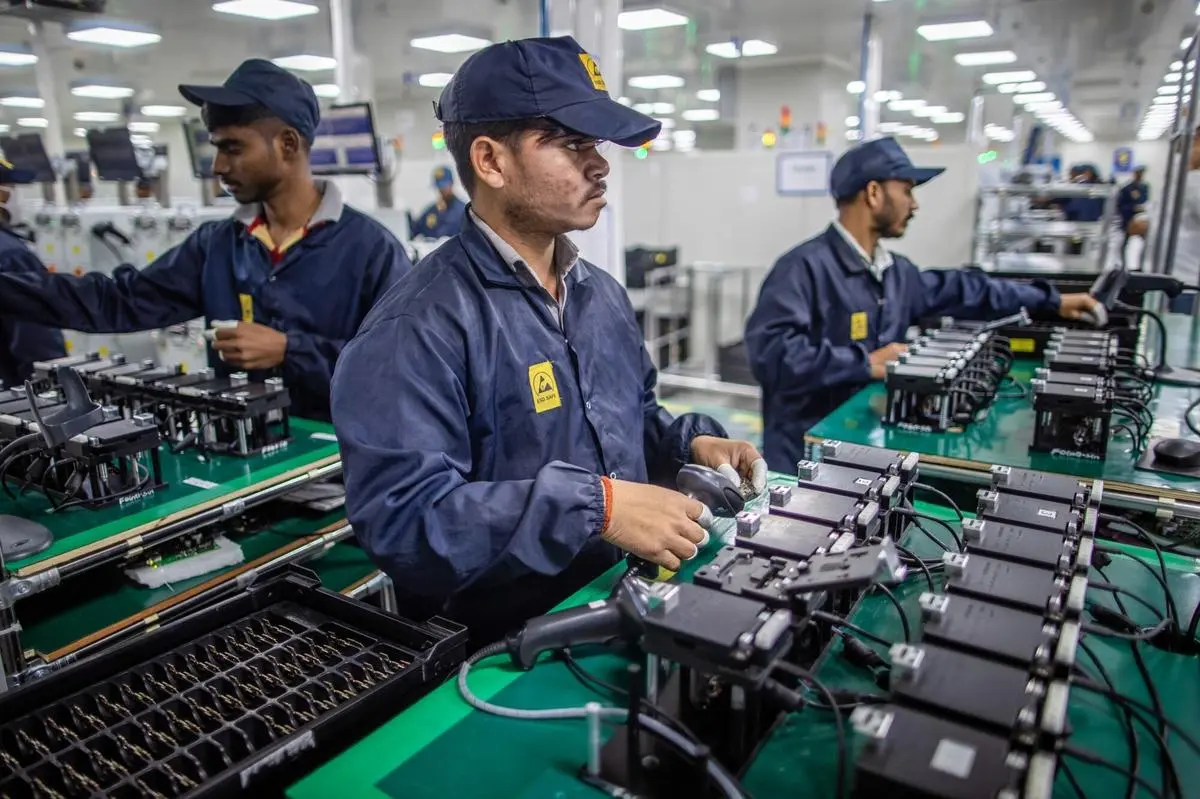
India’s electronics manufacturing industry has entered a transformative phase driven by strong policy initiatives and sustained investment. The Union Budget 2026–27 significantly enhanced the outlay for the Electronics Components Manufacturing Scheme (ECMS) to ₹40,000 crore, reflecting a strategic effort to deepen domestic manufacturing capacity and strengthen global competitiveness. Over the past decade, India has emerged as a major electronics production hub, achieving nearly a six-fold increase in output and generating millions of jobs across the country.
The ECMS represents a crucial step in India’s ambition to create a self-reliant electronics ecosystem while positioning itself as a key player in global value chains. By supporting component manufacturing and encouraging investment across the supply chain, the scheme seeks to address structural gaps that have historically limited domestic value addition.
Growth of India’s Electronics Manufacturing Sector
India’s electronics sector has witnessed rapid expansion, driven by consistent policy support and increasing export competitiveness. Electronics have become one of the fastest-growing export categories, rising significantly in global rankings within a few years. Strong export performance reflects the country’s expanding integration with international supply chains and its growing reputation as a reliable manufacturing destination.
Production trends illustrate the scale of transformation. Electronics manufacturing has expanded several times over the past decade, while exports have grown even faster, highlighting improved competitiveness and policy effectiveness. Mobile phone manufacturing has played a central role in this growth story. India is now among the world’s leading mobile phone manufacturers, with production and exports rising sharply due to strong domestic policies and industry participation.
Overview and Objectives of ECMS
The Electronics Components Manufacturing Scheme was introduced to develop a robust ecosystem for manufacturing electronic components, sub-assemblies, and raw materials within India. Its primary objective is to strengthen domestic value addition, attract global investment, and reduce reliance on imports.
The scheme focuses on building capacity across the electronics value chain by encouraging companies to manufacture essential components locally. It complements broader initiatives aimed at strengthening semiconductor manufacturing and advanced electronics production. By promoting local innovation and expanding industrial infrastructure, ECMS aims to position India as a major global hub for electronics manufacturing.
Investment Trends and Expected Outcomes
Investment projections under ECMS demonstrate strong industry confidence. Expected investment commitments have surpassed initial targets, indicating growing interest from domestic and international companies. Over the coming years, the scheme is projected to generate significant production output and create large-scale employment opportunities.
Approved projects span multiple states, reflecting nationwide participation and regional industrial growth. These projects cover a wide range of electronic components such as printed circuit boards, connectors, camera modules, and optical devices—key elements that support advanced electronics manufacturing. The distribution of projects across different regions highlights the government’s emphasis on balanced industrial development and inclusive growth.
Role of Complementary Policy Initiatives
ECMS operates within a broader ecosystem of government initiatives designed to accelerate India’s electronics sector. Policies such as the Production-Linked Incentive scheme encourage companies to expand production, adopt new technologies, and enhance export capabilities. Industrial cluster initiatives provide world-class infrastructure, including ready-built factory facilities and plug-and-play manufacturing environments that help reduce operational costs and improve efficiency.
Additional incentives, including customs duty exemptions and financial support for capital expenditure, aim to strengthen domestic manufacturing capabilities. Together, these measures create a comprehensive framework that supports innovation, attracts investment, and enhances India’s position in global value chains.
Projected Impact for FY 2026–27
The ECMS is expected to deliver measurable outcomes in the near term. Increased investments are projected to translate into higher production capacity, improved technological capabilities, and steady job creation. As projects scale up, the scheme is likely to enhance domestic manufacturing resilience and reduce reliance on imports of key electronic components.
These projected outcomes signal steady progress toward building a high-value manufacturing base that can compete globally. By strengthening the local component ecosystem, ECMS contributes to the broader goal of creating a sustainable and innovation-driven electronics industry.
The Electronics Components Manufacturing Scheme represents a cornerstone of India’s industrial strategy in the electronics sector. The increased budgetary allocation underscores the government’s commitment to expanding domestic production capacity and supporting long-term industry growth. Through targeted incentives, strategic policy alignment, and strong industry participation, ECMS has the potential to transform India into a global hub for advanced electronics production.
As investments continue to rise and domestic capabilities expand, the scheme is expected to drive technological innovation, generate employment, and deepen India’s integration into global supply chains. With sustained policy support and industry collaboration, India is well positioned to achieve its vision of becoming a leading global electronics manufacturing powerhouse in the coming decade.