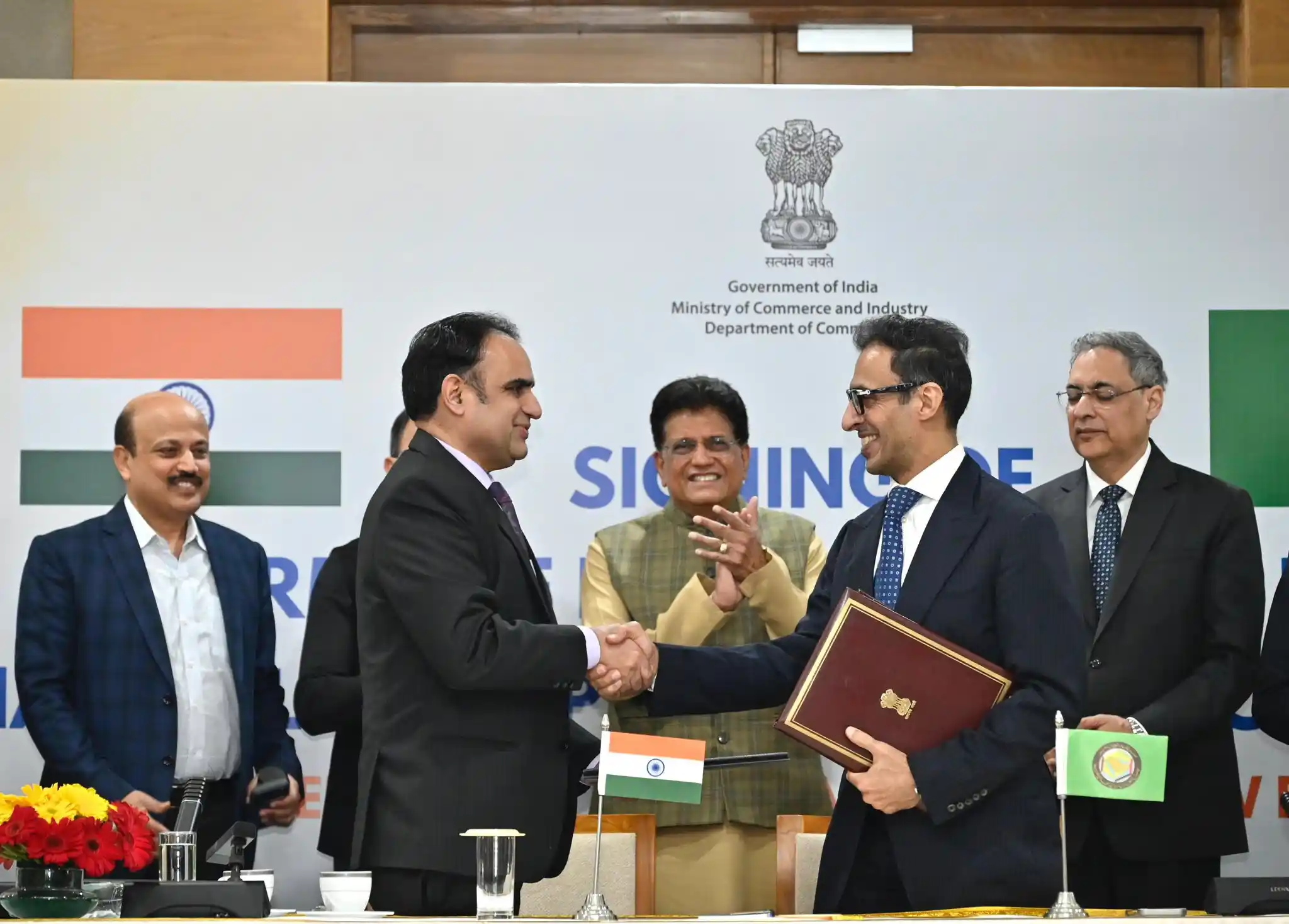
The signing of the Terms of Reference (ToR) for a Free Trade Agreement (FTA) between India and the Gulf Cooperation Council (GCC) yesterday marks a pivotal moment in one of the world’s most consequential economic relationships. The GCC, comprising Bahrain, Kuwait, Oman, Qatar, Saudi Arabia, and the United Arab Emirates, represents not just a bloc of wealthy oil-rich states but India’s largest trading partner in a vital region. With bilateral trade already reaching approximately $178-179 billion in recent fiscal years (accounting for over 15% of India’s global trade), this step revives negotiations dormant since the early 2000s and signals a shared ambition to deepen ties beyond hydrocarbons.
For decades, India has relied heavily on the Gulf for energy security. The region supplies a substantial portion of India’s crude oil and liquefied natural gas imports, underpinning the country’s industrial growth and household needs. In return, the GCC has found in India a massive, rapidly expanding market for its petroleum products, petrochemicals, and investments. Indian workers in the Gulf, millions strong, remit billions annually, supporting families back home and contributing to India’s foreign exchange reserves. These ties are civilizational, rooted in centuries of trade across the Arabian Sea, but they have often remained transactional rather than strategically integrated.
The ToR signing, presided over by Commerce and Industry Minister Piyush Goyal, formalizes the scope, modalities, and framework for talks on a comprehensive FTA. It aims to cover trade in goods and services, investment protection, customs cooperation, and more. Once concluded, the agreement could eliminate or sharply reduce tariffs, streamline non-tariff barriers, and foster predictability, key for businesses on both sides. For India, this translates into enhanced access to Gulf markets for pharmaceuticals, textiles, engineering goods, agricultural products, and services like IT and tourism. Gulf investors, already active in Indian infrastructure, real estate, and startups, would gain greater confidence to deploy capital in manufacturing, renewables, and logistics.
The timing could not be more strategic. India is pursuing an aggressive FTA agenda to integrate into global value chains, having recently inked deals with partners like the UAE, Australia, and Mauritius. A GCC-wide pact would complement these, creating synergies across West Asia. For the Gulf states, pursuing economic diversification under visions like Saudi Arabia’s Vision 2030 and the UAE’s post-oil agenda, India offers a demographic dividend, technological prowess, and a consumer market of 1.4 billion people. An FTA would accelerate joint ventures in renewables, food security, and digital economy, areas where mutual strengths align.
Critics may note that past talks stalled over issues like market access sensitivities and differing regulatory standards. Yet the resumption reflects maturity: both sides have matured their positions through bilateral deals (e.g., India-UAE CEPA) and geopolitical realities. Energy transitions, supply chain resilience post-pandemic, and the need for diversified partnerships amid global uncertainties make deeper integration imperative.
This is more than a trade document; it is a bridge to a multipolar future. A successful India-GCC FTA would not only boost economic growth and job creation but also reinforce strategic stability in a region critical to global energy and security. As Minister Goyal noted, it promises greater free flow of goods, services, and investments, elevating bilateral relations to new heights. In an era of fragmentation, this accord-in-the-making stands as a testament to pragmatic cooperation between two dynamic regions poised to shape the 21st-century economy.