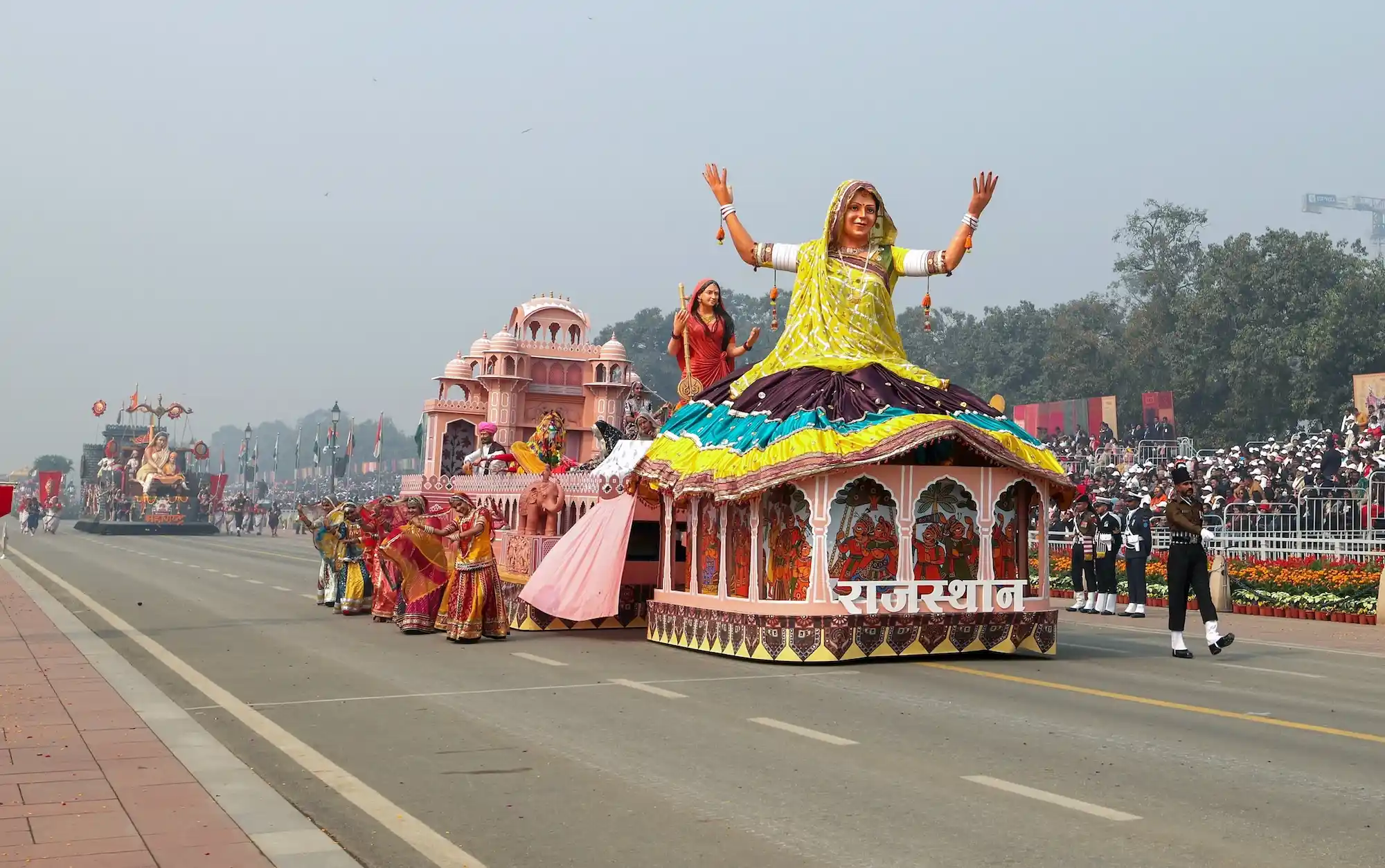
The 77th Republic Day Parade on January 26, 2026, promises to be a spectacular celebration of India’s constitutional legacy, cultural richness, and forward momentum toward self-reliance. Held along the iconic Kartavya Path in New Delhi, the event features military precision, marching contingents, and—most captivatingly—the tableaux (vibrant, mobile displays) that transform policy, heritage, and aspiration into rolling works of art.
This year, 30 tableaux participate: 17 from States and Union Territories and 13 from various Ministries, Departments, and Central Services. They align under two powerful overarching themes commemorating key milestones and national priorities:
- Swatantrata ka Mantra: Vande Mataram — Marking 150 years since Bankim Chandra Chattopadhyay composed the timeless patriotic song “Vande Mataram” in 1875, evoking the spirit of freedom, unity, and the independence movement.
- Samriddhi ka Mantra: Aatmanirbhar Bharat — Highlighting self-reliance, innovation, economic empowerment, and India’s vision of becoming a developed nation (Viksit Bharat) through local ingenuity and inclusive growth.
These tableaux serve as dynamic storytelling platforms, blending traditional craftsmanship, folk performances, modern technology, and symbolic elements to showcase India’s civilizational depth and contemporary achievements.
Participating Tableaux from States and Union Territories
States and UTs bring regional diversity to the fore, celebrating local heritage while tying into national themes of freedom and self-reliance.
- Assam: Asharikandi – Terracotta Craft Village of Assam (showcasing the ancient pottery tradition and artisan excellence of this craft hub).
- Chhattisgarh: The Mantra of Freedom – Vande Mataram (a direct tribute to the song’s inspirational role in the freedom struggle).
- Gujarat: Mantra of Swadeshi – Self-Reliance – Freedom: Vande Mataram (linking Swadeshi principles with modern self-reliance).
- Himachal Pradesh: Dev Bhoomi, Veer Bhoomi (portraying the land as abode of gods and bravehearts).
- Jammu & Kashmir: Handicrafts and Folk Dances of Jammu & Kashmir (highlighting intricate shawls, carpets, Pashmina, and vibrant cultural dances).
- Kerala: Water Metro & 100% Digital Literacy: Aatmanirbhar Kerala for Aatmanirbhar Bharat (emphasizing sustainable urban mobility and digital empowerment).
- Maharashtra: Ganeshotsav: A Symbol of Aatmanirbharta (depicting the community festival as an embodiment of grassroots self-reliance).
- Manipur: Towards Prosperity: From Agricultural Fields to International Markets (illustrating the shift from farming roots to global trade).
- Nagaland: The Hornbill Festival – Celebrating Culture, Tourism & Self-Reliance (vibrant showcase of Naga traditions, festivals, and tourism potential).
- Odisha: Soil to Silicon: Rooted in Tradition, Rising with Innovation (merging ancient heritage with tech and digital progress).
- Puducherry: Rich Heritage of Craft, Culture and Auroville’s Vision (blending Indo-French influences with sustainable, spiritual community ideals).
- Rajasthan: Golden Touch of the Desert: Bikaner Gold Art (Usta Art) (celebrating intricate golden miniature paintings and desert craftsmanship).
- Tamil Nadu: Mantra of Prosperity: Self-Reliant India (focusing on industrial prowess, including electric vehicles and manufacturing).
- Uttar Pradesh: Culture of Bundelkhand (highlighting folk arts, music, and historical legacy of the region).
- West Bengal: Bengal in the Freedom Movement of India (honoring revolutionaries, intellectuals, and cultural contributions to independence).
- Madhya Pradesh: Punyashlok Lokmata Devi Ahilyabai Holkar (tribute to the enlightened queen’s just rule and legacy).
- Punjab: 350th Year of Martyrdom of Sri Guru Tegh Bahadur Sahib Ji (commemorating Sikh sacrifice and spiritual resilience).
Participating Tableaux from Ministries, Departments, and Services
Central entities emphasize national initiatives in defense, education, health, energy, and governance.
- Ministry of Culture: Vande Mataram – The Soul Cry of a Nation (featuring the original manuscript, diverse folk artists, and symbolic generational continuity).
- Department of Military Affairs: Tri-Services Tableau – Operation Sindoor: Victory through Jointness (showcasing integrated armed forces operations and strategic triumphs).
- Naval Headquarters: Samudra Se Samriddhi (prosperity through maritime strength and blue economy).
- Air Headquarters: Veteran Tableau – Nation Building through War (honoring veterans’ contributions beyond the battlefield).
- Ministry of Power: Prakash Ganga: Powering an Aatmanirbhar and Viksit Bharat (journey toward energy self-sufficiency and universal electrification).
- Ministry of Skill Development & Entrepreneurship: Powered by Skills: Building a Self-Reliant, Future-Ready India (youth skilling for economic independence).
- Ministry of AYUSH: AYUSH KA TANTRA, SWASTHYA KA MANTRA (promoting traditional Indian medicine for holistic wellness).
- Ministry of Panchayati Raj: SVAMITVA Scheme – Aatmanirbhar Panchayat se Samriddh evam Aatmanirbhar Bharat (rural empowerment via property digitization and governance).
Other central tableaux cover themes like National Education Policy reforms, post-disaster resilience (e.g., 25 years of Bhuj earthquake recovery), new criminal justice laws, and storytelling of India’s cultural heritage.
Selected through a rigorous, multi-stage process involving expert committees and artistic evaluations, these tableaux turn abstract ideas into vivid, moving spectacles. As they glide past the saluting dais, they remind millions of viewers—both on-site and via broadcasts—of India’s enduring spirit: rooted in the mantra of freedom, propelled by the mantra of self-reliance, and united in the pursuit of prosperity.
The Republic Day Parade 2026 stands as a grand visual ode to a nation that honors its past while confidently shaping its future.