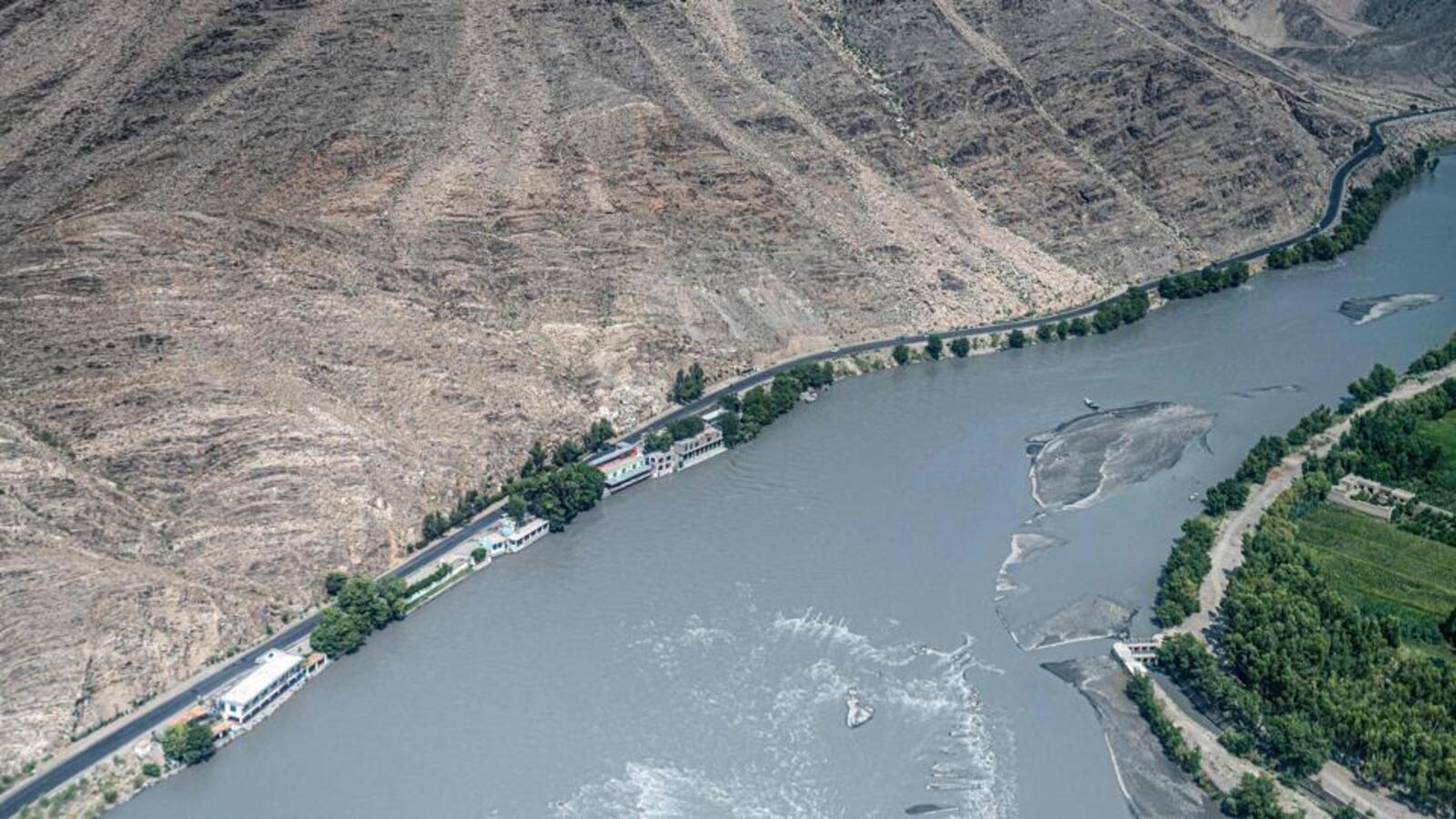
A quiet but consequential water dispute is taking shape in South Asia, centered around the Kunar River — a life-giving yet geopolitically charged waterway that links Afghanistan and Pakistan. Recent plans by the Taliban-led government in Afghanistan to construct dams on this river have not only stirred controversy in Pakistan but also added another layer to the complex triangle of relations among Afghanistan, Pakistan, and India.
The Kunar River originates in Pakistan’s Khyber Pakhtunkhwa province in the towering Hindu Kush range before flowing west into Afghanistan. From there, it continues to merge into the Kabul River, which makes its way back into Pakistan. This unusual loop makes the Kunar vital to both countries, providing water for agriculture, electricity, and drinking needs. It serves as a crucial lifeline for communities in Pakistan’s northwestern regions and Afghanistan’s eastern border provinces.
Stretching across roughly 5,000 kilometers when considering its tributaries and extensions, the river sustains both nations’ rural economies and infrastructure. Any alteration in its flow — such as damming — carries far-reaching consequences.
The Catalyst: Afghanistan’s Dam Initiative
The Taliban government’s announcement to build reservoirs and hydropower projects along the Kunar comes at a time of heightened border tensions with Pakistan. Though the plan is framed as a move to boost domestic energy and irrigation capacity, the geopolitical subtext is hard to ignore. Afghanistan has long faced power shortages and underdeveloped agricultural systems, and the idea of harnessing its natural resources is not new. Yet, the timing and external endorsements have turned a developmental project into a regional flashpoint.
One notable aspect of Afghanistan’s initiative is the tacit support it has received from India. While New Delhi frames its stance as a recognition of Afghanistan’s sovereign right to manage its resources, the historical context adds depth to this position. For years, India has collaborated on infrastructure and development projects in Afghanistan, particularly in sectors where sustainable growth can be triggered and local capacity built.
The Salma Dam in Herat province — also known as the Afghan-India Friendship Dam — stands as a testament to this partnership. Inaugurated in 2016, the dam generates 42 megawatts of power and irrigates over 75,000 hectares of farmland. It was designed and funded in large part by India, becoming a symbol of its constructive regional engagement. Afghanistan’s current water strategy bears echoes of this collaborative approach.
Islamabad, however, sees the Kunar dam proposals as posing risks to its already stressed water system. Pakistan depends on around 17 million acre-feet of water from the Kunar annually, a flow essential to meeting sanitation and farming needs in districts like Peshawar. Hydrologists have warned that new dams in Afghanistan could reduce Pakistan’s access by as much as three million acre-feet — a deficit that can be devastating, especially during the pre-monsoon agricultural period.
Complicating matters further, Pakistan is already dealing with another upstream challenge: India’s recent curbs on water supplies under the Indus Waters Treaty. After the Pahalgam terror attack, India halted several routine engagements on shared water usage, citing national security concerns. This interruption has compounded water scarcity in provinces like Punjab, prompting urgent internal deliberations in Pakistan about water strategy.
What appears to be a dispute over river flow is, in fact, a reflection of broader strategic shifts in South Asia. As Afghanistan asserts greater control over its natural resources, it does so with developmental backing and political support from New Delhi — marking a shift in regional influence dynamics. Pakistan, caught between emerging water limitations from both east and west, perceives this confluence as a threat not just to its farms, but to its national sovereignty.
The Kunar water dispute encapsulates the delicate balance between national development and regional cooperation. While Afghanistan seeks to transform natural assets into economic strength, Pakistan faces legitimate fears of resource scarcity. Meanwhile, India’s development partnerships reflect a broader approach to fostering interdependence through infrastructure — a template that could serve as a basis for constructive dialogue.
As South Asia grapples with growing climate uncertainty and shared river basins, the Kunar River’s future stands as a reminder that water, while a necessity for survival, is also a test of diplomacy. Managing it wisely — through treaties, transparent planning, and joint stewardship — will be essential to avoiding a deeper crisis and securing stability in the region.