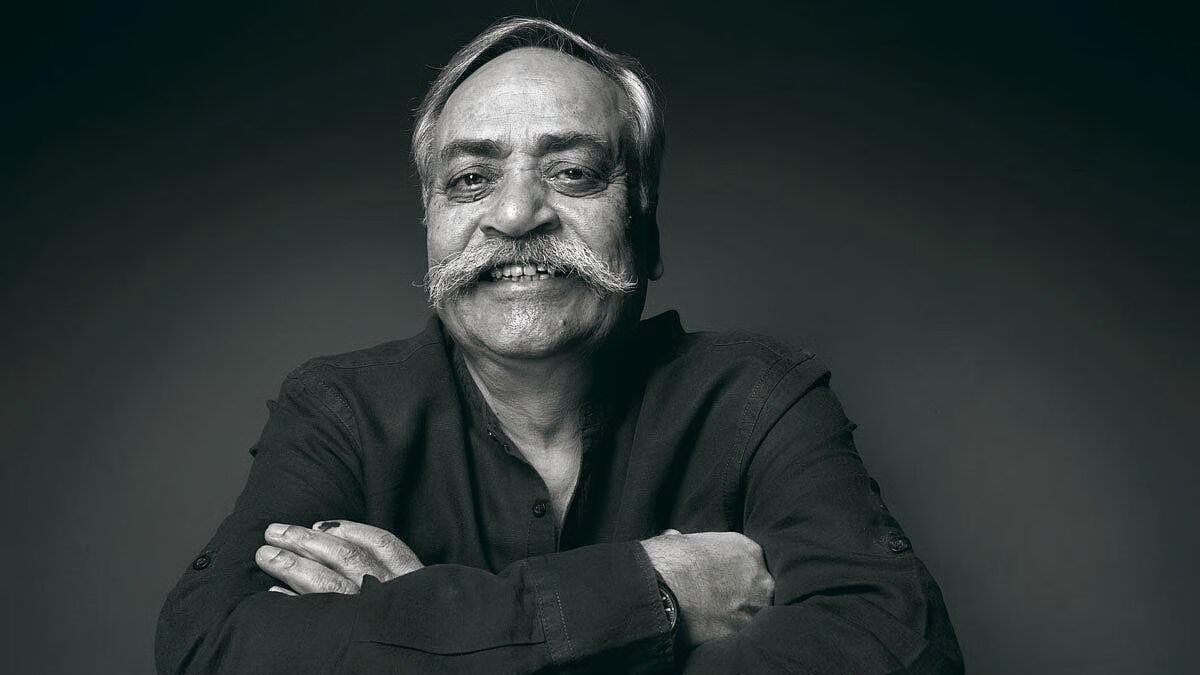
Piyush Pandey, often hailed as the creative titan who gave Indian advertising its true voice, stands as a beacon in the world of storytelling, emotion, and brand-building. His journey—from a client servicing executive to the legendary Chief Creative Officer of Ogilvy—reshaped how millions perceived advertisements, blending local flavor, earthy humor, and deep authenticity into campaigns that became part of India’s collective memory.
Born in Jaipur in 1955 in a large family, Piyush Pandey’s roots were distinctly Indian, grounded in the ethos and rhythms of a vibrant household. The son of a cooperative bank employee and sibling to creative luminaries like Prasoon Pandey and Ila Arun, Piyush’s early experiences with cricket (playing Ranji Trophy for Rajasthan) and tea-tasting gave him a unique understanding of both structure and spontaneity. After postgraduate studies in History from St. Stephen’s College, Delhi, Pandey entered advertising with Ogilvy in 1982, beginning in client servicing before finding his true calling in the creative department six years later.
The transformation Pandey brought to Indian advertising was unmistakable. Before his rise, the industry was heavily influenced by Western models and aesthetics. Pandey’s genius lay in his ability to see the extraordinary in the ordinary—he infused advertisements with Indian cultural motifs, local languages, idioms, and honest, heartfelt storytelling that resonated with people across geographies and generations.
Ogilvy, under his leadership, was consistently ranked the top agency in India for over a decade, demonstrating his impact not just in creative circles but in business outcomes as well. Mentoring countless budding talent, he established a legacy that extended beyond awards, shaping careers and pushing the boundaries of what advertising could mean to Indians.
The Master Behind Iconic Campaigns
Piyush Pandey’s portfolio is a testament to his ability to shape public consciousness. Some memorable ads and public campaigns defined both brands and eras:
- Fevicol “Fevicol ka Mazboot Jod”: Who can forget the visuals of the overloaded bus or the unbreakable egg? These ads became synonymous with the brand and showcased Pandey’s knack for pure visual storytelling and humor.
- Cadbury Dairy Milk “Kuchh Khaas Hai”: The sight of a young woman dancing joyously on a cricket field, celebrating life, redefined the idea of chocolate—transforming it from a child’s treat to a shared joy for all generations.
- Asian Paints “Har Ghar Kuch Kehta Hai”: This campaign delivered a soulful message, painting homes as keepers of memories and emotions rather than mere structures.
- Polio Campaign “Do Boond Zindagi Ke”: Pandey’s collaboration with Amitabh Bachchan was both powerful and impactful. When Bachchan scolded viewers for neglecting vaccination, parents across India responded emotionally and brought their children for polio drops. The campaign is credited with saving millions of lives.
- Vodafone “Pug” and ZooZoo: Both campaigns rewrote rules of brand mascots. The adorable pug and later the quirky ZooZoos not only sold products but became cultural icons loved by all ages.
- BJP 2014 Election “Abki Baar Modi Sarkar”: In political branding, few slogans have had the mass resonance and simplicity of this four-word chant—a prime example of Pandey’s ability to distill emotion, ambition, and identity into a line that moved a nation.
- Fevikwik “Todo Nahin, Jodo” and others: Even smaller campaigns, infused with humor and simplicity, ensured product recall and emotional connection.
The Heartbeat of Indian Creativity
Piyush Pandey’s storytelling brilliance lay in his attention to the language, quirks, and textures of everyday India. He was unafraid to use local dialects, rural idioms, and colloquial phrases—elements that made every campaign relatable. In doing so, Pandey gave Indian advertising both “swadeshi swagger” and self-confidence, as noted by tributes from industry captains such as Gautam Adani.
He recognized that selling was not about pushing products but about touching hearts, as cricket commentator Arun Lal noted: “You are selling nothing if you don’t touch hearts—the man behind the Cadbury girl and Dr. Fixit ads told me so”. That ethos guided all his work and transformed ads into timeless stories.
Tributes and Legacy
Upon his passing in October 2025 at age 70, outpourings of tributes from every corner—corporates, creative professionals, and ordinary people—cemented his iconic status. Leading agencies like Ogilvy penned “the most difficult ad of our lives,” honoring his career with a tone of heartfelt humanity. Brands he shaped, from Amul to Fevicol, used their own signatures—be it a clever caption or a lone moustache—to mark the legacy of a man whose creativity touched every household in India.
Cabinet ministers, business leaders, and fellow creatives described him as a phenomenon, a legend, and a genius who always shone through his authenticity and warmth. His 40-year-long career, numerous awards (including the Padma Shri in 2016 and the LIA Legend Award in 2024), and global recognition as the first Asian jury president at Cannes, only tell part of the story. The rest lives on in every ad that echoes his voice, in every creative that draws inspiration from his simplicity, wit, and irrepressible humanity.
For generations of advertisers, writers, and filmmakers, Pandey’s work is a masterclass in emotional storytelling and cultural resonance. He taught the importance of speaking the language of the people—of seeing brands as companions in daily Indian life. His books (“Pandeymonium”, “The Making of a Brand: Asian Paints”) and frequent mentoring sessions continue to inspire a new wave of creatives globally.
In a country as diverse as India, Piyush Pandey found the one universal emotion—connection. Whether laughing at a Fevicol joke, tearing up at a Cadbury celebration, or nodding solemnly to a polio campaign, millions felt understood. That is the ultimate tribute to a man who made creativity live in people’s hearts—and who, in the words of his peers, will continue to define Indian advertising for decades to come.