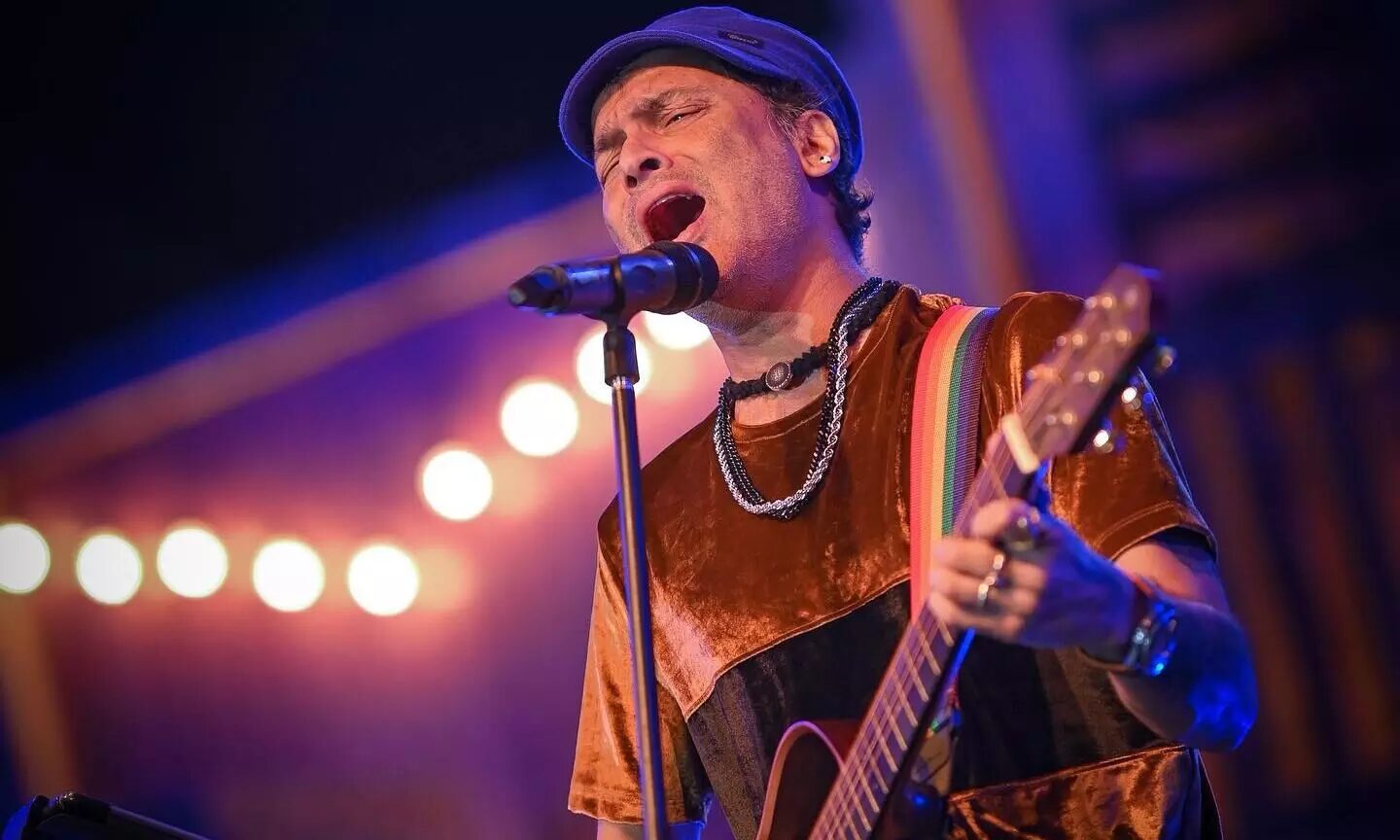
The sea of humanity who waited patiently day and night in scorching heat, rain, and thunder from Saturday (21 September) for the arrival of the mortal remains of Assamese heartthrob Zubeen Garg and his cremation on Tuesday (23 September) amply illustrates how he connected with the masses, cutting across religion, language, caste, and ethnicity.
The unexpected death of Assam’s most loved singer and musician, Zubeen Garg, at the age of 52 in Singapore on 19 September, where he had gone to participate in the Northeast Cultural Festival, caught everyone by total surprise. This annual event, organized in different countries in India’s neighbourhood, is meant to showcase the Northeast as part of the Act East Policy of India, with the aim of attracting investors and tourists.
Though the postmortem of the singing icon was performed at the Singapore General Hospital, a large section of his fans, as well as intellectuals of Assam, speculated about a conspiracy surrounding his death. Hence, a second post-mortem was conducted at the Guwahati Medical College Hospital on 23 September prior to his cremation.
Social media, print, and electronic media of the state were abuzz with news that the icon died due to the carelessness and callousness of the organizers. About 40 FIRs have been lodged in different police stations across the state against Zubeen’s personal manager and the organizer of the festival. Singapore Police, as well as Assam Police, have started conducting separate investigations.
The Assamese people have never shown such collective grief and personal pain over the most unexpected passing of the colossus, and probably grief of such magnitude will not be witnessed in the foreseeable future. The Chief Minister of Assam rightly said that for the next fifty years, another Zubeen will not be born in the state.
What endeared Zubeen to the masses, cutting across religion, language, caste, and creed, were his human qualities, because of which he could connect with young and old, boys and girls, poor and rich alike. He never considered himself a celebrity and never threw his weight around. He was human to the core.
He was a man of the masses—accessible to everyone, with no airs, no qualms. He would travel by rickshaw, cycle through narrow lanes, have tea at roadside stalls, and play cricket amidst his schedules. Assam, which has a history of conflict over ethnicity and other issues, found solace in his songs, which spoke of universal love, humanity, and kindness.
There was no way to know how many people he helped—many of whom he had never even met—and he grieved for people in distress. His love for animals and his concern over uncontrolled cutting of trees in the name of development are well known.
Yet he could be brutally frank. His quality of calling a spade a spade and speaking his mind ruffled a few, but he could not be silenced. Zubeen was one of the very few who stood up to ULFA’s diktat of not singing Hindi songs during cultural programmes like Bihu functions. However, ULFA realized their folly and mourned his death, stating that they grieved the loss of a cultural figure who helped carry Assam’s voice beyond its borders. He also had bad experiences with security forces at the height of the ULFA problem. He once said, “I was slapped by the Army and Police,” who assumed he was a sympathizer of the militant group.
He was not only a singer, musician, or songwriter, but also a leader when Assam faced crises. He led the protest against the BJP government’s decision in 2019 to implement the Citizenship Amendment Act (CAA).
His music career began in 1992 at the age of nineteen with his pathbreaking Assamese cassette “Anamika,” which became an instant hit. Over the years, he sang more than 38,000 songs in over 38 languages and dialects. He was a multi-instrumentalist who played as many as twelve musical instruments, including the dhol, guitar, and keyboard, with ease. He produced several Assamese films, including ‘Mission China’ and ‘Kanchenjunga,’ which were big hits. The concept of big-budget films in the Assamese film industry was introduced by Zubeen Garg, with films like ‘Kanchenjunga’ grossing over five crores—unprecedented in Assam’s film industry.
Zubeen also made significant contributions to Bengali cinema and music. He served as music director and singer for “Shudhu Tumi” (2004), for which he won the Best Music Director award. His Bengali hits such as “Mon Mane Na” and “Piya Re Piya Re” established him as a sought-after playback singer and composer.
Zubeen moved to Mumbai in the early 2000s and lent his voice to songs like ‘Ya Ali’ (Gangster), ‘Dilruba’ (Namaste London), and many others. Though he earned fame, he returned to Assam, citing disillusionment. He once said, “I don’t like chaos; it is just too much. In Assam, I will die like a king.”
How true he was. The millions of people who lined up for his funeral speak of his king-sized image. He even told his wife that once he died, there would be mourning for days. The outpouring of emotion on the eve of his funeral, and at the funeral itself, is probably unimaginable outside the state.
There was a clamour for his cremation to be organized at Jorhat (his hometown) and many other places in the state. But the Assam Government, taking a considerate decision, conducted the cremation at Hatimura, a small village on the outskirts of Guwahati. The Karbi community (an ethnic group) voluntarily relocated their century-old cremation site to pave the way for Zubeen’s cremation. This speaks volumes about the love of the Assamese people for Zubeen.
Mourning Zubeen’s death, Prime Minister Narendra Modi said, “He will be remembered for his rich contribution to music. His renditions were very popular among people from all walks of life.” Other politicians, including Mamata Banerjee, Arvind Kejriwal, Kiren Rijiju, and Gaurav Gogoi, paid homage to the singer and musician. The Northeastern states also mourned his death. The King of Bhutan even sent a special envoy to pay tribute to the music maestro.
At times he was reckless, and perhaps this recklessness and defiance brought his life to a tragic end at the age of fifty-two on 19 September, when he decided to go for a swim despite not keeping well for some time.
The last few days have been tough for the Assam Chief Minister. With the unexpected death of the singing icon, he was caught between the emotional needs of the icon’s family and the varied sentiments echoed by the public. However, all issues were handled to everyone’s satisfaction, with military precision and finesse, which has been lauded by both sides, including opposition parties.
Zubeen was given the most emotional send-off by lakhs of people, though he will never know. However, the most fitting tribute will be if all of us, cutting across religion, caste, creed, and language, strive to preserve and promote the universal love and brotherhood he propagated through his countless songs.