Donald Trump’s latest announcement on H-1B visa policy marks one of the most significant shifts in U.S. immigration and workforce strategy in decades. With the imposition of an unprecedented $100,000 annual fee for every new H-1B visa petition, the move has sent shockwaves through the technology, academic, and immigrant communities—especially among Indians, who make up the bulk of H-1B recipients. Below, a deep dive explores the new rules, the motivations and politics behind the decision, and the real-world ramifications for Indian professionals, students, and aspiring migrants.
The Announcement: What Has Changed?
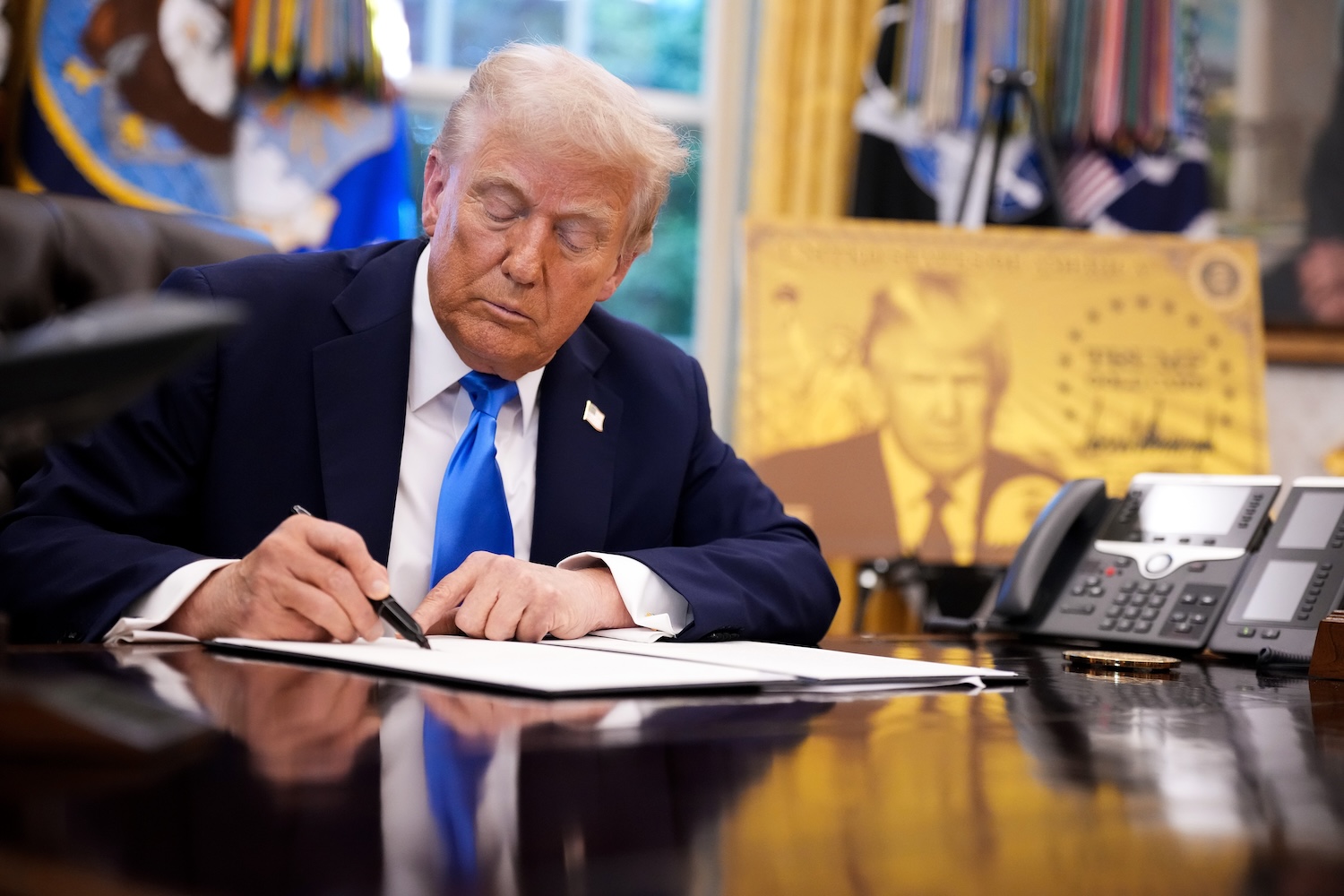
On September 19, 2025, President Trump signed an executive proclamation instituting a $100,000 fee requirement on H-1B visa applications filed by U.S. employers on behalf of foreign skilled workers. This is a seismic increase from the previous cost, which was roughly $4,500 per visa. The new rule comes into effect on September 21, 2025, and is set to last for 12 months, with a review scheduled before any extension.
Key details:
- The $100,000 fee must accompany all new H-1B petitions; without proof of payment, applications will be denied.
- The new rule targets applications filed for workers currently outside the U.S.; existing H-1B holders already in the country are not immediately affected, but extensions and transfers could become more costly in the future.
- Provisions allow for narrowly defined exemptions in the national interest, but these are expected to be rare.
- The Department of Labor (DOL) is also directed to begin raising wage levels and tightening oversight of the program to further limit its usage.
Trump’s administration frames this action as a necessary step to “protect American workers,” insisting that employers have exploited the system to replace domestic labor with cheaper, foreign talent—a claim that has been highly contentious, especially in tech.
Why Indians Are at the Epicenter
Indians have been the primary beneficiaries of the H-1B program, receiving about 71% of all approved visas in recent years, vastly outstripping any other nationality. For Indian tech professionals and students, the H-1B has long been the most viable route to building a career and eventually seeking permanent residence in the U.S.
- Indian IT services and consulting firms, along with U.S. tech giants like Amazon, Microsoft, and Meta, are among the largest sponsors of H-1B workers. For instance, Amazon received over 10,000 such visas in 2025 alone.
- The new fee structure will most severely affect these firms and the Indian professionals they hire.
Immediate Impacts for Indians Already in the US
The most immediate effects will fall on:
- New visa applicants currently outside the U.S., International travel, and return for H-1B holders abroad may become unfeasible for smaller employers who cannot afford the fee.
- Companies now face million-dollar increments in annual immigration costs. Startups, small consultancies, or mid-tier firms that rely on Indian professionals will struggle to absorb such costs, concentrating opportunities further among tech giants.
For Indians already in the US on H-1B:
- There is no retroactive fee for existing visas, but future renewals and transfers may be subject to the new rule if agencies interpret the policy expansively.
Ripples for Future Indian Students and Job Aspirants
For Students
The move will likely have a chilling effect on Indian and other international students aspiring to study in the U.S., especially in STEM fields that normally lead to H-1B sponsorship.
- The pathway from Optional Practical Training (OPT) to H-1B will be less accessible, as employers become more selective due to the costs involved.
- With diminished opportunities for post-study employment, U.S. degrees may lose appeal for Indians, especially when compared to Canada, the UK, or Australia, which are aggressively courting international talent.
For Professionals
The U.S. is likely to become a far less attractive destination for mid-career professionals unless their skills are deemed “exceptional” and critical to a company’s core business.
- Senior or niche talent, particularly in AI, cybersecurity, or advanced research may still find pathways, but most entry-level and junior roles will become inaccessible to foreign candidates unless employers are willing to shoulder astronomical costs.
- More companies may now push for remote work, offshoring, or expansion in countries with less restrictive immigration regimes, causing a possible “reverse brain drain” to India or other Asian tech hubs.
Strategic Motivations and Policy Calculus
Trump’s move is part of a deliberate pivot toward economic nationalism, arguing that curbing work visas is vital for increasing U.S. wages and job availability. The administration has also signaled that the revenue from these fees will help fund border security initiatives, new detention centers, and the hiring of immigration agents.
The order directs agencies to:
- Audit and enforce stricter wage standards, making H-1Bs available only to the highest-paid, high-demand roles.
- Crack down on firms perceived to use the visa for cheap labor, a thinly-veiled reference to the Indian IT services sector.
Industry and Academic Response
The announcement has triggered alarm and criticism across business, academia, and even government:
- Tech firms and academic leaders argue that the U.S. risks losing its edge in innovation and research by making it harder, costlier, and less predictable to attract international talent.
- Smaller firms, startups, and university spin-offs are likely to exit the H-1B lottery entirely, further concentrating tech jobs in the hands of a few mega corporations.
- Some Indian policymakers, such as former NITI Aayog CEO Amitabh Kant, have stated that “America’s loss will be India’s gain,” foreseeing a return of talent and investment opportunities to India.
Donald Trump’s 100,000 H-1B fee will choke U.S. innovation, and turbocharge India’s. By slamming the door on global talent, America pushes the next wave of labs, patents, innovation and startups to Bangalore and Hyderabad, Pune and Gurgaon . India’s finest Doctors, engineers,…
— Amitabh Kant (@amitabhk87) September 20, 2025
Alternatives and Next Steps
In the wake of this:
- Some professionals may attempt to qualify for the new “gold card” visa, which requires a $1 million payment and offers a fast-track to permanent residency—but this is feasible for only a tiny elite.
- Pathways like the O-1 visa (“extraordinary ability”) or direct EB-1A applications for permanent residency may see a spike in interest, though these are significantly harder to obtain and limited in number.
Legal and Political Uncertainty
Given the unprecedented scale of this administrative fee, legal challenges are likely from affected companies, advocacy groups, and possibly other nations, but outcomes remain uncertain. In the meantime, the new rule stands to reshape global talent flows—if it survives legal and political review.
A Paradigm Shift in Global Mobility
In summary, Trump’s H-1B proclamation heralds a fundamental transformation in U.S. immigration policy, with Indians in the U.S. and aspiring migrants most affected. The fee imposition not only restricts physical movement but also redraws the economic and academic contours of U.S.-India relations. Unless reversed or challenged, the U.S. risks seeing its doors closed to global talent, while India and other innovation hubs stand poised to benefit from the shakeup.
For Indian students and professionals, the American dream has never been more uncertain, and for Indian industry, the moment is ripe to welcome back its global talent.