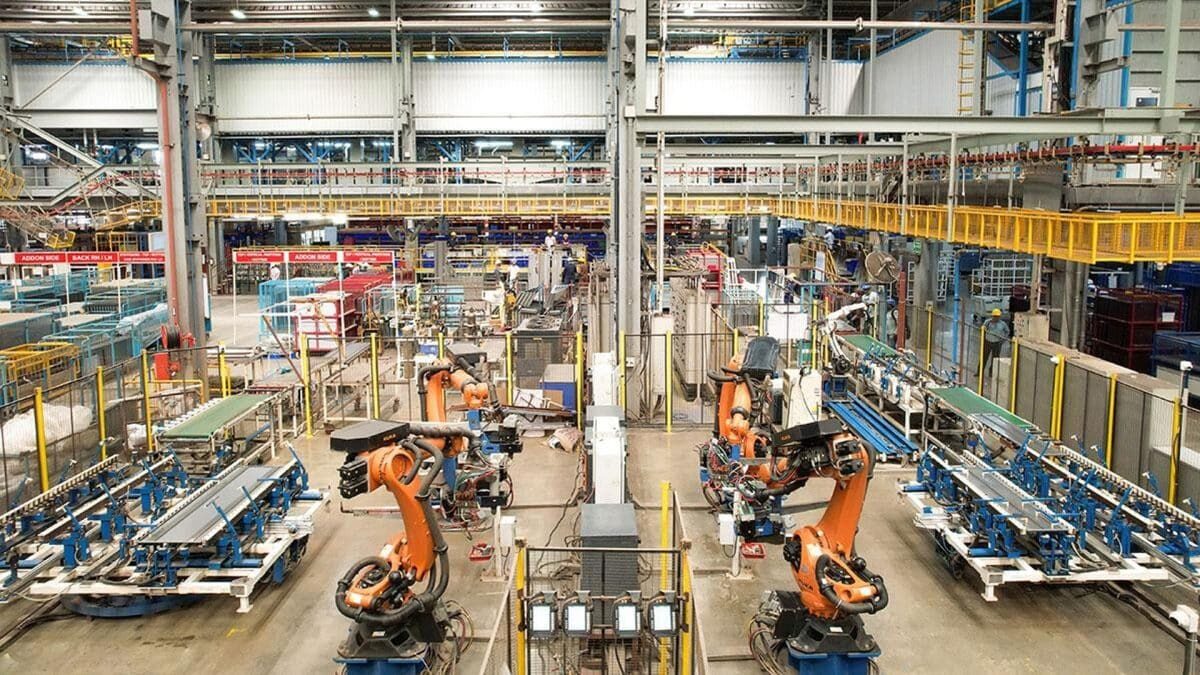
India’s economic trajectory has long been anchored in its services sector, which contributes over half of national GDP. However, to achieve balanced, sustainable, and job-intensive growth, the government has sought to reposition manufacturing as the next big engine. Central to this vision is the Production Linked Incentive (PLI) Scheme, introduced in 2020, with an incentive outlay of ₹1.97 lakh crore.
Designed to align with flagship national goals such as Atmanirbhar Bharat and the target of a $5 trillion economy, PLI is more than a financial package. By 2025, it has already attracted ₹1.76 lakh crore in investments, approved 806 applications across 14 strategic sectors, generated over 12 lakh jobs, and pushed sales by beneficiaries beyond ₹16.5 lakh croredoc2025824619301.
This makes the PLI not just a policy tool but a catalyst for a structural transformation of India’s industrial base.
Genesis of the PLI Scheme
When launched in April 2020, the scheme initially targeted three crucial sectors:
- Mobile manufacturing and specified electronic components
- Active Pharmaceutical Ingredients (APIs) and drug intermediaries
- Medical devicesdoc2025824619301
Encouraged by the early response, the government expanded it to 13 additional sectors including automobiles, textiles, specialty steel, food processing, and renewable energy. The design was simple yet powerful: companies that achieved incremental sales beyond a baseline would be rewarded with direct financial incentives.
This performance-linked approach ensured accountability, encouraged scale, and nudged businesses to adopt cutting-edge technologies while drawing foreign players into India’s industrial ecosystem.
Sectoral Coverage: Broad and Strategic
The PLI scheme today covers 14 critical sectors, each chosen for its strategic importance to India’s growth ambitions. Here’s how it is reshaping them:
1. Electronics & Mobile Manufacturing
Electronics has been one of the biggest success stories. Backed by the National Policy on Electronics 2019, PLI lured global OEMs and Indian firms alike. Production surged 146%, from ₹2.13 lakh crore in FY 2020-21 to ₹5.25 lakh crore in FY 2024-25doc2025824619301. India is now among the world’s leading mobile phone manufacturing hubs, reducing dependence on imports and building supply chain depth.
2. Automobiles & Auto Components
PLI has injected momentum into India’s electric vehicle (EV) and clean-tech sectors, complementing the FAME initiative. With ₹67,690 crore in committed investments, over 28,800 jobs created, and incentives across 19 vehicle categories and 103 components, India is positioning itself as a global EV hubdoc2025824619301.
3. Food Processing
171 approved applications and ₹8,910 crore in investments have modernized units and boosted exports. This sector links farmers, SMEs, and global markets, ensuring value addition while complementing schemes like PM-FME and PMKSYdoc2025824619301.
4. Pharmaceuticals
From dependence on imports, India’s pharmaceutical backbone is regaining autonomy. Within three years, pharma sales under PLI crossed ₹2.66 lakh crore, including ₹1.70 lakh crore in exports. The sector achieved 83.7% domestic value addition by March 2025, turning India into a net exporter of bulk drugsdoc2025824619301.
5. Solar PV Modules
PLI for solar aims to establish 48 GW of integrated capacity, reducing reliance on imports and boosting energy security. With ₹48,120 crore in investments and nearly 38,500 jobs, the scheme directly aligns with India’s renewable energy transitiondoc2025824619301.
6. Semiconductors
Semiconductors are the backbone of modern electronics. Under the India Semiconductor Mission (ISM), six projects are underway, with four more approved in 2025. These initiatives are expected to create 2,000+ direct jobs and seed India’s long-term ambition of a self-reliant chip ecosystem by 2030doc2025824619301.
7. Textiles
The ₹10,683 crore outlay for man-made fibers and technical textiles has enhanced export competitiveness. Exports of MMF rose to ₹525 crore in FY 2024–25, while technical textile exports grew by nearly 50% in a yeardoc2025824619301.
8. White Goods (ACs & LED Lights)
With ₹6,238 crore earmarked, this scheme aims to push local production of critical components. Domestic value addition is projected to jump from 25% to 75–80% by 2029, reducing import dependency and supporting green manufacturingdoc2025824619301.
Impact: Jobs, Investments, and Ecosystem Development
The achievements so far are striking:
- Investments: ₹1.76 lakh crore realized by March 2025
- Sales: ₹16.5 lakh crore by PLI participants
- Jobs: Over 12 lakh direct and indirect opportunities
- Exports: Pharma and mobile exports at record highsdoc2025824619301
Beyond numbers, PLI has catalyzed ecosystem growth. Anchor units in each sector have triggered supplier networks, particularly benefiting India’s MSME base. This ripple effect is fostering clusters like semiconductor parks in Gujarat, MMF hubs in Surat, and medical device parks in Tamil Nadu and Andhra Pradeshdoc2025824619301.
Importantly, it has also strengthened India’s FDI inflows, sending a strong message that India is a reliable, policy-stable destination for high-value manufacturing.
Challenges and Criticisms
Despite the momentum, the scheme faces challenges:
- Implementation Delays: Several projects have lagged in shifting from approvals to execution.
- Global Competition: Competing with countries like Vietnam or China requires constant innovation in policy design and logistics infrastructure.
- Sectoral Imbalances: While electronics and pharma are surging, some sectors such as textiles and white goods need more time to scale.
- MSME Participation: Although MSMEs benefit indirectly, their direct inclusion in PLI schemes remains limited.
Addressing these gaps will be critical for the scheme to reach its full transformative potential.
Global Context: India’s Competitive Edge
PLI schemes are not unique to India. Nations like the US and EU also offer subsidies for semiconductors, clean energy, and pharmaceuticals. However, India’s performance-linked structure stands out, as it ties government outlays to measurable outputs.
This approach avoids open-ended subsidies, ensures accountability, and aligns industry success with national interest. Combined with India’s demographic advantage and expanding domestic market, it provides a strong platform for global competitiveness.
The Road Ahead
As budget allocations for PLI rise further in FY 2025-26, the scheme is set to deepen its impact. Analysts expect its influence to:
- Push manufacturing’s share in GDP towards the 25% target.
- Anchor India in global supply chains for electronics, EVs, and pharmaceuticals.
- Create millions of jobs in both formal and ancillary industries.
- Foster innovation ecosystems, particularly in semiconductors and clean energy.
If sustained with robust monitoring and complementary reforms in labor laws, logistics, and infrastructure, PLI could become the cornerstone of India’s industrial revolution.
The Production Linked Incentive Scheme has evolved from a targeted financial tool into a structural reform instrument. By combining policy support with private sector dynamism, it has propelled India from being an import-reliant economy towards becoming a global manufacturing contender.
Its success stories—from smartphones to solar modules—highlight a clear trend: India is not just making products, it is reshaping industries and building future-ready capacities.
With strategic execution and continuous fine-tuning, the PLI scheme could be remembered as the turning point that set India firmly on the path of industrial self-reliance and global competitiveness.