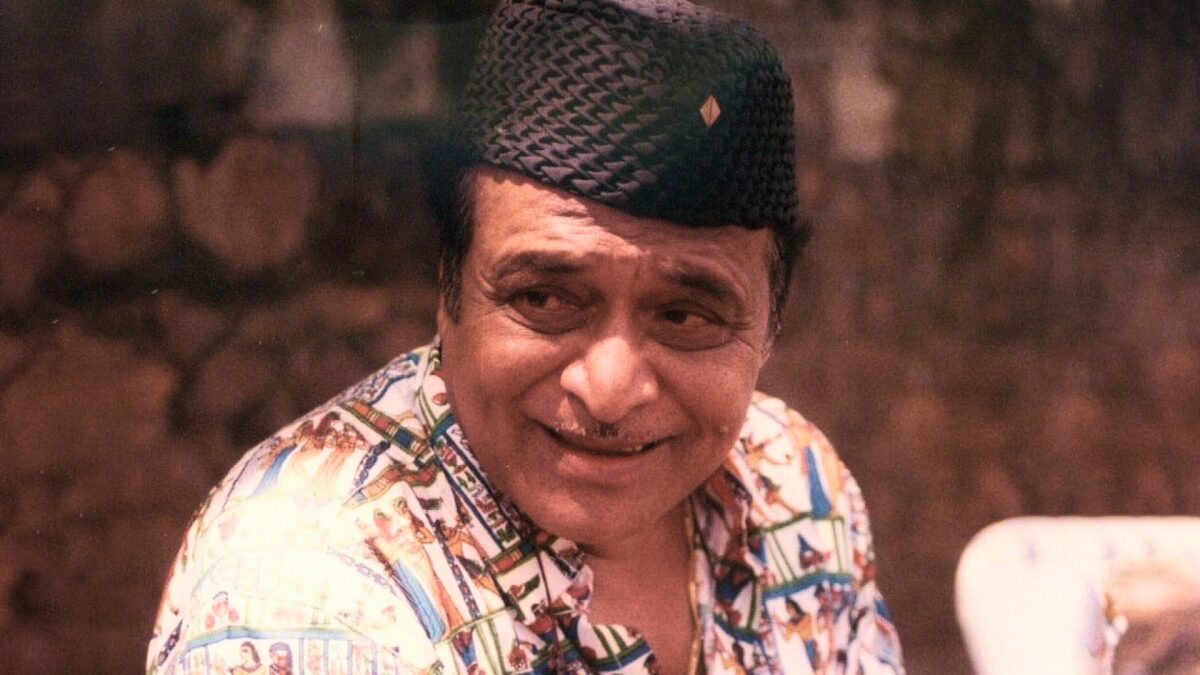
It is indeed extremely heartening that Prime Minister Narendra Modi, despite his hectic schedule, has written a masterly piece about Bhupen Hazarika, the bard of Assam. The Prime Minister’s article, written in English to commemorate Bhupen Hazarika’s birth centenary, which began on 8 September 2025, was subsequently translated into many languages of the country, allowing people to gain insight into the multifaceted personality of Bhupen Hazarika.
His decision to write about Bhupen Da was not because Bhupen Hazarika was a great singer or a lyricist, but because of the universal love, compassion, empathy, and humanity he conveyed through hundreds of songs he composed and sang. His songs of universal brotherhood stood in great stead for the people of multicultural, multi-religious, and multiethnic Northeast, particularly for the state of Assam.
In his article, he stated that Hazarika’s songs primarily dwelt on brotherhood, humanity, and empathy. He has rightly observed that Bhupen Hazarika was the heartbeat of the people of Assam and had added that the spirit of ‘Ek Bharat, Shrestha Bharat’ found powerful expressions in Bhupen Hazarika’s philosophy.

The Prime Minister, who was the chief guest at the birth centenary celebration on September 13th in Guwahati, spoke about the human aspects of Bhupen Dada. The Prime Minister said, “Bhupen Hazarika connected music with sensitivity and preserved the dreams of India through his soulful compositions.”
He also released a book titled “Bharat Ratna Bhupen Hazarika,” written by Sahitya Academy awardee Anuradha Sarma Pujari, which will be translated into all major Indian languages. The Prime Minister also released a non-circulating Rupee 100 commemorative silver coin as a tribute to the music maestro.
It is also pertinent to note that our country can boast of excellent singers, musicians, composers, and film directors, but Bhupen Hazarika was unique in the sense that he was all of these in one. Additionally, he was a professor, a writer, and had even served a short stint in politics.
Born in Sadiya, a small town of Assam, he was the eldest of the ten children and thus had to shoulder enormous responsibilities. He completed his schooling in Guwahati and Tezpur, and his intermediate education at Cotton College, Guwahati. Subsequently, he completed his graduation and post-graduation from Banaras Hindu University. He had acquired a PhD from Columbia University(USA) for the topic ‘Role of Mass Communication in India’s Adult Education”.
He started his stage performance at the age of five and recorded his first song in 1937, at the age of eighteen, for the Assamese film “Indumati,” produced by Jyoti Prasad Agarwala. In fact, Jyoti Prasad Agarwala and Bishnu Prasad Rabha, two doyens of Assamese rich culture, had a significant influence on him.
During his stay in the USA, he came in contact with noted Folk singer and prominent civil rights activist Paul Robeson, who had a profound influence on Bhupen Hazarika’s intellectual thinking. His eternal song ‘Bistirno Parore” was greatly influenced by “OI’ Man River” sung by Paul Robeson. The song conveys the suffering of marginalized communities, promotes humanistic values, and advocates for universal justice and empathy.
Bhupen Hazarika started his career in 1948 as a radio artist for the newly established All India Radio Centre at Guwahati. He also had a brief stint as a professor at Guwahati University. He produced nine Assamese movies, starting with “Era Batar Soor” in 1956. Many of his films have received National awards. Besides Assamese movies (a total of thirty-six), he composed music for films in various languages, mainly Bengali and Hindi. The prominent Hindi films include Rudaali, Daman, and Ek Pal. He had sung numerous songs in many languages, including Gujarati, Nepali, etc. Songs from Hindi films like Rudaali and Ek Pal have touched the chords of millions of Indians.
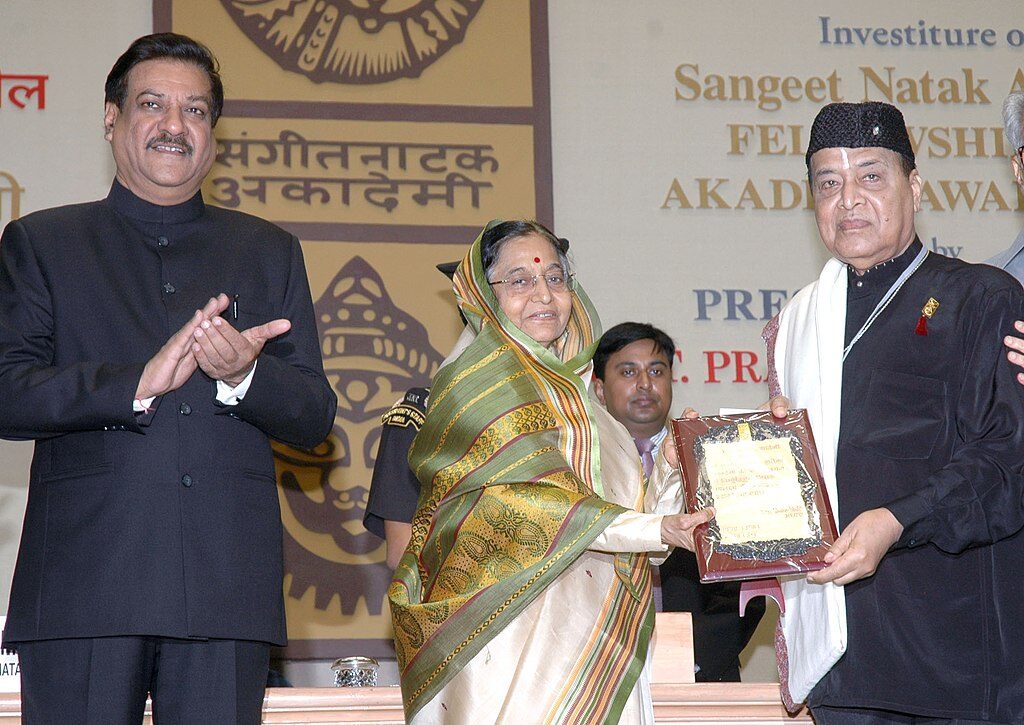
He was awarded all the important awards by the Central and State Governments, as well as numerous cultural organizations. In 1987, he received the Sangit Natak Academy Award. In 1992, he was awarded the Dada Saheb Phalke Award. The Padmashri was conferred upon him in 1997, followed by the Padma Bhushan in 2001. In 2012, he was honored with the Padma Vibhushan, and in 2019, he was awarded the Bharat Ratna. The two highest awards of India, namely Padma Vibhushan and Bharat Ratna, were awarded posthumously.
Bhupen Hazarika also briefly ventured into politics. In 1967, he was elected as an Independent MLA from the Naoboicha constituency of Lakhimpur district. However, politics came as a rude shock to him when, in 2004, as a BJP candidate, he lost the Lok Sabha election from the all-important Guwahati constituency. Incidentally, his popularity was at its peak at that time. He was totally devastated, as he thought that everyone, from the young to the old, loved him. Only then did he probably realize that being a cultural icon and politics are totally different.
The entire state, cutting across political affiliations, is engaged in a year-long celebration of the birth centenary of the musical maestro, which will conclude on September 8, 2026, and the Honorable President of the country will grace it. However, the way the Assam Chief Minister is leading from the front is likely to give the BJP a definite edge in the run-up to the state’s ensuing assembly election, scheduled for early 2026.
Though Bhupen Hazarika’s core is and will always be Assamese, Kolkata (or, for that matter, Mumbai) played a significant role in nurturing his talent and integrating him into the Indian landscape. More than 500 of his song recordings were made at the HMV Centre, Kolkata. He was fortunate to meet all the great cultural luminaries, including Lata Mangeshkar, S. D. Burman, Mohd Rafi, Kishore Kumar, and many others.
In 1972, based on the request from the newly formed Bangladesh Government, he had recorded the song “Joy Joy Nabagata Bangladesh”. Bengali people from Tripura to Bengal (West as well as East Bengal – now Bangladesh) have tremendous respect for the legend. Therefore, we would be at fault if we did not appreciate the contribution of Bengal to his growth. Similarly, we need to acknowledge the part played by Kalpna Lajmi, who was his long-term companion. She played a pivotal role in bringing Bhupen Hazarika to the national limelight.
His lyrics are thought-provoking, based on universal themes such as love, communal harmony, women’s empowerment, Justice, patriotism, and optimism. The most remarkable human quality was his ability to connect with people from all walks of life, including those as diverse as an auto rickshaw driver, a boatman, and a tea garden worker.
Approximately fourteen years ago, on 9 October 2011, lakhs of people from all cross-sections of society had lined up along the roads in Guwahati to pay homage to Bhupen Hazarika. Millions of people watched his cremation on Television. This speaks volumes about his engagement with the masses.
Similar enthusiasm is evident all over the state as it celebrates his birth centenary, which commenced on September 8, 2025. This illustrates that Bhupen Hazarika’s philosophy of universal love and compassion continues to touch millions of hearts. The Government’s efforts to preserve his greatness are truly commendable.