Semiconductors are the lifeblood of modern technology, enabling everything from smartphones and electric vehicles to defence systems and spacecraft. Their dual role as conductors and insulators allows them to control electricity, making them indispensable for digital systems. As global events like the Covid-19 pandemic and the Ukraine war exposed vulnerabilities in supply chains, nations have begun treating semiconductors as a matter of economic security and strategic independence.
For India, the past four years have marked a shift from aspiration to action. The India Semiconductor Mission (ISM)—launched in 2021 with a ₹76,000 crore Production Linked Incentive (PLI) scheme—has already committed nearly ₹65,000 crore to domestic manufacturing and design.
SEMICON India 2025: A Global Stage
SEMICON India 2025, themed “Building the Next Semiconductor Powerhouse”, is being held from 2–4 September in New Delhi’s Yashobhoomi convention center. This fourth edition is the largest yet, hosting:
- 350+ exhibitors from 33 countries
- 50+ global CXOs and 50+ visionary speakers
- Participation from 9 Indian states and 6 country roundtables
- Over 15,000 visitors expected
Earlier today, interacted with leading CEOs from the world of semiconductors during SEMICON India 2025. Their confidence in India’s potential is evident and they are betting big on India as a global hub for semiconductor innovation and manufacturing. I talked about India's… pic.twitter.com/9Eba4xyLRI
— Narendra Modi (@narendramodi) September 3, 2025
Organized jointly by ISM and SEMI, the global semiconductor industry association, the event spotlights India’s semiconductor ecosystem expansion, highlights technological trends, and promotes collaboration across the supply chain.
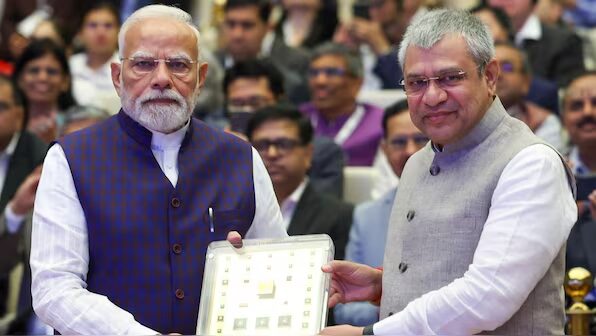
Key features include:
- Global Pavilions & Country Roundtables to foster international cooperation
- Workforce Development Pavilion targeting a 1 million skilled worker goal by 2030
- SEMI University Program offering 800+ technical and business training courses
- Sustainability initiatives addressing emissions, resource stress, and circularity
- Design Startup Pavilion showcasing indigenous chip design innovation
Why SEMICON Matters
SEMICON India serves as a convergence point for industry leaders, policymakers, academia, and startups. It fuels the ISM’s objectives by:
- Enabling cross-border collaborations
- Promoting commercialization of research
- Enhancing skill development
- Showcasing India’s role in the global semiconductor value chain
Thank you to PM @narendramodi for visiting the 🇸🇬 booth at #SemiconIndia2025. We shared about the close cooperation between 🇮🇳 and 🇸🇬 in the Semicon sector and how 🇸🇬 is a key node in Semicon supply chains. Look forward to doing more together!@PMOIndia @SemiconIndia pic.twitter.com/MxItYD0f9T
— Singapore in India (@SGinIndia) September 3, 2025
Previous editions reflect a growth trajectory:
- 2022 (Bengaluru): Focused on design and manufacturing for global markets
- 2023 (Gandhinagar): Hosted 8,000+ participants; AMD announced a $400M investment
- 2024 (Greater Noida): Featured 250+ exhibitors from 18 countries and 10,994 visitors
India’s Semiconductor Ambitions
Market Potential
India’s semiconductor market stood at $38 billion in 2023, is projected to hit $45–50 billion in 2024–25, and is expected to reach $100–110 billion by 2030. Globally, the semiconductor market is projected to grow to $1 trillion by the same year.
Strategic Positioning
India aims to become a global contributor across three pillars of the semiconductor supply chain:
- Equipment – Leveraging MSMEs to produce semiconductor equipment components
- Materials – Supplying chemicals, minerals, and gases
- Services – Providing R&D, logistics, AI, cloud computing, and IoT talent
India Semiconductor Mission (ISM)
ISM is the nodal agency for implementing semiconductor and display schemes. Its mission includes:
- Establishing fabs, packaging, and testing units
- Supporting chip design startups
- Developing a secure, trusted supply chain
- Facilitating indigenous IP creation
- Driving advanced research and technology transfer
- Promoting international collaboration
Approved Projects (10 across 6 states) worth ₹1.60 lakh crore include:
- Micron Technology (Sanand, Gujarat) – ₹22,516 crore ATMP facility
- Tata Electronics + PSMC (Dholera, Gujarat) – ₹91,000 crore fab for 50,000 wafers/month
- CG Power + Renesas & Stars (Sanand) – ₹7,600 crore OSAT pilot line; first ‘Made in India’ chip expected
- HCL-Foxconn JV (Jewar, UP) – ₹3,700 crore fab for 20,000 wafers/month
- SicSem Pvt Ltd (Bhubaneswar, Odisha) – Silicon Carbide fab with 96 million unit/year ATMP capacity
Technological Advancements
India is moving beyond traditional silicon-based semiconductors to Silicon Carbide (SiC)—more robust and heat-resistant (up to 2400°C), ideal for defence and space applications. In design, India is progressing towards 3D Glass Packaging for higher performance chips.
In May 2025, India inaugurated two design facilities in Noida and Bengaluru, becoming the first in the country to focus on 3-nanometer chip design—a leap from the earlier 7nm and 5nm capabilities.
OSAT Pilot Line Milestone
On 28 August 2025, CG Power’s OSAT Pilot Line Facility in Gujarat became operational, a first for India.
- Investment: ₹7,600 crore over five years
- Capacity: G1 facility – 0.5 million units/day; G2 facility (2026) – 14.5 million units/day
- Jobs: Over 5,000 direct positions planned
- Impact: Supports talent development, enhances India’s packaging and testing capabilities
Talent Development & Collaboration
The Workforce Development Pavilion and ISM’s skill programs aim to:
- Train 85,000 skilled workers in VLSI design over 10 years
- Provide EDA tools to 278 academic institutions and 72 startups
- Enable programs like the C2S initiative and Future Skills Program (training 20,000 engineers in Madhya Pradesh)
- Collaborate with Lam Research, IBM, Purdue University
- Produce 20 chips from 17 institutions by August 2025
Over 60,000 students have already received semiconductor-related training, building a pipeline for industry-ready talent.
Sustainability Focus
India’s semiconductor roadmap also emphasizes green manufacturing—addressing global warming, resource stress, and waste reduction through circular economy principles.
Global Relevance & Challenges
While Taiwan, South Korea, Japan, China, and the US dominate chip production, their concentration creates supply chain risks. India’s strategy to build secure, diversified manufacturing capabilities aligns with global efforts to mitigate these risks.
From Vision to Leadership
India’s semiconductor journey, exemplified by SEMICON India 2025, showcases a determined push towards self-reliance, innovation, and global competitiveness. Through large-scale investments, skill development, technology advancement, and international partnerships, India is positioning itself not just as a participant but as a future leader in the semiconductor industry.
This transformation—from consumer to creator—ensures that “Designed and Made in India” technologies will not only meet domestic needs but also shape the future of global electronics.