
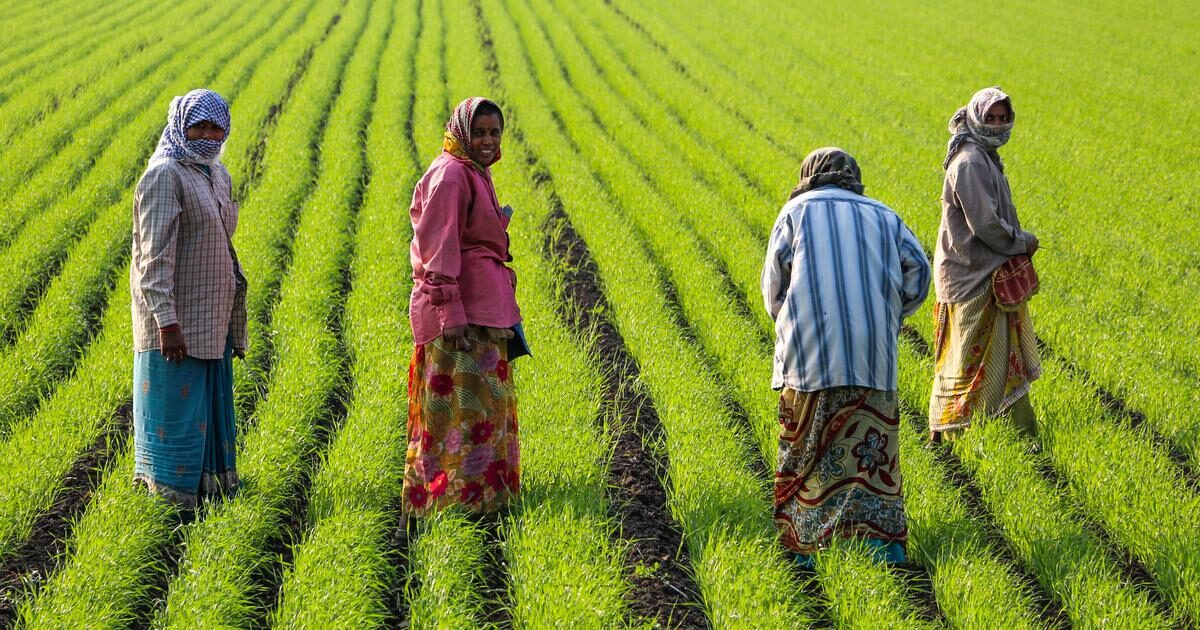
Natural farming has emerged as a significant shift in India’s agricultural strategy, promoting chemical-free, eco-friendly practices that enhance soil health and biodiversity. In recent years, the Government of India has been actively encouraging this approach through policy frameworks, pilot projects, and farmer training programs. This explainer examines the conceptual foundation, implementation strategies, benefits, and challenges of natural farming in the Indian context, drawing on official reports, parliamentary responses, and government guidelines.
Understanding Natural Farming
Natural farming is an agricultural method that relies on natural inputs, avoiding synthetic fertilizers, pesticides, and genetically modified organisms. It focuses on restoring ecological balance and making farming systems self-sustainable.
Key features include:
- Soil Enrichment: Using locally prepared bio-inputs such as Beejamrit (seed treatment solution) and Jeevamrit (fermented microbial culture) to enhance soil microbiology.
- Mulching and Cover Crops: Retaining soil moisture, preventing erosion, and increasing organic matter.
- Intercropping and Crop Diversity: Growing complementary crops together to reduce pest incidence and improve yield resilience.
- Minimal Tillage: Reducing soil disturbance to preserve microbial and fungal networks.
Unlike organic farming—which may still use certain permitted external inputs—natural farming promotes on-farm resource cycling, reducing dependency on purchased inputs altogether.
Policy Framework and Government Initiatives
The Ministry of Agriculture & Farmers’ Welfare has spearheaded programs to mainstream natural farming.
Mission and Objectives
According to the official Natural Farming portal, the mission focuses on:
- Promoting sustainable agricultural practices.
- Reducing environmental impact from chemical-intensive farming.
- Increasing farmers’ income by cutting input costs and accessing premium markets.
Central Schemes
Several schemes have integrated natural farming components:
- Bharatiya Prakritik Krishi Padhati (BPKP): Part of the Paramparagat Krishi Vikas Yojana (PKVY), targeting chemical-free farming using traditional practices.
- National Mission on Sustainable Agriculture (NMSA): Supports natural resource management, water-use efficiency, and crop diversification.
- Special Projects: States like Andhra Pradesh and Himachal Pradesh have received funding for large-scale natural farming adoption.
The Role of Krishi Vigyan Kendras (KVKs)
KVKs serve as the primary extension network for agricultural innovation in India, and their role in natural farming has expanded rapidly.
Capacity Building
KVKs conduct:
- On-field demonstrations of natural farming methods.
- Training programs for farmers, rural youth, and extension workers.
- Workshops on preparation of bio-inputs like Beejamrit and Jeevamrit.
Research-Extension Link
They facilitate:
- Localized adaptation of natural farming practices.
- Farmer feedback to research institutions for refining techniques.
- Dissemination of pest and disease management strategies compatible with chemical-free farming.
Technical Components of Natural Farming
Beejamrit
A fermented mixture of cow dung, cow urine, water, and lime, used to treat seeds before sowing.
Function:
- Prevents seed-borne diseases.
- Enhances germination.
- Introduces beneficial microbes to the rhizosphere.
Jeevamrit
A liquid bio-fertilizer prepared with cow dung, cow urine, jaggery, pulse flour, and soil from the farm.
Function:
- Boosts microbial activity.
- Supplies essential plant nutrients.
- Improves soil aeration and water retention.
Mulching
Covering the soil with crop residues or organic matter:
- Conserves moisture.
- Suppresses weed growth.
- Adds organic carbon to the soil.
Benefits of Natural Farming
Economic Advantages
- Lower Input Costs: Elimination of synthetic fertilizers and pesticides reduces operational expenditure.
- Premium Market Access: Growing demand for chemical-free produce in domestic and export markets.
- Resilience Against Price Volatility: Reduced dependency on external agricultural inputs shields farmers from price spikes.
Environmental Benefits
- Soil Health Restoration: Enhanced organic matter and microbial diversity.
- Water Conservation: Mulching and soil structure improvements lead to better water retention.
- Reduced Pollution: Less runoff of harmful chemicals into water bodies.
Social Impact
- Encourages community participation through shared resource preparation.
- Revives traditional agricultural knowledge systems.
- Enhances food safety and nutritional quality.
Adoption Trends and Pilot Projects
State-led initiatives have been instrumental in scaling natural farming:
- Andhra Pradesh Community Managed Natural Farming (APCNF): Aims to convert all six million farms in the state to natural farming.
- Himachal Pradesh: Focuses on hilly terrain farmers, reducing dependence on purchased inputs.
- Gujarat’s Beejamrit Promotion Program: Distributed guidelines and conducted farmer workshops.
The Government has reported significant growth in the area under natural farming, with several lakh hectares converted in the last few years.
Challenges in Implementation
Despite its promise, natural farming faces hurdles:
- Yield Transition Period: Farmers may experience initial yield drops as the ecosystem stabilizes.
- Market Linkages: Premium pricing for natural produce is not always accessible without certification.
- Knowledge Gap: Requires intensive farmer training and follow-up support.
- Livestock Availability: Dependence on cow-based inputs may be challenging in non-cattle-rearing regions.
Monitoring and Evaluation
The Government has set up monitoring mechanisms to evaluate:
- Soil Health Indicators: Organic carbon content, microbial activity, nutrient availability.
- Farmer Income Changes: Tracking cost savings and profitability.
- Environmental Metrics: Water usage, biodiversity indices.
Periodic reviews are conducted through district agricultural offices, KVK reports, and farmer feedback sessions.
International Context and Comparisons
Globally, movements akin to India’s natural farming exist:
- Korean Natural Farming (KNF): Focuses on indigenous microorganisms and plant-based ferments.
- Japanese Fukuoka Method: Advocates “do-nothing” farming with minimal soil disturbance.
India’s model is unique in integrating traditional cow-based inputs with large-scale policy support.
Future Prospects
With increasing global concerns about climate change, soil degradation, and pesticide residues, natural farming offers a viable pathway to sustainable food systems.
Key priorities for expansion include:
- Strengthening farmer cooperatives for marketing.
- Investing in research for region-specific natural farming protocols.
- Integrating digital platforms for farmer training and market access.
- Developing participatory guarantee systems (PGS) for easier certification.
Natural farming in India represents a paradigm shift from input-intensive agriculture to an ecologically balanced, farmer-centric approach. While challenges remain—particularly in scaling up and ensuring market viability—the movement is gaining momentum due to strong policy backing, grassroots engagement through KVKs, and growing consumer awareness. If supported with robust infrastructure, training, and marketing systems, natural farming could not only enhance farmers’ livelihoods but also contribute significantly to national goals of environmental sustainability and food security.

