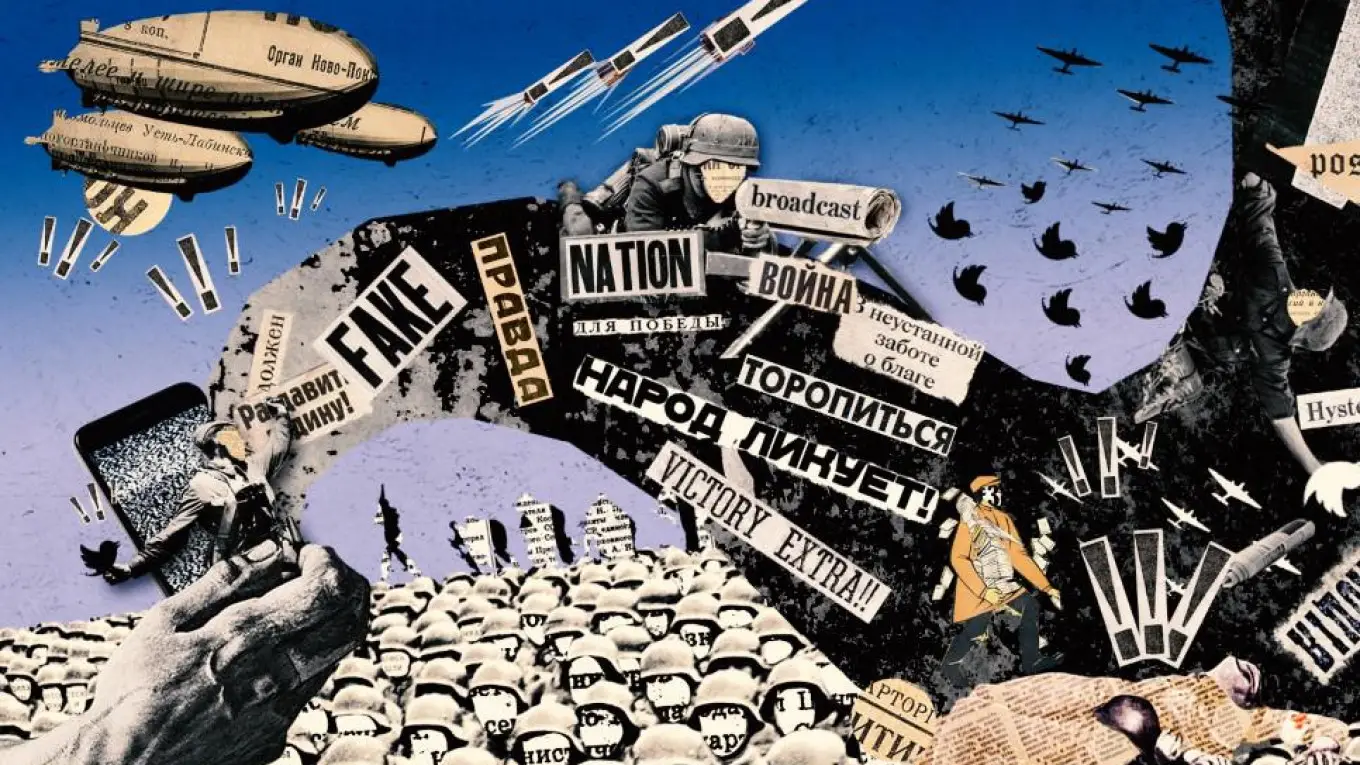
The right to protest is fundamental to democracy, as it helps establish and enforce accountability and transparency, and upholds democratic values and the fabric of society and governance. However, this fundamental right to protest needs to be examined for its justice and necessity to prevent the threat of subversion, hijacking, and ultimately anarchy. Even this fundamental right has red lines. Protest remains legitimate dissent only when it seeks to reform, correct, or hold the state accountable within a recognised political or moral framework.
Turning Protest Into Anarchism
In the past month, Europe has seen back-to-back protests, with most of them escalating into massive street violence, specifically in France. While these protests stem from genuine governance failures, the concern is that the line between legitimate protests and staging anarchy is blurring. Protests that begin by seeking reform through pressure can shift towards dismantling the system. In this transition, the protest’s genuineness and real cause are lost, and its justness comes into question, even if it was necessary at first. A closer look at protests across several European countries shows some alarming signs. Europe has experienced a severe wave of social unrest, mostly starting in September 2026 with student blockades and exploding in mid-October 2026.
The protests in France began peacefully over domestic and educational issues, with a mobilisation that organised blockades of high schools, marches, and public gatherings, drawing between 250,000 and 450,000 participants nationwide. However, within days, a widespread takeover by black-clad, masked agitators, far-left radicals, and opportunists turned peaceful student and union marches into severe riots, resulting in over 2,400 arrests.
The unrest led to looting, pillaging, and the torching of public buildings, including a historic town hall in Limoges and tourist facilities in Lyon.
While the initial student and union strikes met the criteria of a genuine protest communicating shared societal grievances, the subsequent looting and destruction of civic property shifted the movement into what critics call an anarchical model. Interestingly, France will hold Presidential elections next year. Such escalations indicate that, by capitalising on genuine issues, some anti-establishment and fringe elements can subvert the system. They stage instability under the guise of the right to protest and by highlighting genuine governance failures. Still, in reality, these subversive, vested agents mask their ulterior motives by using real issues to shield themselves and stoke instability without being questioned. A closer look suggests two more issues explain France’s situation: first, Europe’s big-hearted attitude given its policy of accepting immigrants(Dublin Treaty); and second, the political environment. Opening borders for immigrants, especially Muslims from conflict-ridden regions. According to data from the Pew Research Centre, France hosts one of the highest proportions of Muslims relative to its population compared to other major European nations. President Emmanuel Macron directly attributed the rising violent demonstrations to Muslim migrants, publicly stating, “this is about Islam wanting to take over a once great Country”. However, the immigration problem and political motives in this case are acting as catalysts in breeding violence on the streets and weaponising the cause. The statement of US President Trump that Paris is soon going to be a muslim country is another observation that points possibility of immirgration issue in France getting exploded and gradually becoming a threat.
The weaponisation argument is logically sound because, in France’s case, the government acknowledged shortcomings in the education system and offered several major concessions, yet the protests have not stopped. The French government attempted to de-escalate the situation by offering a series of targeted fixes to address the education system’s immediate failures, like immediately deploying thousands of teachers to address staff shortages, scrapping planned increases to university registration fees for the next budget cycle, and, most importantly, including students in institutional decision-making processes for high schools.
The original trigger of the protests is being addressed here, but despite the government’s assurances, the protest is shifting its goalposts and taking on a political colour. As a protest gains mass momentum, it stops belonging solely to the students or trade unions who started it. Opposition parties on both the far-left and far-right actively encourage the demonstrations to continue. For these groups, a quick resolution is disadvantageous; keeping the public mobilised systematically weakens the ruling centrist regime ahead of the 2027 presidential election.
This is exactly what is happening in other countries like Albania, Italy, Belgium, and Spain, where the original trigger was socio-economic issues, the initial wave of protest was legitimate and peaceful, and it later escalated into massive street violence. Key states like Spain, Italy, and France are set to see elections next year.
The idea of protest is simple: make the state realise its mistakes and seek reform, but use legitimate means of protest, which in all these cases were valid unless violence and subversive elements hijacked the protests and waged psychological warfare against the state.
The Psychological Battle
Earlier, psychological warfare was simple, involving staged protests through propaganda or minor domestic issues. At face value, it seemed like a deliberate attempt to destabilise the environment, as during the Cold War. The most glaring example was the 1964 toppling of the left government in Brazil.
Under Operation Brother Sam, the US’s CIA coordinated closely with conservative Brazilian business elites and religious organisations to organise massive urban demonstrations known as the “Marches of the Family with God for Freedom.” The organisers funded transport, media campaigns, and logistics to bring hundreds of thousands of people into the streets. The protests were framed not as a policy critique but as a moral crusade against a “communist threat,” explicitly designed to signal total instability that led to a military takeover, whose rule lasted for decades.
Three stages are essential to waging psychological warfare. First, create a subversive environment where anti-social, fringe, and foreign intelligence agencies can subvert, launch propaganda, and psychologically colour or misguide, or socially brainwash, the general public or a group of people, either ideologically or by simply pumping money. In other words, they weaponise the original trigger or real cause not to seek accountability, but to dismantle it.
After subversion, the second stage is to control the narrative and environment by disseminating propaganda, which can be of three types: white, grey, and black, through media houses or social media.
In all three, truth is twisted to fit a one-sided narrative, or, in grey or black propaganda, falsehoods are peddled. After subversion and environmental control, the third stage is D-Day: if the government weakens to the point of needing to surrender, it will either roll back its policies or, if political and institutional resilience is weak, anarchism will prevail, with mob leaders ruling or the military seizing power.
Red Lines
The regime-change argument is not entirely flawed but reflects a complex reality engineered and executed by global powers for geopolitical competition, as we saw in the Cold War, when the CIA heavily funded the toppling of regimes that were communist or Soviet-leaning. The face of psychological warfare is now changing, with domestic issues of the state being weaponised to stage destabilisation campaigns under the garb of “right to protest”. The series of “colour revolutions” in the Central Asian region is a key example where real domestic issues were weaponised by external and internal groups with vested interests, such as the possible coup attempt in Kazakhstan in 2022, where fuel price issues led to peaceful protests that later turned violent and were characterised as a coordinated coup attempt and an elite power struggle. Under the guise of seeking reform, a larger devil is at play that people often ignore, because the luxury of intellect lets them see only a narrow picture and stick to a narrative convenient to them: “regime change”. In the coming time, psychological warfare is the most potent weapon because it can hit the hardest and wage a war without firing a single bullet. For India, attempts have been made to weaponise domestic issues and launch white propaganda and short-burst campaigns to weaken the government’s credibility. However, India’s institutional resilience is ironclad; regime change is almost impossible. Can the government’s credibility still be weakened and political damage inflicted? The answer is yes. Therefore, India must counter and deter the breeding environment for such activities, as France learned the hard way; India must draw red lines for protest because civil society is increasingly becoming a new theatre of warfare, as Ajit Doval once said, “Those who can make you think the way that’s in their interest enjoy the real power”.
An important distinction, therefore, must be made: there is no denying the right to protest and seek accountability or reform, but questions remain about its real intentions and progression, where the state also has the right to deny systemically engineered chaos on the street, as the Constitution itself does not guarantee an absolute right to protest.
A famous German philosopher, Habermas, argued that in a functioning constitutional democracy, coercive or disruptive protests (such as civil disobedience) are a last resort, justified only when the state is structurally “ignorant” or blind to a systemic injustice. If the government is actively using democratic institutions to ensure its own accountability, bypassing those legal processes through coercion is illegitimate.