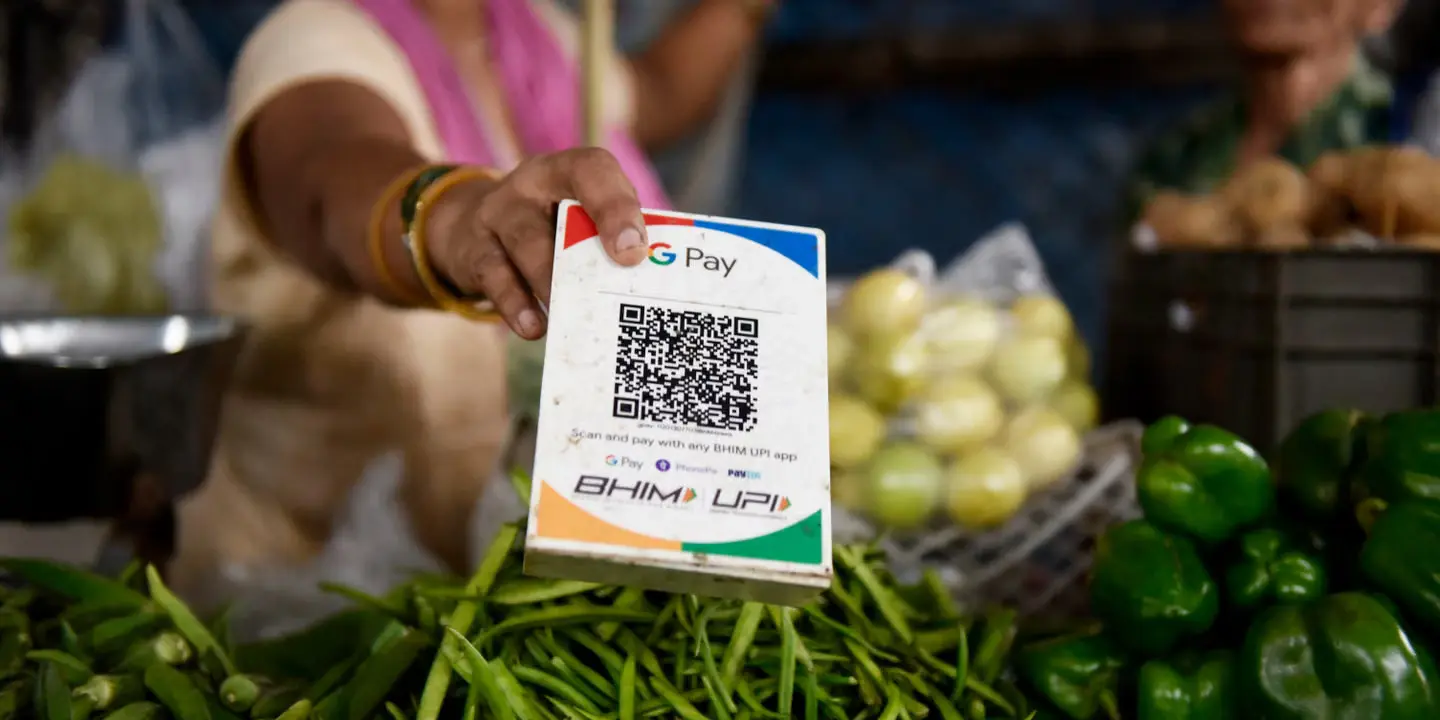
Ten years after its launch, the Unified Payments Interface has moved far beyond being a payment mechanism. It has become a piece of India’s digital public infrastructure—transforming everyday commerce, reducing dependence on cash, bringing millions of small transactions into a traceable financial system, and giving India a leadership position in real-time payments globally.
On 25 August 2016, the Unified Payments Interface (UPI) went live for customers in India with 21 participating banks, after a few months of pilot/soft launch to check the system’s robustness. Few could have imagined that this relatively modest beginning would, within a decade, produce one of the world’s largest real-time payment ecosystems.
What followed has been nothing short of a digital payments revolution. The transformation is extraordinary. In FY 2016–17, UPI processed about 2 crore transactions. By FY 2025–26, annual transactions had crossed 24,162 crore, an almost 13,000-fold astronomical increase. Transaction value rose from ₹0.07 lakh crore in FY 2016–17 to approximately ₹314 lakh crore in FY 2025–26. By March 2026, 703 banks were live on UPI, while monthly transactions reached a record 2,264 crore, worth ₹29.53 lakh crore.
Developed by the National Payments Corporation of India (NPCI) under the regulatory oversight of the RBI, UPI has recorded an unprecedented expansion in both transaction volume and value over the past 10 years, it said. The year 2026 marked a significant milestone in UPI’s growth trajectory, it said, adding that monthly transaction volumes crossed 2,300 crore for the first time in May 2026, reaching 2,320 crore transactions and signalling a new scale of adoption. This momentum continued through the year, with July 2026 recording 2,366 crore transactions, the highest monthly transaction volume in UPI’s decade-long journey.UPI now accounts for approximately 85% of India’s digital payment transactions.
These numbers tell only part of the story. The real significance of UPI lies in what it has done to the behaviour of citizens, merchants and businesses.
From cash to a QR code
For generations, cash was the default instrument for India’sIndia’s everyday economy. A customer buying vegetables from a street vendor or groceries from the local kirana shop, paying a taxi driver, visiting a neighbourhood barber or purchasing tea from a roadside stall was expected to carry currency. Small merchants had to keep cash on hand, provide change, deposit money in banks, and manage the risks of handling physical currency.
UPI changed that equation.
A small merchant no longer needs a sophisticated point-of-sale terminal to accept digital payments. A printed QR code can turn a roadside stall into a digital merchant. A customer can scan it, enter an amount, authenticate the transaction and transfer money directly from a bank account—within seconds.
The Reserve Bank of India has specifically noted that UPI has facilitated digital payments among retail outlets, kirana stores and street vendors across the country. The same payment infrastructure serves the multinational corporation and the street vendor.
This simplicity is perhaps UPI’s greatest achievement.
It has effectively converted the mobile phone into a bank branch, payment terminal and financial-access point.
And it has done so without requiring the common citizen to understand the complicated architecture behind the transaction. This democratisation of payment technology is one of UPI’s greatest achievements.
The power of interoperability
UPI’s genius is not merely that it is digital. It is that it is interoperable.
A customer with an account in one bank can pay a merchant whose account is with another bank, using a third-party application. Multiple bank accounts can be connected to a single interface. Payments can be made using a virtual payment address, mobile number or QR code.
The RBI has described UPI’s open, interoperable architecture, two-factor authentication, multiple-bank-account functionality, and the ability to let payment service providers build applications on the underlying infrastructure as key reasons for its potential and success.
This architecture created an ecosystem rather than a single proprietary application. Banks, fintech companies and payment applications can innovate on top of this common infrastructure.
The result is competition and choice for the consumer while retaining a common underlying payment architecture.
A revolution in ease of doing business
UPI has also transformed India’s business environment.
For a small entrepreneur, accepting cash involves handling currency, maintaining change, travelling to a bank, reconciling cash receipts and dealing with the risks of theft or loss.
Digital payment removes much of that friction.
A payment can move directly from the customer’s bank account to the merchant’s account. The transaction generates a digital record, making reconciliation easier and reducing the need to maintain physical cash.
For businesses, this means:
· faster collection;
· easier reconciliation;
· lower dependence on cash handling;
· greater transparency of transactions;
· easier remote payments;
· simpler customer-to-business transactions; and
· access to a growing digital financial ecosystem.
It also makes commerce possible without expensive payment infrastructure.
A roadside food vendor can accept digital payments.
A taxi driver can accept digital payments.
A home-based entrepreneur can receive payments from customers in another city.
A small retailer can sell through digital channels without installing an elaborate payment system.
Thus, UPI has helped reduce the transaction costs of commerce.
And lower transaction costs are at the heart of improving the ease of doing business.
The RBI has also highlighted an important second-order benefit: digital payments generate real-time information about sellers’ businesses, cash flows and purchasing patterns, potentially enabling providers to offer credit, insurance, savings and other financial services.
This could be particularly transformative for micro and small enterprises that traditionally struggled to demonstrate a formal financial history.
Bringing the informal economy into the formal financial system
Perhaps UPI’s most profound economic consequence is its potential to bring the informal economy onto the financial map.
India’s informal sector has historically operated substantially through cash. A small vendor may have customers and income but little documentary evidence of turnover. Cash transactions are difficult for banks and formal lenders to observe.
Digital transactions change that.
If a street vendor receives hundreds of small UPI payments every month, those receipts now have a digital record. Over time, such records can help establish a pattern of business activity.
This does not automatically formalise a business in the legal or tax sense. Nor should every UPI transaction be interpreted as taxable business income. But it creates something that cash often did not: a digital financial footprint.
That footprint can become valuable for access to formal finance.
In this sense, UPI can act as a bridge:
Informal commerce → digital transaction record → financial history → formal financial services → greater economic opportunity.
This is one of the most important ways in which UPI can contribute to inclusive growth.
Empowering the common man
UPI’s social significance is equally important.
A person does not need to own a credit card or understand internet banking to make a digital payment. A bank account, mobile phone and appropriate authentication can be enough to participate in a sophisticated real-time payment system.
And innovation has progressively expanded accessibility.
UPI123Pay, introduced in 2022, brought UPI to feature-phone users, explicitly to deepen financial inclusion. As a result, sophisticated payment infrastructure increasingly resides in the pocket of the common citizen.
UPI Lite has enabled small-value payments with greater convenience, while other innovations have expanded the range of recurring, offline and credit-linked transactions. The RBI has described these developments as part of UPI’s continuing evolution to improve access and convenience.
The result is an important shift in the relationship between the citizen and money.
The psychological change is equally important.
The common man increasingly does not have to ask:
“Do I have cash?”
The question becomes:
“Do I have money in my bank account?”
That is a profound behavioural change.
UPI and financial inclusion
UPI’s rise has occurred alongside India’s broader financial-inclusion architecture—Jan Dhan bank accounts, Aadhaar-based identification, expanding mobile connectivity and digital infrastructure.
One of UPI’s most remarkable features is the enormous number of small-value transactions. In FY 2025–26, UPI processed more than 24,161 crore transactions. Government data indicates that approximately 86% of person-to-merchant transactions were below ₹500, illustrating how deeply UPI has penetrated everyday retail commerce.
The RBI’s Financial Inclusion Index rose from 43.4 in March 2017 to 64.2 in March 2024, reflecting improvements across access, usage and quality of financial services.
UPI did not create financial inclusion on its own. Rather, it became an extraordinarily effective last-mile payment layer on top of the banking infrastructure built over the preceding years. This is not simply rapid growth. It represents mass adoption.
That combination—bank account + identity + mobile connectivity + interoperable payment infrastructure—is one of the defining features of India’s digital transformation.
India becomes the global leader
The most remarkable aspect of UPI is that its success is no longer merely an Indian story. UPI has transformed India’s position in the global payments landscape.
India has become the world’s largest real-time payments market.
ACI Worldwide’s global real-time payments analysis estimated that India accounted for 49% of global real-time payment transactions in 2023, with about 129.3 billion transactions—more than the combined volume of the other leading real-time-payment markets in its comparison.
The Indian government, citing NPCI data, reports that India’s share remained approximately 49% of global real-time payment volume in 2025.
The achievement is significant because India has demonstrated that real-time payments can operate not merely as a premium banking service but as mass-market public infrastructure.
The lesson is increasingly being studied by other countries.
From domestic success to international reach
UPI’s next chapter is internationalisation.
Indian travellers can now use UPI-powered applications at participating merchants in several countries, while India has also pursued linkages between its payment infrastructure and foreign systems.
NPCI International’s partnerships have enabled UPI acceptance in markets including the UAE, Singapore, Bhutan, Nepal, Mauritius, France and Sri Lanka, while the UPI-PayNow linkage enables instant cross-border transfers between India and Singapore.
The government’s latest decade-of-UPI review says the global footprint had reached nine countries by 2026, with Cambodia the latest country to enable UPI-based payments for travellers.
The ambition is considerably larger than allowing Indians to scan QR codes abroad.
India is seeking to establish UPI as part of a broader network of cross-border payment and remittance corridors.
That could eventually reduce the cost and friction associated with international retail payments and remittances.
UPI as India’s digital public infrastructure export
There is an even larger strategic dimension. India is increasingly presenting UPI as a form of digital public infrastructure that other developing countries can adapt, rather than build completely from scratch.
The attraction is obvious. A country seeking rapid digital-payment adoption can potentially learn from India’s open, interoperable architecture rather than creating a closed ecosystem dominated by individual private platforms.
The objective is not merely to export a payment application.
It is to export an architecture and philosophy:
interoperability + low friction + mobile access + competition + public infrastructure + private innovation.
That is potentially India’s most important digital export. Developing countries do not necessarily need to replicate India’s entire banking ecosystem before introducing modern digital payments. They can study the underlying model and adapt it to their own circumstances.
A decade that changed the meaning of cash
UPI has not eliminated cash—and it should not be claimed that it has. Cash remains important, particularly among sections of the population with limited digital access and in circumstances where connectivity or digital infrastructure is inadequate.
But UPI has fundamentally changed cash’s role in everyday economic life. No matter how small the transaction amount, it can be paid using UPI.
The significance lies precisely in the smallness of these transactions. When millions of tiny transactions migrate from cash to digital rails, the aggregate economic impact becomes enormous. By June 2026, more than 55.49 crore users had been onboarded onto UPI. The platform served approximately 6.5 crore merchants, giving UPI extraordinary social reach.
The challenges of the next decade
UPI’s success should not lead to complacency.
The next decade will require greater attention to:
· cyber fraud;
· phishing and social engineering;
· identity protection;
· privacy;
· digital literacy;
· system resilience;
· connectivity in remote areas;
· protection of vulnerable users;
· fraud detection using artificial intelligence;
· international interoperability.
The more we depend on digital payments, the more important it is to keep the payment system secure, reliable, and available.
Digital inclusion must therefore increasingly become secure digital inclusion.
The road to Viksit Bharat
The story of UPI ultimately fits into India’s larger aspiration of Viksit Bharat@2047.
As India looks towards Viksit Bharat@2047, UPI represents more than technological innovation. It demonstrates what becomes possible when government, regulators, banks, technology companies and citizens build around a common digital infrastructure.
A developed economy requires more than roads, factories and physical infrastructure. It also needs efficient financial infrastructure that lets money move rapidly, securely, and cheaply.
The first decade’s achievements are already extraordinary.
From 373 transactions in its first month to more than 24,000 crore transactions in a year, UPI has evolved from a payment experiment into a foundational component of India’s digital economy.
Its greatest achievement may ultimately be neither the number of transactions nor the value transferred. It is the democratisation of digital payments.
UPI has made sophisticated financial infrastructure available to the ordinary citizen at the tap of a phone. It has given the small vendor the same basic digital payment capability available to the large retailer. It has reduced dependence on hard currency, created digital trails for millions of small businesses and helped connect informal economic activity with the formal financial system.
Ten years on, UPI is therefore not merely a success story in payments. It has become a critical piece of India’s digital economic infrastructure and a symbol of India’s technological ambition.
It is a story of how digital public infrastructure can empower a billion-plus people—and potentially become one of the foundations of India’s journey towards Viksit Bharat@2047.