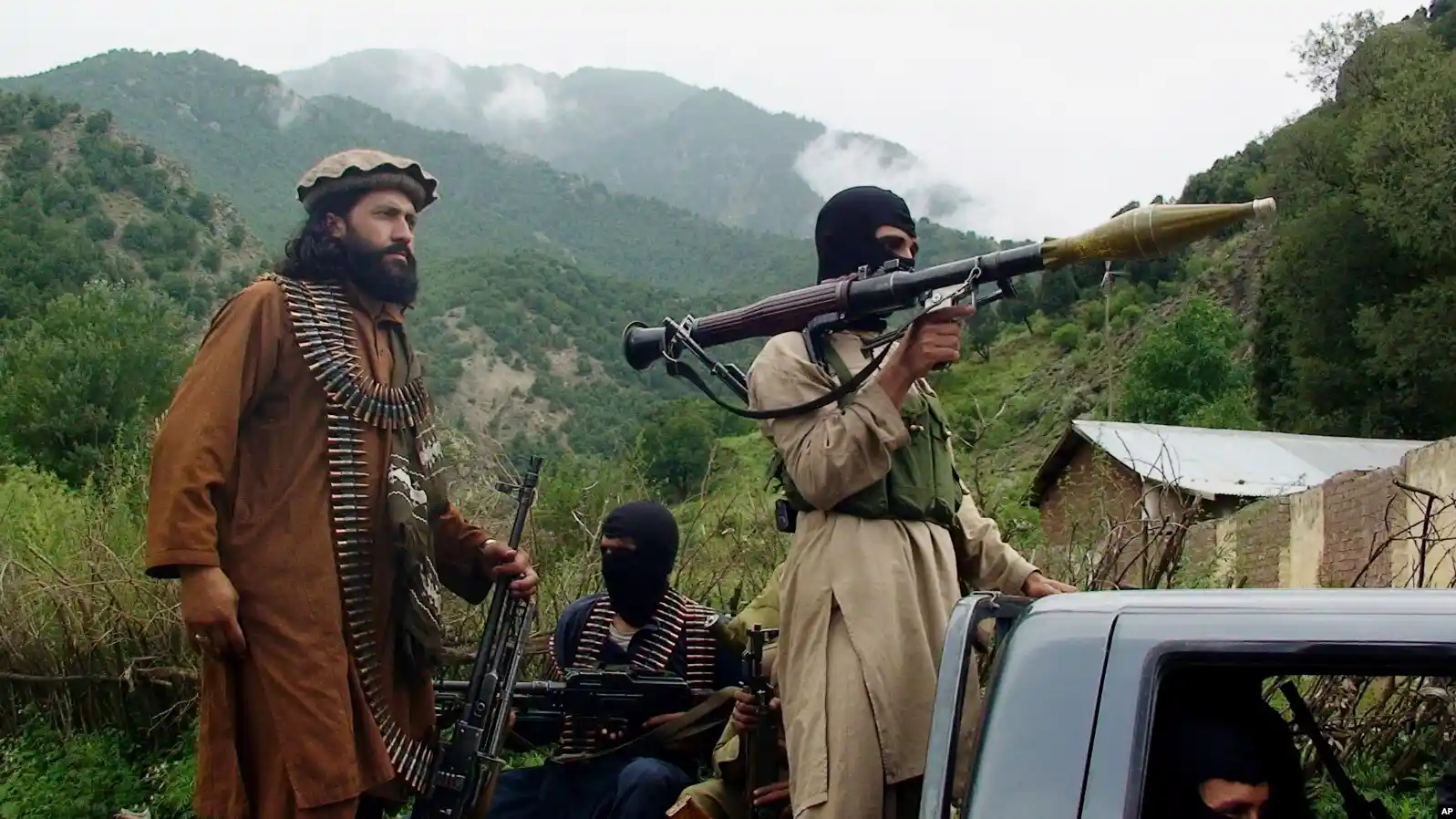
This piece examines the role of “spoilers”, actors who deliberately undermine peace processes, in the context of India–Pakistan relations. Spoilers benefit politically, economically, or strategically from ongoing conflict and therefore work to derail reconciliation efforts. The 2008 Mumbai attacks illustrate how violence can sabotage diplomatic progress and deepen mistrust between the two countries. In Pakistan, elements within security institutions and militant groups are often accused of sustaining hostility to justify military influence and budgets, particularly around the Kashmir dispute. Recognizing and exposing these spoilers is essential for any peace initiative. Ultimately, lasting peace depends on empowering broader public support for cooperation rather than allowing minority interests that profit from conflict to dominate the narrative.
What are Spoilers, and Why Are They Always There?
As soon as anybody introduces the idea of peace in a certain conflict zone, there are those who have an interest in spoiling the very thought of it. And they will, by frustrating any peaceful intentions. They will harm the process, create chaos, or even use violence to visualize the futility of a process towards peace. These so-called spoilers will pop up. No matter what you do to motivate the people or the warring parties, however hard you try to invent solutions, to negotiate compromises, or to accommodate certain requests or ambitions. They frustrate the process because they profit in financial or other terms from the conditions of the conflict. Because they make money in weaponry, use chaotic, uncontrolled conditions to advance their profitable illegal trade, or, even more down to earth, because they do not know how to survive in any other way. For some, living under conflict-like situations is a `way of life`. For some, preventing peace is a full-scale political issue. Their political survival depends on the animosity towards `the other`. They need an enemy to have a foundation in the political arena. There are many examples. The `real IRA` is one of them, spoilers during the peace process in Northern Ireland, RENAMO is known for spoiling the peace process in Mozambique, and more recently, some factions within FARC didn`t want the peace process to succeed and continued the `luta`.
Dealing with spoilers is a very delicate affair. Because the spoilers may easily succeed in creating or raising popular opposition to any initiative to start a peace process. Spoilers reinforce the animosity that is evident during the conflict, and spoilers undermine the very trust that has to mature during the process towards peaceful coexistence. Giving in to spoilers may be seen as a sign of weakness, and ignoring their signals may aggravate the very root cause of a conflict. That is why there is no realistic, one-size-fits-all recipe for success. Every conflict is different, and the motives of the peace makers, as well as the motives of the spoilers, need to be unveiled in every specific situation.
What are the Specifics in the India-Pakistan Case?
The most evident attempt to spoil the initiative to create peaceful relations between India and Pakistan was the horrible Mumbai attacks. After the Agra summit in 2001 and the peace bus in 2004, a thaw was setting in, defrosting the frozen relations between the two countries. Two countries that went through some serious conflicts. But the detente was not in the interest of some players. The links between the attackers and certain actors in the intel services and military circles in Pakistan is well described and documented[1]. India obviously demanded the arrest and the handing over of the terrorists for them to be brought to justice. And the Indian government launched a diplomatic offensive aimed at isolating Pakistan. Relations between India and Pakistan soured. The spoilers had their way.
And even though Mumbai is almost two decades old, nothing much seems to have changed. The ISI is still openly accused of supporting Lashkar-e-Taiba (LeT) and Jaish-e-Mohammed to counter India’s conventional military superiority. The support for terrorist outfits clearly allows for a high level of deniability. The stakes in Pakistan are elevated. While any army, anywhere in the world, needs an enemy to justify its budget, this is even more the case in Pakistan. A significant portion of the national budget goes to the army. Despite ongoing economic hardships. Education and health care are underfunded. These facts do not go unnoticed In de public debate. The critical voices that raise these issues require an adequate response. Hence, the fact that the army needs a justification for eating an ever bigger chunk of the national cake. And the argument is largely based on personal considerations, since a large chunk of the budget goes to military salaries and pensions. If there are no more enemies, it directly affects the income of defence personnel and their families.
History serves the army well in its search for a publicly acceptable justification. Partition serves as painful unfinished business. On both sides of the border. Even though it almost disappeared behind the horizon of history and generations. It has been almost 80 years since communities were torn apart. Lives were destroyed. Pain was inflicted on many people. And that pain was transferred to the next generation. But it seems that the youngsters of today, the third generation after Partition, have accepted the new reality in which they live. Life goes on. Acceptance seems increasingly the narrative for many.
However, the disputed position of Kashmir is not just unresolved. It also serves as a propeller for the brokers of violence. `Kashmir` effectively serves as a mobiliser. The opposite sides are dug deep in their respective trenches. Much is needed to bridge the divide. Also, because the situation around `Kashmir` helps mobilise support for a much wider, identity-based agenda.
How to Deal With Spoilers?
First and foremost, a spoiler should be recognised as such. A spoiler hardly ever represents a majority of the people. A spoiler may inflict harm and use violence, but it should not be mistaken for a representative of the public opinion or position. On the contrary. It reflects the interests of a specific fraction. Often, a small portion of a society. A part of the impact of spoilers can be taken away by loudly calling it what it is.
In the framework of a peace process, it is important, however, to look into the motives and objectives of the spoiler. There is no harm in addressing concerns and objectives if these can be solved in an inclusive process. Security Sector Reform, Demobilisation and Reintegration processes are therefore often part of a post-conflict arrangement. But the way these tools are used should be based on a proper understanding of interests, motives, and leadership positions. On the basis of this understanding, an approach can be tailored. However, some spoilers, referred to as `total spoilers` in the literature[2], are hard-headed. Inclusion is not the answer in this case. Confrontation is the only way out. Like it or not.
Conclusion
Although there are clear advantages to peaceful relations between neighbouring countries in general and between Pakistan and India specifically, any attempt to follow up on the initiatives in the early days of this century is bound to be obstructed by spoilers. Naming and blaming the spoilers is relatively easy. To expose their agenda publicly may prove harder. However, it may very well be true that a new generation is standing up that advocates peace, rather than tensions. The main lesson from other theatres of conflict is that we should not let the spoilers dominate the process. On the contrary. Spoilers represent minority interests. They should be exposed as such. Their true colours named and shamed. Their real motives are understood. Alternatives researched and proposed. Spoilers should never be allowed to take the lead. The voices of peace should be heard and listened to. They deserve it much more than the brokers of violence do.
[1] https://www.brookings.edu/articles/mumbai-attacks-four-years-later/
[2] See, amongst other publications, Methods Used to Deal with Peace Process Spoilers, June 2014, ILIRIA International Review 4(1):343 by Bilbil Kastrati.