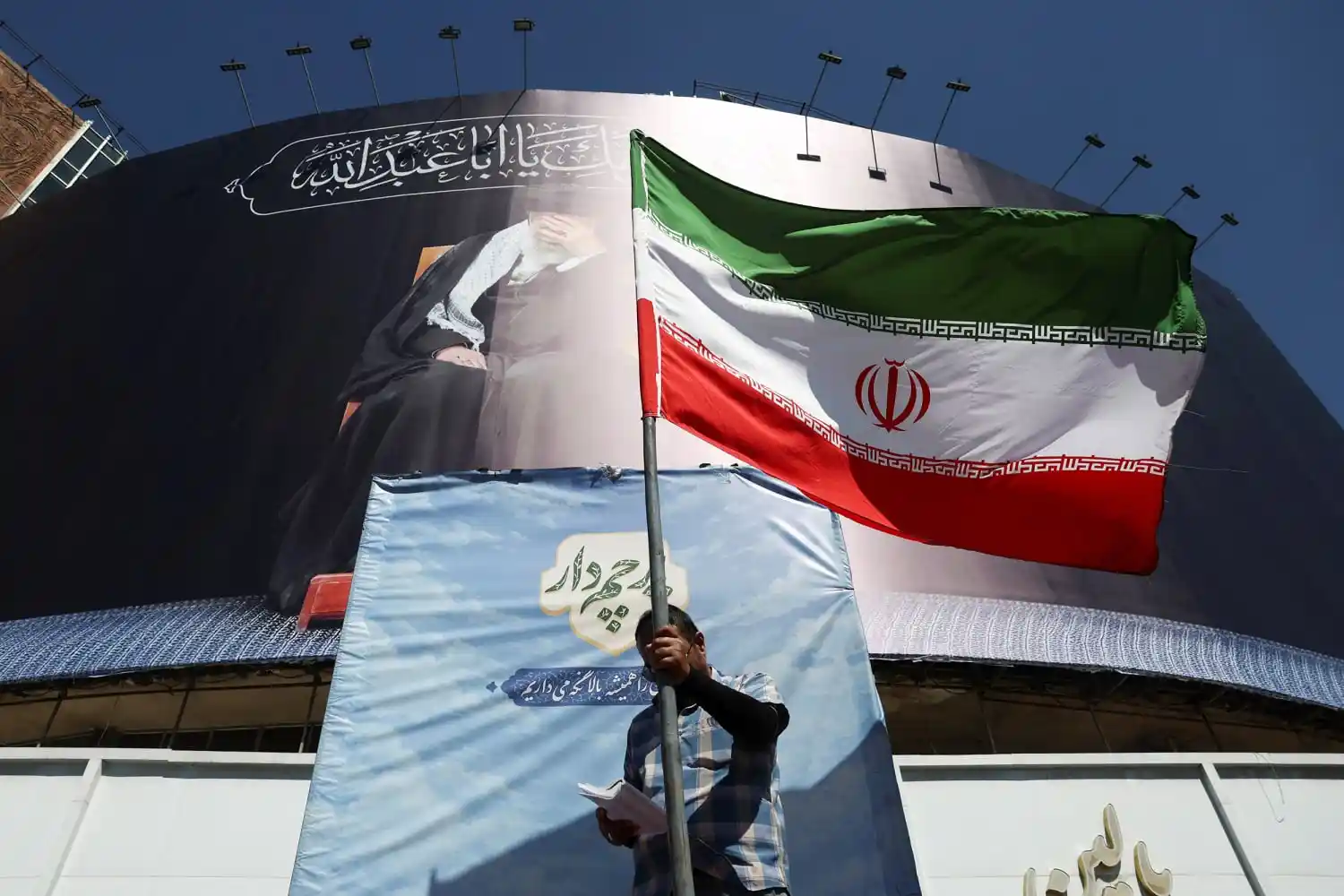
The most consequential outcome of the 2026 Hormuz War may ultimately be found not on the battlefield but at the negotiating table. Iran has not emerged as an undisputed military victor. Yet it may have secured something more durable: a transformation in its diplomatic status. After four decades of sanctions, isolation and containment, Tehran is once again being treated as an indispensable participant in discussions on regional security, energy stability and the future order of West Asia.
Diplomats learn early in their careers that countries are rarely as isolated as political rhetoric suggests. Governments may be sanctioned, condemned or excluded from particular forums. Yet when geography, resources and security interests converge, yesterday’s outcast often reappears at today’s negotiating table. The events surrounding the Hormuz conflict offer a striking illustration of that reality.
The most revealing aspect of the ceasefire and the negotiations that followed is not what Iran may eventually concede, but what the United States has already been compelled to acknowledge. A country long viewed primarily as a problem to be managed has become a counterpart that must be engaged.
For much of the period since the 1979 Islamic Revolution, Iran occupied a unique place in the international system. The hostage crisis, successive waves of sanctions, diplomatic estrangement and allegations of support for militant groups combined to make it the West’s archetypal pariah state. The phrase “axis of evil” was more than political rhetoric; it reflected a broader strategic consensus that Iran should be constrained rather than accommodated.
Even the 2015 nuclear agreement failed to fundamentally alter that perception. The subsequent collapse of the accord and the reimposition of sanctions reinforced the belief that Iran’s isolation was both sustainable and manageable.
The war around Hormuz exposed the limits of that assumption.
As hostilities escalated around the Strait of Hormuz, Iran demonstrated a geopolitical reality that neither sanctions nor military pressure could erase. Geography remains one of the most enduring sources of power in international relations. The narrow waterway at the entrance to the Gulf continues to carry a substantial share of global seaborne oil and liquefied natural gas exports. Disruptions to shipping rapidly reverberated through energy markets, insurance costs and supply chains far beyond the region.
Military deployments by the United States and its partners helped contain the crisis but could not eliminate the underlying vulnerability. It became increasingly apparent that secure navigation through Hormuz could not be guaranteed indefinitely without some form of understanding with Iran itself.
That realisation altered the diplomatic equation.
For years, many policymakers in Washington and elsewhere appeared to believe that Iran’s influence would gradually diminish under the cumulative weight of sanctions and diplomatic pressure. That expectation was not entirely unreasonable. Yet history offers numerous examples of strategically located states proving more resilient than their critics anticipated. Iran appears to have joined that list.
While reports regarding the ceasefire framework and associated understandings remain subject to verification, the broad direction of diplomacy is already evident. The emerging discussions appear to connect four issues that had previously been treated separately: Iran’s nuclear programme, freedom of navigation through Hormuz, sanctions relief and economic reconstruction.
What matters strategically is less the precise details of any eventual agreement than the shift in approach that the negotiations represent. Washington appears willing to move beyond a policy centred exclusively on pressure and towards one combining deterrence with engagement. Tehran, for its part, appears prepared to discuss stronger nuclear oversight and commitments regarding maritime security in exchange for economic and political space.
For Iran, this represents a substantial diplomatic achievement.
The Islamic Republic has converted resilience into leverage. After enduring years of sanctions and a direct military confrontation, it has secured negotiations on issues extending well beyond its nuclear programme. Maritime security, energy stability and regional order are now part of the conversation.
This amounts to recognition of a reality that many policymakers had long sought to avoid: there is no durable Gulf security architecture that can simply exclude Iran.
The benefits are potentially significant. Greater access to oil revenues, financial channels and frozen assets could help stabilise Iran’s economy and strengthen its bargaining position. Equally important, Tehran has moved from being treated as an object of international policy to becoming one of its participants.
The battle of narratives may prove no less important.
Within Iran, the leadership can argue that it withstood military and economic pressure without capitulation. Internationally, Tehran can point to commitments on maritime security and nuclear oversight as evidence that it is prepared to operate within negotiated rules when its core interests are acknowledged.
None of this transforms Iran into a status quo power, nor does it erase longstanding concerns regarding missiles, proxy networks or domestic governance. What it does change is the framework through which Iran is viewed. A state once regarded primarily as a spoiler is increasingly being treated as a difficult but necessary interlocutor.
That prospect inevitably generates unease elsewhere.
For Israel, the more difficult challenge may now be political rather than military. Israeli governments have spent decades arguing that Iran should be treated as an exceptional threat requiring exceptional measures. An Iran that is once again sitting at important diplomatic tables is harder to contain than an Iran that is merely isolated.
The concern is not merely that sanctions could be eased or reconstruction funds mobilised. It is that Iran may acquire greater political room for manoeuvre while retaining important elements of its strategic capability. More broadly, the episode may reinforce a longstanding Israeli concern that American global priorities do not always align perfectly with Israeli preferences. History suggests that when wider regional stability, energy security and great-power interests are at stake, Washington’s calculations inevitably become broader than those of any single ally.
Among the Gulf Arab states, the reaction is likely to be more nuanced. The ceasefire offers welcome relief from the prospect of prolonged disruption to trade and energy exports. Yet the conflict also exposed vulnerabilities that sophisticated defence systems and external security guarantees could not entirely eliminate.
The lesson for Gulf capitals is unlikely to be abandonment of existing partnerships. Rather, it is likely to be diversification. The trend towards broader diplomatic engagement, strategic hedging and pragmatic coexistence with regional rivals is likely to accelerate. The emerging regional order appears increasingly defined not by rigid blocs but by overlapping partnerships and managed competition.
For India, these developments carry direct implications.
A large share of India’s energy imports passes through the Gulf. Millions of Indian citizens live and work across West Asia. Any prolonged disruption in the region immediately affects energy security, remittances and economic stability.
At the same time, a less isolated Iran could create new opportunities. Connectivity initiatives such as Chabahar may become easier to advance in a more stable diplomatic environment. Yet the larger lesson for India is strategic rather than commercial.
During my years in diplomacy, I often found that the most durable partnerships were built not by choosing sides in regional rivalries but by preserving channels of communication with all significant actors. India’s relationships with Israel, the Gulf states, the United States and Iran are sometimes portrayed as contradictory. In practice, they reflect an understanding that stability in a complex region requires engagement across competing camps.
The emerging regional order rewards countries capable of maintaining productive relationships across geopolitical divides. Few major powers are as well positioned for such an environment as India. New Delhi enjoys strong ties with the United States, Israel and the Gulf monarchies while preserving channels of engagement with Iran. Rather than forcing difficult choices, a more stable relationship between Tehran and Washington could actually expand the diplomatic space for India’s multi-aligned approach.
The broader significance of the Hormuz War extends beyond Iran itself. It highlights an increasingly important feature of contemporary international politics. Economic sanctions do not automatically produce political isolation. Military superiority does not invariably translate into diplomatic advantage. Above all, major regional actors rarely disappear simply because others would prefer them to.
Students of diplomatic history will recognise a familiar pattern. Great powers periodically convince themselves that troublesome states can be transformed, marginalised or bypassed. More often than not, they eventually find themselves negotiating with those same states. Geography has a long memory. Strategic necessity often outlives political fashion.
The lesson of 2026 is not that Iran has become a friend of the West. Nor is it that decades of disagreement have suddenly disappeared. The lesson is more modest, but perhaps more important. Durable regional orders are rarely built by ignoring significant actors, however uncomfortable their presence may be.
History may therefore record that Iran won no decisive military victory in 2026. Yet it achieved something potentially more enduring. After four decades on the margins of the international system, it persuaded even its adversaries to acknowledge a reality they had long resisted: no stable order in West Asia can be constructed without Iran having a place in the conversation.